

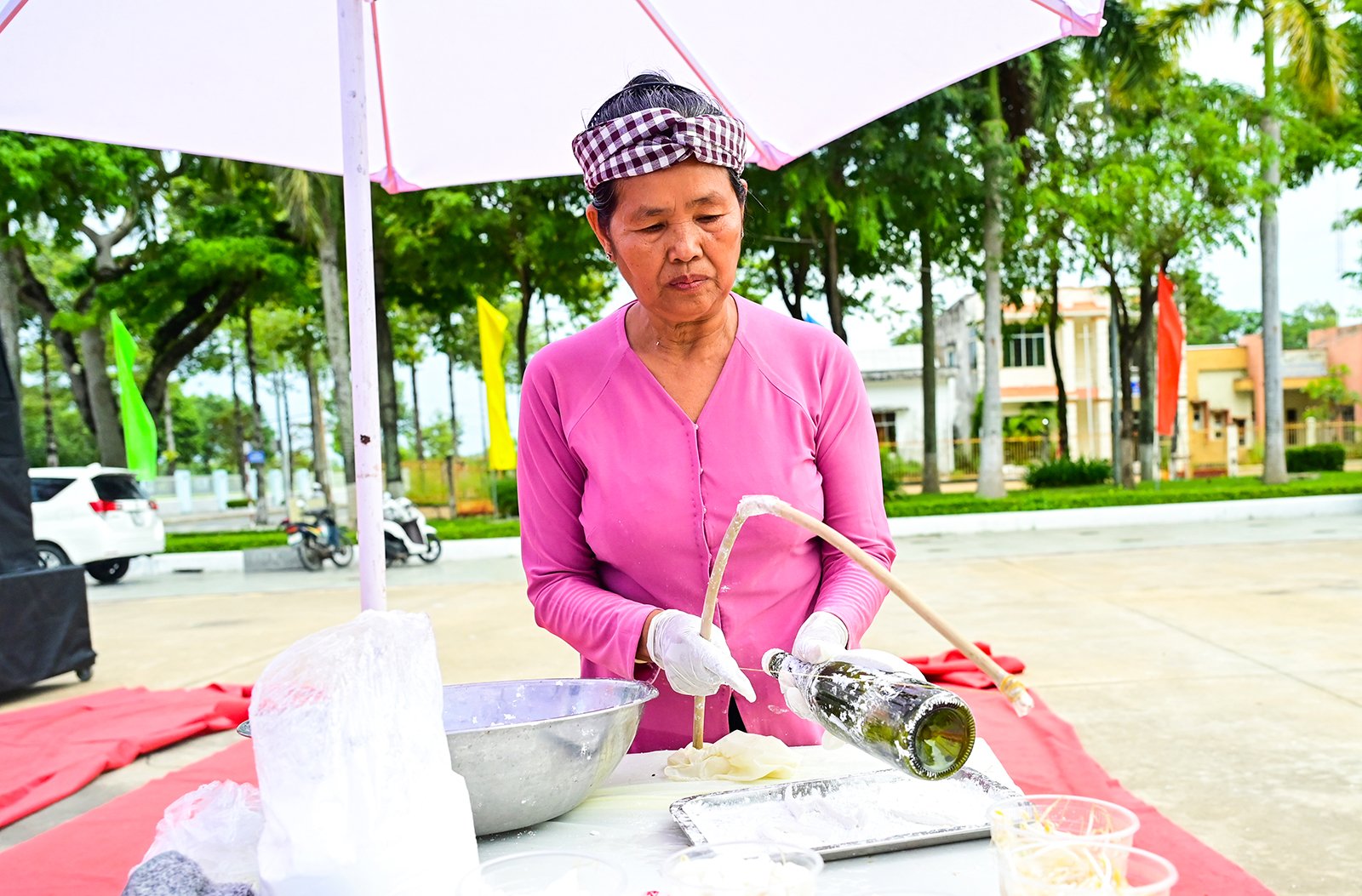
The rice noodles are hand-cut. Photo: THUY TIEN
The dish is called "hand-cut noodle soup" because the dough is kneaded, then rolled thinly and cut into strands by hand, without molds or machinery. It sounds simple, but making a delicious batch of noodles is a meticulous process.
My family still keeps an old stone mortar. Every time we wanted to make rice noodles, my mother would soak the rice until it softened, then put it in the mortar to grind. She chose a type of rice that wasn't too sticky, resulting in a milky white color and a very unique flavor. After grinding, she would place a piece of muslin cloth over the rice and press it down with a cutting board to squeeze out the excess water. To preserve the aroma and prevent it from turning sour, she would often mix in a little salt and a few tablespoons of coconut milk to enhance the richness and make the dough more pliable.
Next comes the kneading process, which must be done evenly until the dough is smooth and pliable. Once finished, my mother divides it into small portions. Each portion is shaped around a glass bottle, rolled back and forth until the dough is evenly distributed and thin enough. In this way, my mother prepares each "bottle of dough," ready for the slicing stage.
As for the fish and crabs we caught, my sisters and I helped Mom clean them. We removed the crab shells, set the roe aside, and pounded the crab meat until smooth. We boiled the fish until cooked, deboned it, and took out the meat. Mom carefully strained the crab meat, using the resulting liquid to make a sweet broth.
The pot of broth was placed on the wood-fired stove, the fire burning gently. Meanwhile, my mother sat cutting the rice noodles. With one hand she held the rolled-out dough, and with the other she used a knife to cut each strand, letting them fall directly into the boiling water. Every few strands, she would wet the knife to prevent the dough from sticking and to keep the noodles from breaking. Watching her nimble hands was mesmerizing.
The rice noodles will turn the broth a milky white and slightly thickened color. At this point, my mother puts a small pan on the stove, sautés the onions and garlic until fragrant, then adds the crab roe and stirs it briefly before pouring it into the pot of rice noodles. She adds a little fish sauce, seasons it to taste, and finally sprinkles it with chopped scallions and ground pepper. And there you have it, a pot of fragrant, home-style rice noodle soup!

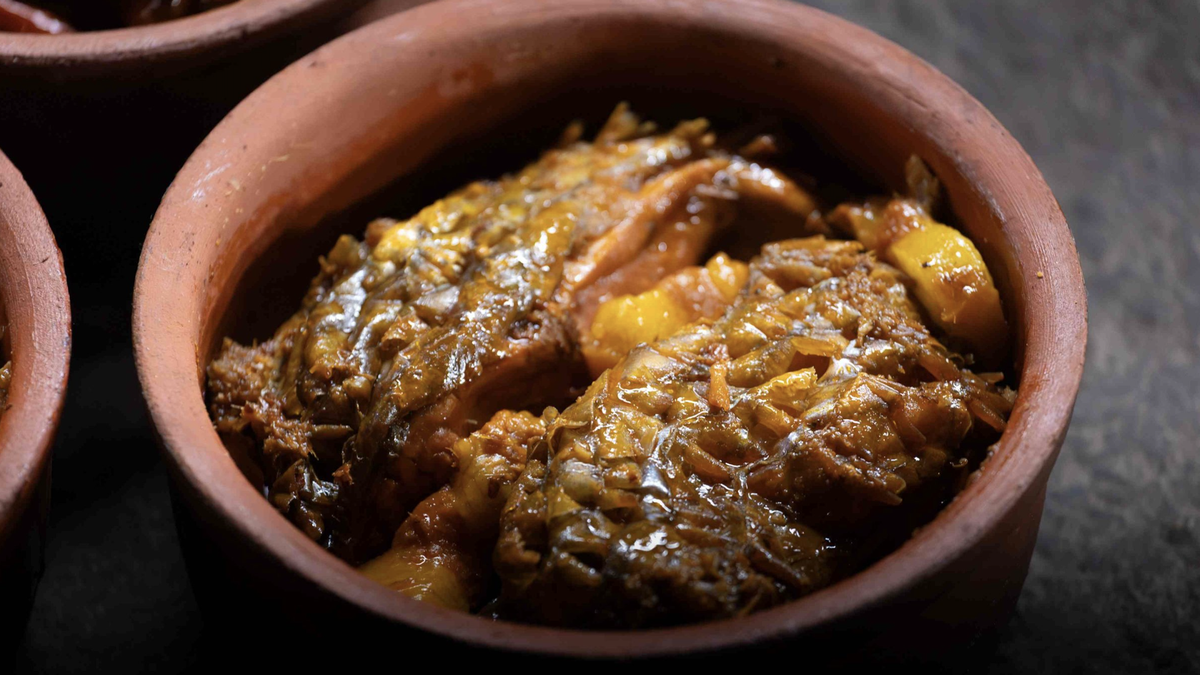
A bowl of rice noodle soup with shrimp, crab, and coconut milk. Photo: THUY TIEN
The whole family gathered around, enjoying a steaming bowl of banh canh (Vietnamese rice noodle soup), savoring each bite. The rich broth, flavored with crab roe and coconut milk, the chewy noodles, and the sweet pieces of fish and crab filled the air, warming the stomach with every bite. On a chilly day, sitting together around the table felt truly comforting.
Rice noodle soup can be prepared in either a sweet or savory style. The sweet version typically uses palm sugar or cane sugar, cooked with ginger and pandan leaves, and topped with rich coconut milk for a creamy texture and enticing aroma. The savory version varies by region; some use freshwater fish, crab, or shrimp, while others use duck or chicken as the main ingredients. Despite the differences in cooking methods, the common thread remains: the handmade, chewy, and rustic rice noodles blend perfectly with the rich, flavorful broth.
Nowadays, rice noodle soup with hand-cut noodles isn't as popular as it used to be, but whenever it's drizzling or windy in the evening, I crave the fragrant aroma of the broth simmering over my mother's wood fire. I miss not only the dish itself, but also the clacking sound of the stone mill, my mother's nimble hands rolling the dough and slicing the noodles, the aroma of the crab roe sautéed with onions, the joyful laughter around the boiling pot, and even the feeling of sitting there waiting with a rumbling stomach...
Rice noodle soup is not just a dish; it's a part of childhood memories, the love in each strand of noodles that my mother kneaded by hand, and the rich, unforgettable taste of home.
Source: https://baoangiang.com.vn/nho-banh-canh-bot-xat-a461353.html


![[Image] Bridges and roads connecting the eastern part of Ho Chi Minh City](https://vphoto.vietnam.vn/thumb/1200x675/vietnam/resource/IMAGE/2026/04/16/1776328595108_ndo_br_bh-vt5-jpg.webp)



























































![[Infographic] Details of the Hanoi-Quang Ninh High-Speed Railway Project](https://vphoto.vietnam.vn/thumb/402x226/vietnam/resource/IMAGE/2026/04/16/1776338188424_anh-man-hinh-2026-04-16-luc-18-16-10.png)
![[Photo] National Assembly Chairman Tran Thanh Man meets with the Speaker of the Georgian Parliament](https://vphoto.vietnam.vn/thumb/402x226/vietnam/resource/IMAGE/2026/04/16/1776338494029_anh-man-hinh-2026-04-16-luc-18-21-21.png)































Comment (0)