


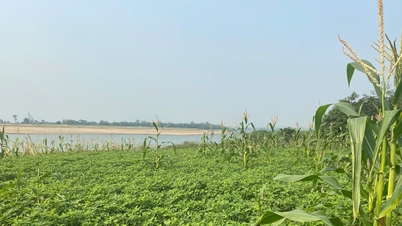
The Tam Ngan canal, in the Tri Ton commune area, crosses the Long Xuyen Quadrangle plain. Photo: THANH CHINH
From barren land to lush green fields.
I remember our ancestors, those who left their barren homeland in Central Vietnam, sailing on small boats, braving the dangers of the sea and wild animals to reach a place where "mosquitoes buzz like flutes, leeches crawl like noodles." With calloused hands and sun-weathered bare shoulders, they transformed the desolate land into lush green fields, turning small canals into vital waterways for trade.
Someone once said that opening up the South was a journey of courage and patience. But above all, it was a journey of faith. The people of the past believed in the land's generosity, believing that it would repay their sweat and toil. And indeed, the South has never let them down. The land provides food, the water provides fish. Every branch of the river, every canal, is like the lifeblood nourishing the entire region.
Sitting on this land today, looking at the lush orchards and rice paddies heavy with grain, I am grateful to the hands that sowed the seeds of life hundreds of years ago. They not only opened the land but also opened their hearts and minds. The generous and compassionate spirit of the people of Southern Vietnam was formed, becoming a distinctive cultural characteristic of this region. Sharing a delicious morsel, dividing a stretch of river – that is the way of life I still see in the innocent eyes and smiles of the people of the Mekong Delta today.
Remembering the pioneers of the land means remembering simple stories imbued with humanistic values. Stories of women with their hair tied up high, wading through swamps to go to market, of old men carrying baskets on their backs, hauling fresh water across the canals. They left us not only fields, gardens, canals, and waterways, but also life values, lessons about humanity and sharing.
The land of Southern Vietnam has changed a lot today, but every time I stand before the Hau River or listen to the gentle sound of waves on the Western coast, I still feel the echoes of the past resounding in my heart. And I know that, no matter how much time passes, the hearts of the people of the South will never forget the first steps taken through mud and hardship, to sow the seeds for a prosperous and tolerant homeland.
A bright future
Remembering the pioneers who cleared the land, we remember not only the stories of their settlement but also the lives intertwined with this transformation. From their first steps on this land, they learned to live in harmony with nature, understanding the ebb and flow of the water, the fury of the river, the alternating seasons of rain and sunshine… Nature is a challenge but also a companion, an indispensable source of life.
Once, I gazed at the gentle Hau River, winding like a soft silk ribbon. An old man beside me, with snow-white hair, spoke in a deep voice: "Those who pioneered the land were those who sought life. But they didn't just seek for themselves; they sought for their descendants." His words were etched into my mind. Those ancestors, though unarmed, fought against countless dangers to protect every inch of land, every drop of water.
I think of rivers like the Tien River and the Hau River, not only the lifeblood of Southern Vietnam but also historical witnesses, marking the footsteps of those who pioneered the land in the past. In the memories of our grandparents, these rivers not only carried silt but also stories of sailing boats braving the waves, days of wading through mud to plant rice, and those who fell defending the land during the difficult years of war.
To the South, the fields remain green, the floating markets still bustling with laughter and conversation, but if you listen carefully, you will hear the echoes of history, of generations before. Those who pioneered this land taught us not only how to cultivate the fields and dig irrigation ditches, but also how to love the land, to cherish every inch of land stained with blood and sweat.
In the eyes of the farmers, old stories still linger. On moonlit nights, they tell their children and grandchildren about the mother from the U Minh region who tirelessly caught crabs and snails while remaining loyal to the revolution; about Uncle Tam from Mien Thu who rowed his boat to transport soldiers into the swamps; or about those who dared to confront wild animals with only a hoe and unwavering loyalty… These stories are not distant legends, but lessons about overcoming hardship and silent sacrifice for a brighter future.
Today, as I set foot on these lands, filled with gratitude, I suddenly realize that each step I take is continuing a greater journey, a journey of preserving and nurturing what the pioneers left behind. This responsibility is not a burden but a source of pride. For the land is not just land, but the soul of a nation, a symbol of perseverance and the will to survive.
The land of the South is quiet yet tolerant, fertile yet gentle, like a mother constantly protecting her children through the ups and downs of history. But without the bare feet stained with mud, without the calloused hands that planted each sapling and dug each ditch, would the land have become a homeland, would the water have become a home?
Perhaps, one day, I too will tell my grandchildren these stories. About the people who built up the prosperous South, about their open hearts, and the message: "Hold onto the land, for the land is our homeland." In every breath of the land, in every harvest season, I believe that the South will forever remember the pioneers, those who came before us, so that today we can stand here, proudly looking towards a bright future.
TRAN NHIEN
Source: https://baoangiang.com.vn/nho-nguoi-xua-mo-dat-phuong-nam-a477827.html






















































































Comment (0)