

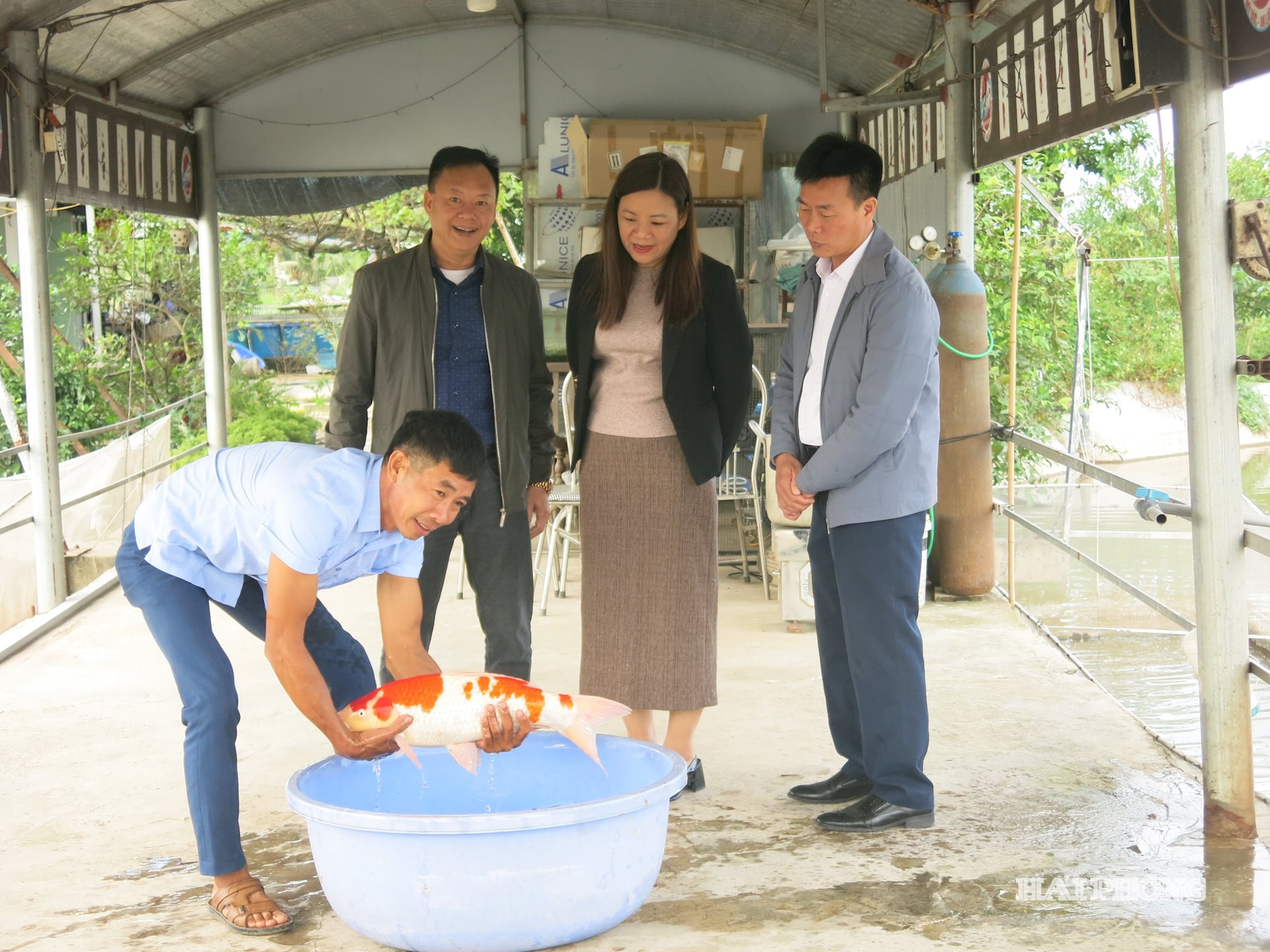
This is an opportunity for people who raise ornamental fish to increase their income.
Diversity
Vu Van Tang's farm is located in the most remote area of Bieu Da village, but customers still don't hesitate to come to this familiar address to buy Koi fish because the farm is famous for having many beautiful Koi carp varieties.
Mr. Tang said that during this Tet holiday, the number of customers is expected to increase by 20%. The farm currently has about 50 expensive Koi carp (around 5-10 million VND/fish) specifically for high-end customers and about 1 ton of Koi carp at regular prices to meet the needs of customers who want to keep them as pets during Tet.
He hopes that the current number of koi carp in his farm will be sold out by the Lunar New Year of the Year of the Horse.
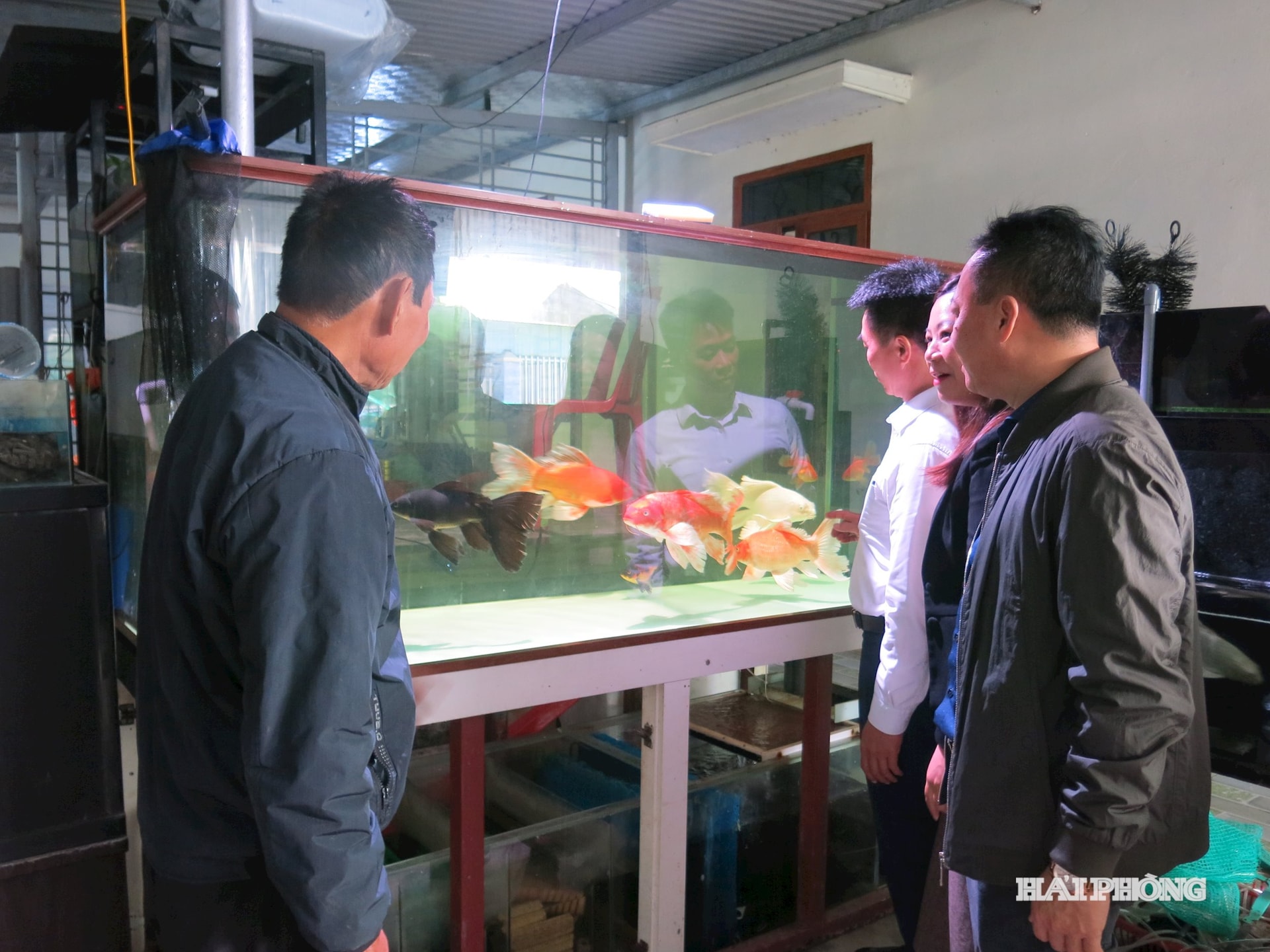
Deep within Biều Đa village, many households in the residential area and those in the fields also raise ornamental fish. The households in the village raise a wider variety of fish, such as: flowerhorn cichlids, lucky bamboo cichlids, angelfish, and basket-tailed catfish… During the end of the year, these households experience a higher volume of customers buying fish than usual.
According to the locals, while product consumption has increased, prices haven't fluctuated much because the ornamental fish farming business mainly relies on regular customers who maintain familiar business relationships throughout the year. During holidays, demand may increase slightly, but the people of Biều Đa cannot raise prices too high as it would risk losing their regular customers…
Dao Dang Trung's fish farm in the village currently attracts many customers who enjoy visiting and placing orders because he is raising fish that are considered "hot trends" today, such as: peacock fish, consort fish, lionfish, and expensive fish originating from China.
Raising this type of fish requires genuine passion, a willingness to take risks, and a gradual learning process. However, the risk remains high, with only about 30% success rate, especially when breeding them, where the survival rate is very low, only 25-30%, compared to 85-90% for other fish species. Therefore, this fish always fetches a good price on the market and is always in high demand, especially during holidays and festivals.
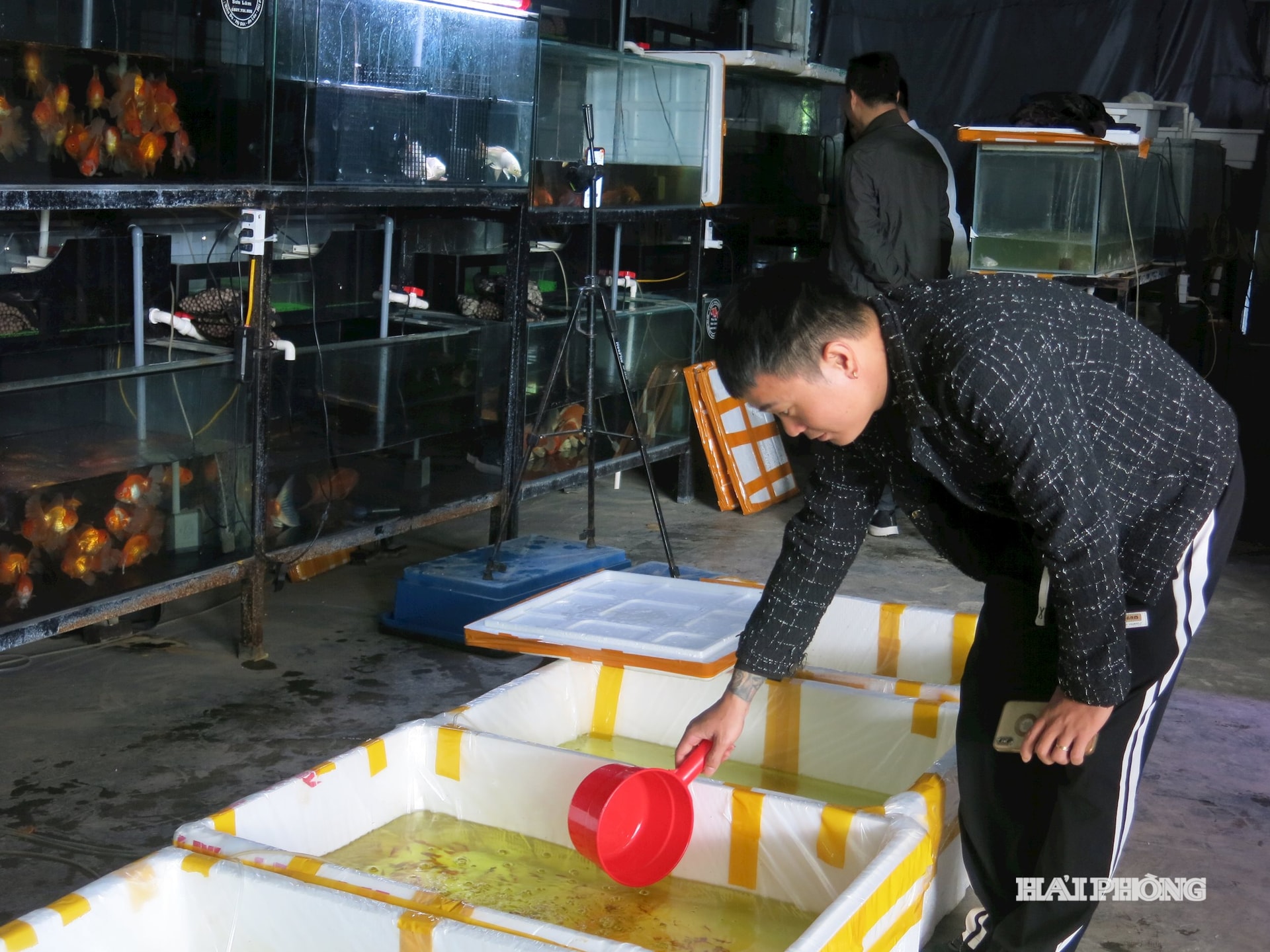
Developing on a village-wide scale.
According to Mr. Nguyen Sy Duc, Chairman of the An Khanh Commune Farmers' Association, initially, only a few households in Bieu Da village had a passion for keeping ornamental fish and experimented with small-scale breeding within their homes. However, these households later realized that this profession provided income and showed a tendency to expand. To date, nearly 30 households in the village have developed the profession, expanding their ornamental fish farming operations in terms of area and diversifying species, raising everything from small, affordable fish to expensive and trendy species.
Currently, the total area for ornamental fish farming in the commune is approximately 10 hectares. Local households are increasingly expanding their ornamental fish farming areas in abandoned rice paddies or low-lying rice paddies with low yields…
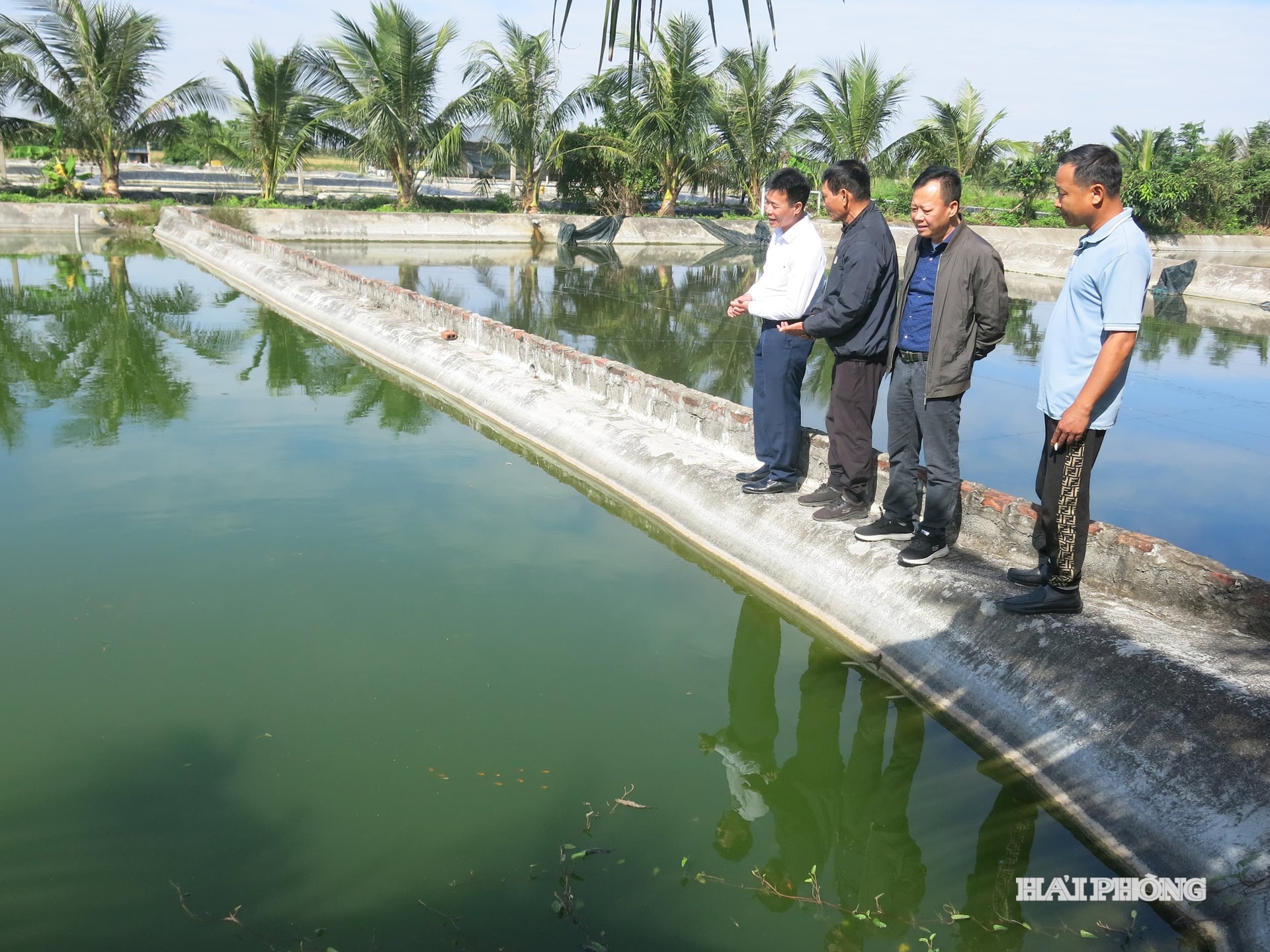
Mr. Nguyen Tuan Anh used to work at a mechanical workshop in the center of the commune and had a passion for keeping ornamental fish. Initially, he only bought ornamental fish to keep as pets, but over time, he gained experience and realized that buying fish fry was quite expensive, so he started breeding and raising his own fish fry.
He actively sought out more experience from fish-keeping clubs and groups, then rented a low-lying plot of land in the local area to start breeding ornamental fish. Initially, he raised goldfish, Koi carp, and flowerhorn fish, but later expanded to raise many different types of fish, some of which he now sells for 4-5 million VND per pair.
According to ornamental fish breeders, this profession is currently bringing high economic value to households, but most households utilize their family's land, resulting in small and cramped fish ponds. In the entire village, only 5-6 households have boldly consolidated their land and converted their fields into ornamental fish ponds.
Notably, the water sources used for aquaculture production are mixed with residential wastewater, easily causing environmental pollution. Some households are currently producing in remote, low-lying areas far from the commune center, with difficult transportation access, especially in areas with inconvenient access to electricity and water, thus facing difficulties.
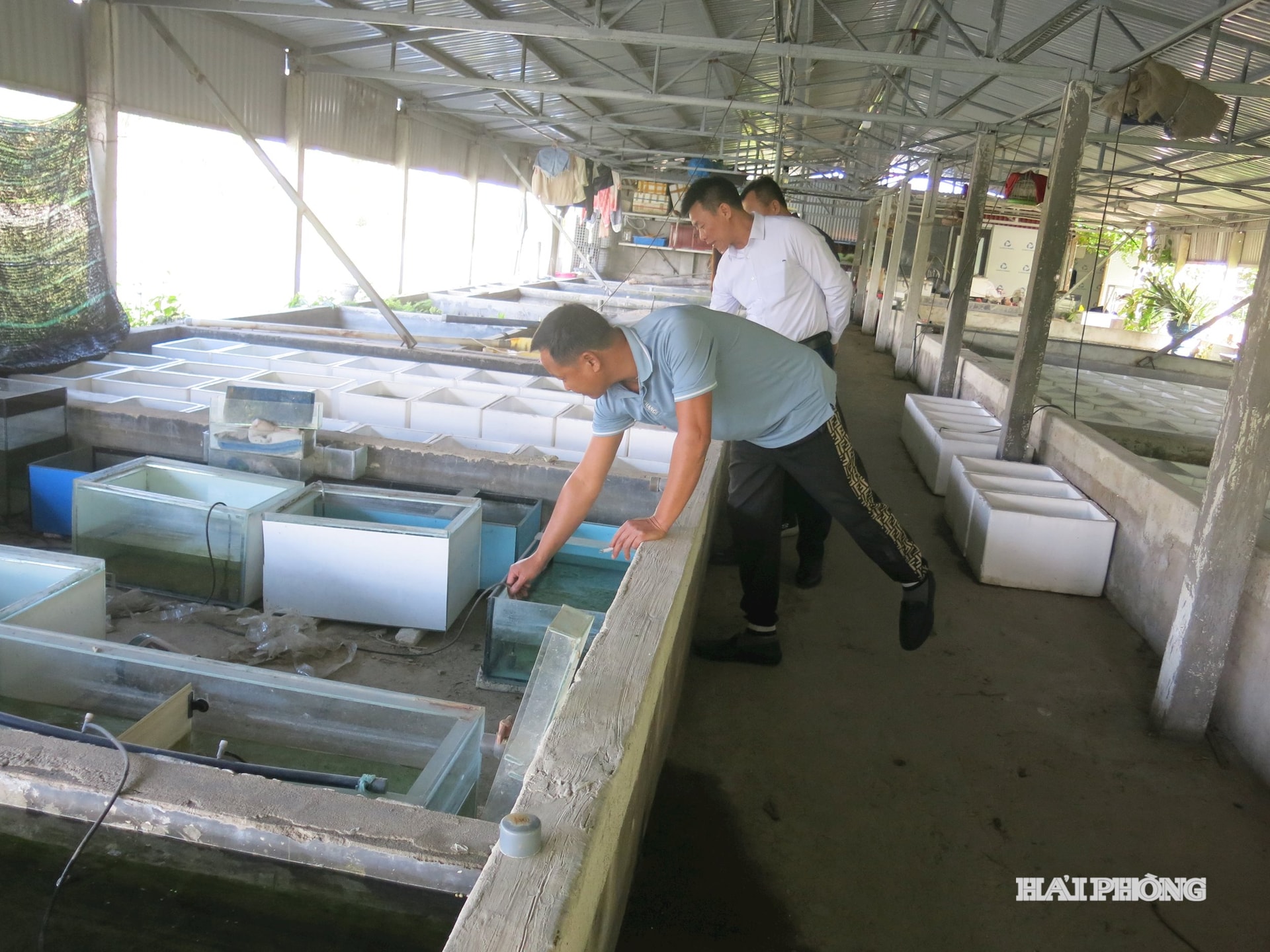
Mr. Vu Van Tan, the owner of a farm in Bieu Da village, said that the farm not only raises ornamental fish but also combines livestock farming, including tilapia farming. Meanwhile, the power station in this area, which was mainly jointly invested in by local people 16 years ago, is now overloaded due to the need for production expansion. The power supply is no longer sufficient, and weak electricity is affecting production activities.
Not only Mr. Tan, but also other fish-farming households in Bieu Da hope to be given the opportunity to expand their production area in abandoned rice fields; and receive support in terms of electricity and water supply to better meet their production needs and prosper on their homeland's soil.
Ho Thi HuongSource: https://baohaiphong.vn/nhon-nhip-lang-ca-canh-bieu-da-532284.html

![[Video] Sunset at Lap An Lagoon – Where the sun sets over the fishing nets](https://vphoto.vietnam.vn/thumb/1200x675/vietnam/resource/IMAGE/2026/05/31/1780192137701_beach-landscape-sea-water-nature-grass-745871-pxhere-com.jpeg)

















![[Video] Sunset at Lap An Lagoon – Where the sun sets over the fishing nets](https://vphoto.vietnam.vn/thumb/800x450/vietnam/resource/IMAGE/2026/05/31/1780192137701_beach-landscape-sea-water-nature-grass-745871-pxhere-com.jpeg)









































![[Video] Sunset at Lap An Lagoon – Where the sun sets over the fishing nets](https://vphoto.vietnam.vn/thumb/402x226/vietnam/resource/IMAGE/2026/05/31/1780192137701_beach-landscape-sea-water-nature-grass-745871-pxhere-com.jpeg)




























Comment (0)