

Before its official establishment on March 3, 1959, under the name Armed Police, the soldiers tasked with border defense and internal security along the entire northern border had to contend with expansionist intentions from neighboring China.
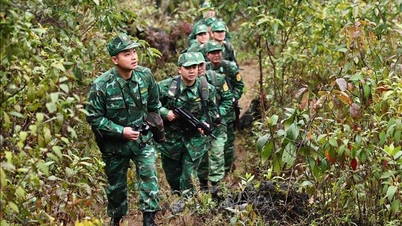
The armed police (now the Border Guard) have been silently and tenaciously fighting to protect the territorial sovereignty of the Fatherland for more than half a century...
Keep watch over Nam Cum every hour.
The Nậm Cúm stream is a tributary of the Nậm Na river, running along the Vietnam-China border from Sì Lờ Lầu commune through Ma Ly Chải, Phù Sang, and then to the Ma Lù Thàng border gate in Ma Ly Pho commune (Phong Thổ district, Lai Châu province) before flowing into the Nậm Na river. Every stone along this stream, a natural border, bears the footprints, sweat, and blood of those who defended the land.
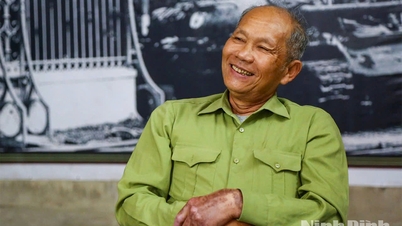
Mr. Ly Chao Xuan, 70 years old, served as the Party Secretary of Ma Ly Pho commune for three terms, so he is very knowledgeable about land and border issues. Along the stream runs the terraced rice fields of the people of Pa Nam Cum village. In the 1960s and 1970s, China helped Vietnam build the Friendship Road 12 connecting Pa Nam Cum with Phong Tho town. At that time, there was no Friendship Bridge connecting the two countries, and the stream was deep, so the Chinese side built an underground road for trucks to cross. After the road was completed, rain and floods deposited soil and rocks, causing the underground road to gradually rise and obstruct the flow. The stream water stagnated, rising and flowing along the new channel deep into our territory, 50-300 meters in. The Chinese side brazenly claimed the new stream as the border, and then built a concrete structure right at the water's edge on their side. "When we protested, they said they were building an underground reservoir to hold water. In reality, it was an obstacle to divert the water flow, causing erosion on our side," said Mr. Ly Chao Xuan.
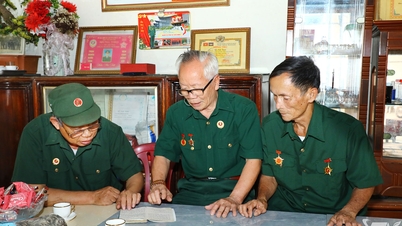
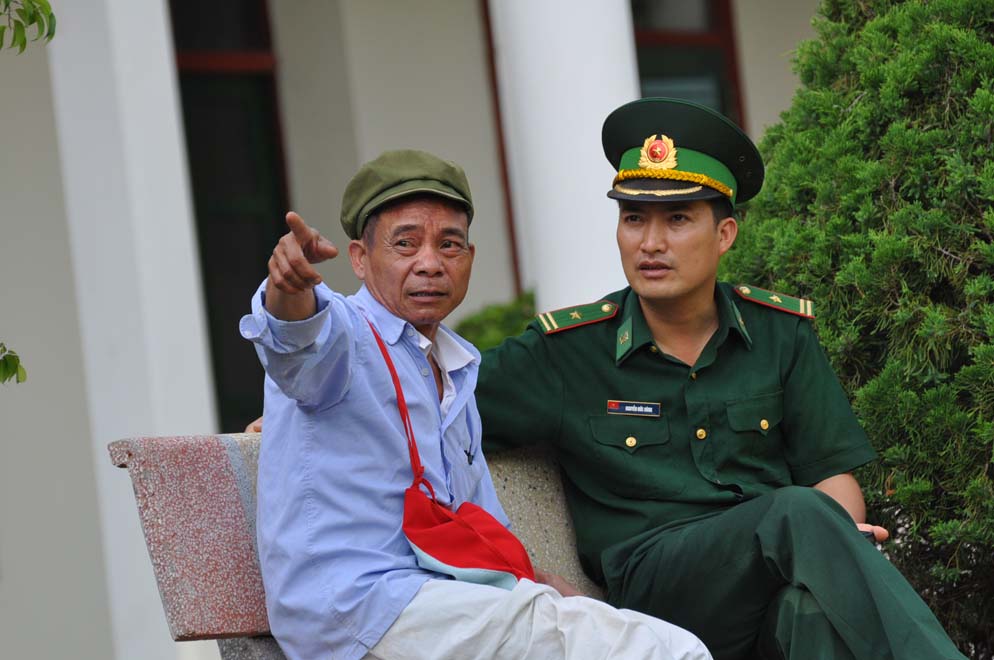 Mr. Ly Dan Quay recounts the story of defending his land with the border guards at Ma Lu Thang outpost. |
Facing the excavator
From 1997, 1998, and early 2003, China constructed a 270-meter-long embankment along the border river to protect the Kim Thuy Ha border economic zone, causing serious erosion on the Vietnamese side of the river. To protect our border riverbank, in March 2003, the Lai Chau Provincial People's Committee began construction of the embankment, which was completed in 2004. In June 2004, in accordance with a high-level agreement between the two countries, construction ceased. However, from mid-June 2006, the Chinese side resumed using excavators to drop gabions and sandbags at the base of their embankment to prevent erosion. Specifically, on the afternoon of March 11, 2007, in the Chinese embankment area, about 600 meters downstream from the Friendship Bridge (opposite the gas station in the Ma Lu Thang Border Economic Zone, under the management of Border Guard Post 279 - Ma Lu Thang), China mobilized dozens of workers to stack stones into sandbags to block half of the Nam Cum stream's flow and also brought in excavators to dump soil. The Ma Lu Thang Border Guard Post requested the Chinese side to immediately stop these activities. By noon the following day, the Chinese side had temporarily stopped construction and moved two excavators to within 700 meters of the border...
The story of the border river is brief, but for the people of Pa Nam Cum village, it represents hours of protracted struggle and the sacrifice of their lives. Mr. Dong Van Pon, a 90-year-old Thai man, is one such person. Born in 1928 in Muong So (Phong Tho district), Mr. Pon experienced two wars against the French and the Americans. After being discharged from the army, Mr. Pon's family and 34 other Thai households were among the first to migrate from Muong So to Pa Nam Cum.
Mr. Pơn recalled: before the Vietnam-China border demarcation (2009), the lack of clarity in delimiting the land border created many hotly contested points along the border between the two countries, including Ma Lù Thàng. In this area, the Chinese side frequently used excavators to build embankments on the river and construct bridges and roads on their land. In narrow, shallow sections of the river, during construction, China encroached close to the border line located in the middle of the river, simultaneously altering the flow, widening the riverbed, leading to a shift in the border line, and causing erosion of the riverbank on the Vietnamese side.
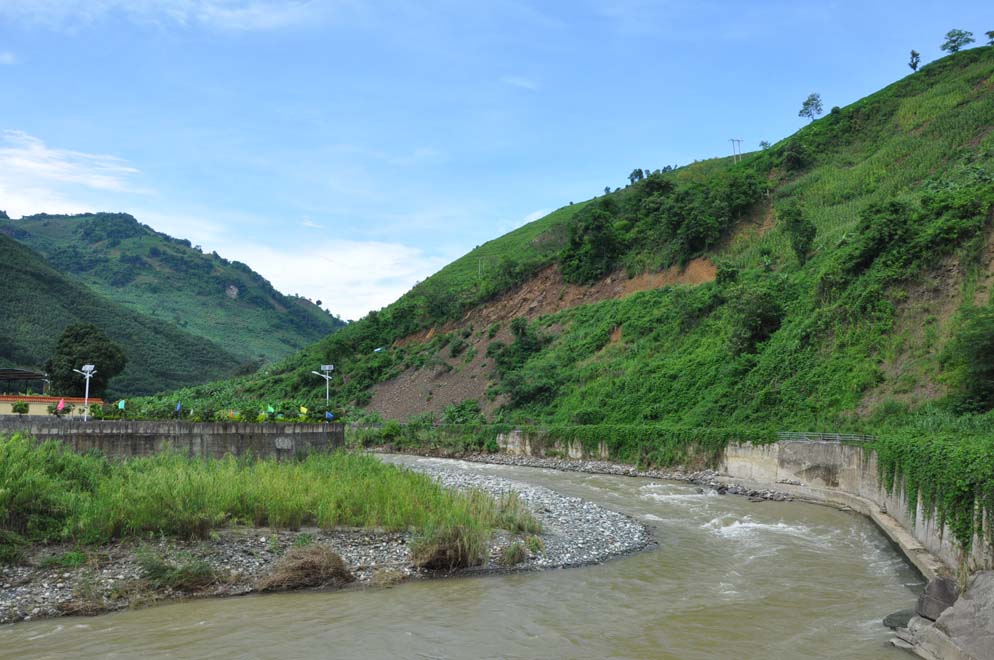 The section of the Nam Cum stream where the incident occurred demonstrates the sovereignty of the people of Pa Nam Cum village (Ma Ly Pho commune, Phong Tho district, Lai Chau province). |
“We, along with the border guards, assigned people to monitor the excavators. Whenever they started operating, we would call each other to run down to the river and demand that the excavator operators stop. The villagers, seeing this, dropped everything and came to help, standing close together like a wall,” said Mr. Ly Dan Quay (61 years old, Pa Nam Cum village).
For days on end, all 60 households of Pa Nam Cum village stood in the freezing cold, taking turns maintaining the riverbed in its current state, preventing unauthorized construction without prior negotiation and consultation with relevant authorities from both sides. Anyone who couldn't stand due to the cold went home to change clothes, and someone else took their place.
On the morning of March 12, 2007, when the struggle reached its peak, a Chinese excavator, disregarding the crowd, lowered its bucket to dig earth from the riverbed. Immediately, Mr. Dong Van Pon jumped onto the excavator's bucket, stood on its enormous teeth, and shouted: "We demand a halt to the construction! This is a border river. We request respect for the status quo; this is our land!" Faced with Mr. Pon's unwavering resolve, the people of Pa Nam Cum village, followed by hundreds of people from Ma Ly Pho commune, rushed to provide support. The Chinese construction unit had to withdraw from the site and agree to negotiate...
During numerous meetings and working sessions at the grassroots level between the two sides, as well as in provincial, regional, and central-level talks, the Vietnamese side demonstrated flexibility in strategy while remaining steadfast in its principles of protecting national territory and sovereignty. From November 6-9, 1959, in Nanning (China), representatives of the Vietnamese Government held talks with the Chinese Government on the Vietnam-China border issue. The Vietnamese side presented the border situation from the time of the liberation of North Vietnam until the time of the talks and emphasized to the Chinese side the situation of counter-revolutionary elements from China infiltrating Vietnam. In particular, the issue of encroachment and settlement deep into Vietnamese territory and violations of the national border was also clearly raised by the Vietnamese Government representatives... In response, the Chinese side also recognized that the issues raised by Vietnam were "unacceptable." Regarding the encroachment on Vietnamese land, the Chinese side ignored it or seemed to defend the wrongdoing. On the issue of illegal farming and settlement, the two sides reached an agreement and signed a joint document to resolve the situation appropriately. (Source: Border Guard Soldier , People's Public Security Publishing House, 1998) |
Source: https://thanhnien.vn/nhung-cot-moc-song-giu-bien-cuong-185737259.htm




















































































Comment (0)