

At 9 a.m., the phone at the Nghe An Psychiatric Hospital's mental health counseling hotline rang. On the other end was the choked voice of a mother recounting how her 7th-grade daughter had suffered many sleepless nights, becoming terrified and bursting into tears at the mere mention of going to school.
That's just one of many calls that mental health professionals receive every day. Behind each call is a student struggling with academic pressure, exams, and the silent crises of adolescence.
In the small room of the Diagnostic Imaging and Functional Examination Department, the telephone rang almost incessantly. Psychology graduate Dang Thi Ha gently inquired, patiently listening to the pauses on the other end of the line. After nearly 20 minutes of counseling a mother whose daughter suffered from prolonged insomnia, she advised the family to take the child to the hospital for a direct examination because the symptoms of psychological instability had persisted for several days.

After the call ended, Ms. Ha was speechless. In nearly 20 years of working as a psychological counselor, she had never seen such a rapid increase in the number of students experiencing mental health problems as she has now. “Most of the students who come for consultations are in middle and high school. Some suffer from insomnia due to exam pressure, some panic whenever they receive a test, and some are as young as 13 or 14 but are already experiencing prolonged anxiety,” Ms. Ha shared.
What troubles her most is that many parents discover the problem too late. Many families only bring their children to the hospital when teachers complain or when the children have already engaged in self-harming behavior.
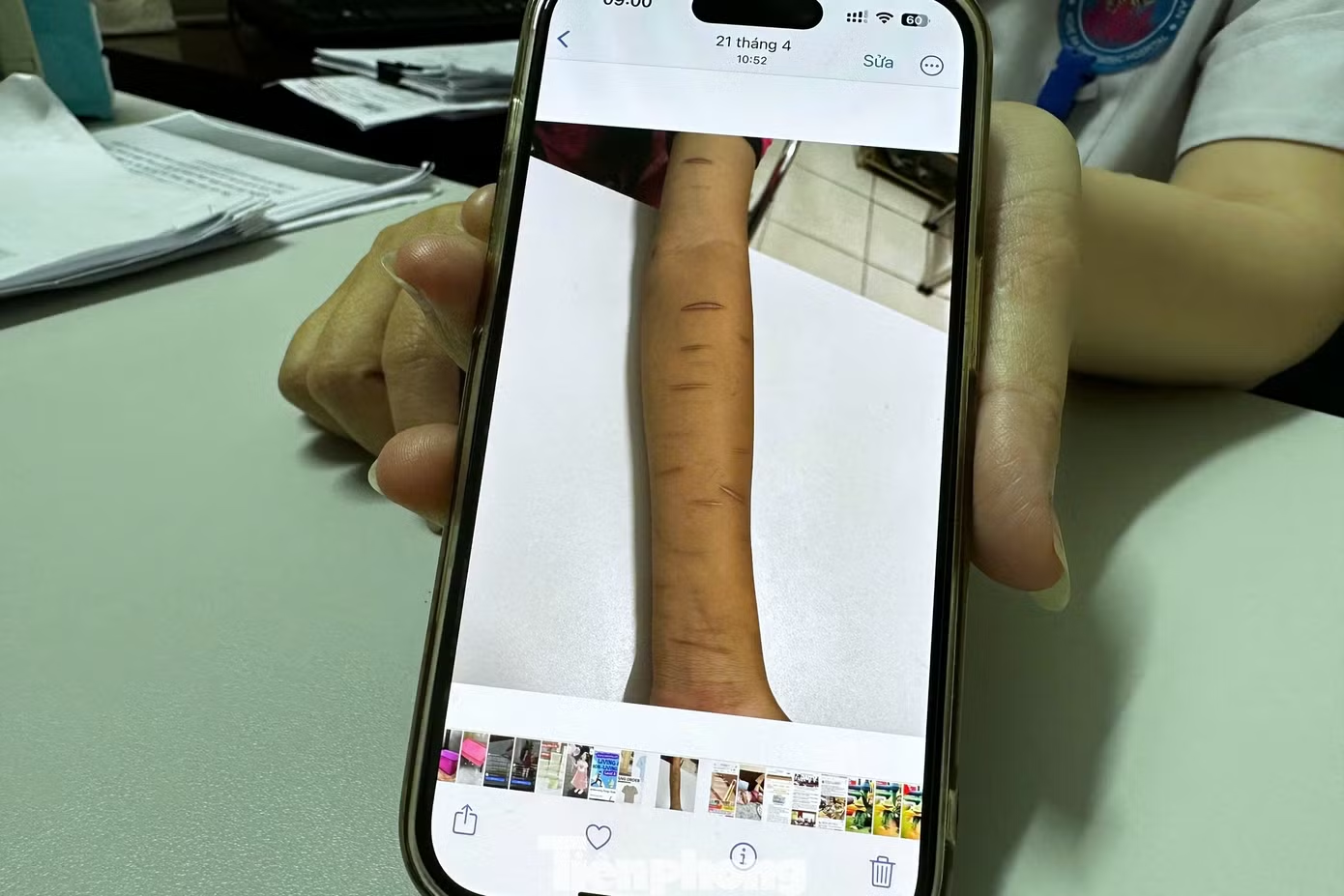
Ms. Ha still remembers the case of a 9th-grade girl preparing for the 10th-grade entrance exam. She was a good student, well-behaved, but constantly under pressure to get into a prestigious school to meet her family's expectations. For months, she pushed herself to study late into the night, with almost no time to rest. When her parents discovered scratches on her hands, she fell into a state of prolonged stress and required medication combined with psychotherapy.
"There are children who live in constant fear of disappointing their parents. Just getting lower-than-expected grades can cause them immense self-reproach," Ms. Ha said.
The female doctor said that the age of 8th and 9th grade is a period of significant psychological and physiological changes. When academic pressure persists without support from family, children are very susceptible to psychological crises.
Invisible "wounds"
Beyond the pressure of grades, many students also carry the trauma of school and social media. Psychologist Nguyen Thi Thuy Dung, from the Department of Diagnostic Imaging and Functional Examination, recounts a case where a parent called near midnight because they discovered their daughter was afraid to go to school. Every morning, before going to school, she would cry, have stomachaches, and try to stay home. After many conversations, the family learned that she had been isolated by her classmates for months. “The scary thing is that many students choose to remain silent. They are afraid that speaking out will lead to scolding or make things worse,” Ms. Dung shared.

According to Ms. Dung, school violence today is not just about physical altercations. Many students are harmed by ridicule, malicious comments, or ostracism on social media. Some female students have been hospitalized with arms covered in old and new wounds overlapping each other. Some students pull out their own hair when they are overly stressed. Some students tremble with fear just walking through the school gate because they are haunted by the whispers of their friends. "When asked why they hurt themselves, one student said that it makes them feel better. It's how they release their emotions when they don't know what else to do," Ms. Dung recounted.
Worryingly, many parents don't recognize the subtle changes in their children. They assume that as long as their child is attending school normally, everything is fine. Meanwhile, according to doctors, symptoms such as insomnia, withdrawal, irritability, fear of going to school, reduced social interaction, or self-isolation can all be early warning signs of a psychological crisis.

Dr. Ho Giang Nam, Director of the Nghe An Psychiatric Hospital, said that anxiety disorders, stress, and depression are now showing a clear trend of affecting younger people. However, many families are still hesitant to take their children for psychological examination. "Many parents only seek medical help when their children have already fallen into a severe crisis," Dr. Nam said.
Based on that reality, Nghe An Psychiatric Hospital has launched a mental health counseling hotline to create an additional support channel for the public, especially students and parents.
According to Mr. Nam, the important thing now is not just treatment, but also changing society's perception of mental health. Because behind the impressive report cards, the compliments like "the ideal child," or the expectations for achievement, many children are growing up under pressure. "Sometimes, what they need most is not another class or a new goal, but simply someone willing to sit down and listen," Mr. Nam shared.
Source: https://tienphong.vn/nhung-cuoc-goi-cau-cuu-tu-tuoi-hoc-tro-post1843760.tpo
































































































Comment (0)