

Immediately after Deputy Prime Minister Pham Thi Thanh Tra signed and issued the plan to launch a 500-day intensive campaign to search for, collect, and identify the remains of fallen soldiers, many remains were discovered and brought to the surface, bringing to a close the long and arduous journey of these heroes.
In just the first few months of 2026, dozens of remains of fallen soldiers were found in Quang Tri province. In particular, new discoveries have been continuously recorded in the Quang Tri Citadel area. At one point, more than 30 remains of fallen soldiers were discovered in a single search operation. And that number continues to rise, as day after day, hour after hour, the task force silently "awakens" the memories buried deep in the earth.
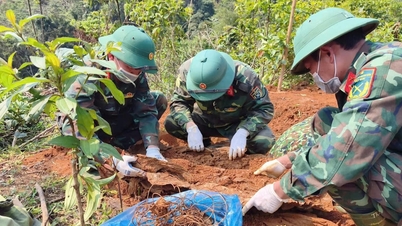
The atmosphere at the excavation sites in Cup, Cha Ly, and Cu Bai villages (Huong Lap commune) these days is both urgent and solemn. Each shovel stroke, each layer of soil is carefully removed. No one speaks loudly, because everyone understands that beneath the earth lies the memory of war, the blood and bones of those who fell for the Fatherland.
.jpg)
According to reports, within a short period of time during the intensive campaign, authorities in Quang Tri discovered numerous locations suspected of containing the remains of fallen soldiers in the area. Some remains were recovered along with artifacts such as buttons, pieces of canvas, and rubber sandals… These simple clues, however small, are enough to bring tears to the eyes of those who witness them. And each discovery is a deeply moving experience.
.jpg)
A representative from the Fallen Soldiers' Remains Collection Team, Economic -Defense Brigade 337 (Military Region 4), shared: “We consider this not just a task but also a sacred responsibility. Every time we discover the remains of a fallen soldier, the team members are deeply moved. Sometimes we have to stop working for a few minutes, no one says anything, we just bow our heads in remembrance.”
The search process faced numerous difficulties due to the changing terrain over time, the disturbed traces of war, and the dwindling information from witnesses. However, with high determination, the forces persevered, staying in the area and following even the smallest clues.
Not only the authorities, but also the local people have always been involved in this journey. Many elderly people, carrying the memories of the war, have become valuable "living witnesses." Mr. Ho Quan, 75 years old, a veteran in Huong Lap commune, said:
"In the past, the bombing was fierce, and many soldiers died before they could be buried. Now, seeing them found and brought back to the cemetery, I feel a little lighter."
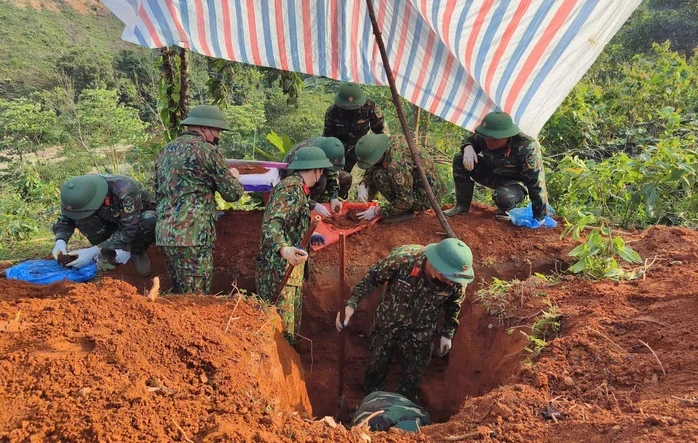
Authorities in Quang Tri province are currently devoting all their efforts to effectively carry out the 500-day intensive campaign to search for, collect, and identify the remains of fallen soldiers.
Information from the public, no matter how small, can become crucial clues helping search teams pinpoint locations. Alongside the recovery efforts, the identification of the remains of fallen soldiers is also being intensified. Biological samples are carefully collected for DNA testing, offering hope to many families anxiously awaiting news of their loved ones.
Mr. Hoang Nam, Permanent Vice Chairman of the Quang Tri Provincial People's Committee, said that the locality has directed units to coordinate with specialized agencies to conduct DNA testing and compare it with data from relatives. Although it takes a lot of time and effort, this is still the most effective method to identify the fallen soldiers.
For many families, finding the remains of a loved one is a miracle; and identifying them represents a fulfillment after decades of waiting.
The war is long over, but its consequences remain. Beneath the ground of Quang Tri province in general, and the Quang Tri Citadel area in particular, lie many fallen soldiers yet to be found. The 500-day and night campaign was not just an administrative operation, but also a reminder of the responsibility of gratitude that today's generation has to show.
"We consider this a race against time. The sooner we find them, the sooner we can help their families have a place to worship and offer incense," shared an officer from Team 584, Political Department, Quang Tri Provincial Military Command.
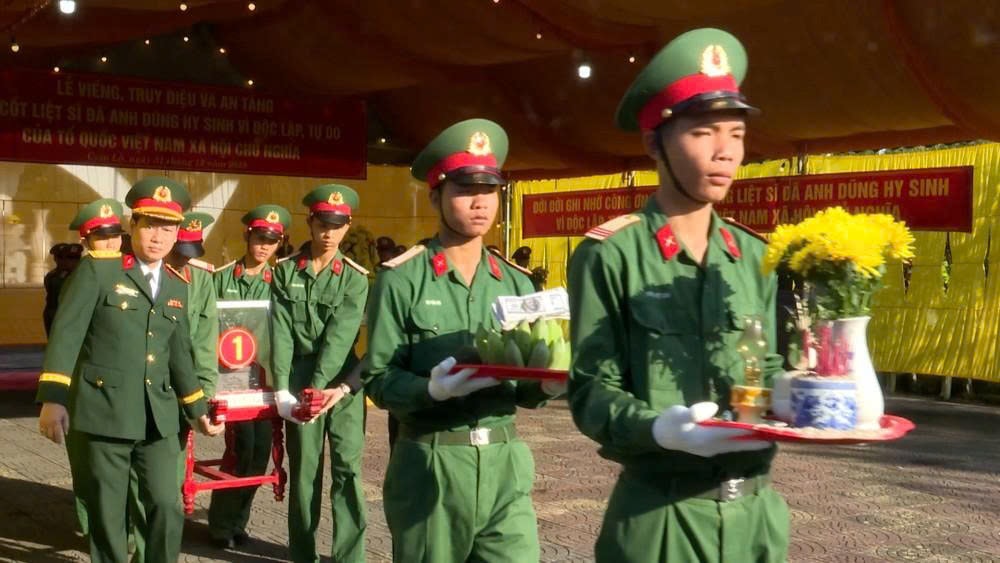
In the harsh sun and wind of Central Vietnam, these people silently dig, listening for every small sign from the earth. Because they believe that somewhere beneath the soil, there are still soldiers waiting for the day of their return. And each time a fallen soldier's remains are found, it is not just the end of a journey, but also the beginning of memories, gratitude, and the belief that no one is forgotten.
Source: https://daibieunhandan.vn/nhung-cuoc-tro-ve-tu-long-dat-quang-tri-10411117.html
![[Image] The appearance of the Bien Hoa-Vung Tau expressway before its opening.](https://vphoto.vietnam.vn/thumb/1200x675/vietnam/resource/IMAGE/2026/03/25/1774430324663_ndo_br_2-resize-6064-jpg.webp)

































































Comment (0)