

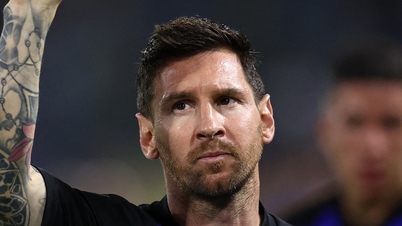
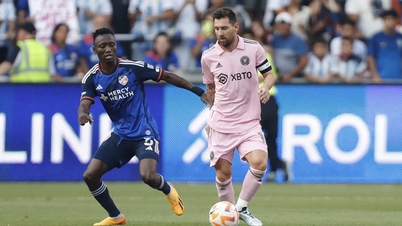
Playing in the championship playoffs, on baseball fields, sometimes on artificial turf, and in sub-zero temperatures will be some of the challenges Lionel Messi will face when he moves to the US to play for Inter Miami.
The play-offs. The most novel thing Messi will experience in MLS is the post-season games. In most national leagues around the world , including La Liga and Ligue 1, where Messi has played, clubs play two legs against all opponents, both at home and away, with the team that earns the most points winning the championship.
But MLS operates under different rules. In the US, clubs play a regular season of 34 games, and the team with the most points receives a fan-dedicated trophy called the Supporters' Shield. But this is just the warm-up for the season's main event, the MLS playoffs. Many fans view the Supporters' Shield as the grand prize, while the MLS organizers ignore it and instead congratulate the Supporters' Shield winner on being the "top seed" for the playoffs.
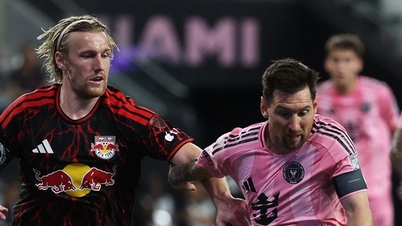
The MLS is divided into two divisions, East and West, with each team playing 34 games according to different schedules. The top nine teams in each division after the regular season qualify for the playoffs. Essentially, these 18 clubs compete in a mini-league, with the top two teams clashing in the MLS Cup to compete for the championship. That's how New York City FC finished fourth in the Eastern Conference in the 2021 season, but won the MLS title.
Many argue that this format devalues much of the season. In reality, 62% of teams qualify for the playoffs, so how important are victories in the first few months?
Inter Miami currently sits at the bottom of the Eastern Conference standings with 15 points from 17 games. However, with the arrival of Messi, the club could climb into the top 9 in the remaining 17 games to qualify for the playoffs.
But according to ESPN , this format helps the tournament maintain its element of surprise and prevents any single club from dominating, as underdog clubs can spring surprises in the play-offs.
There is no relegation. Inter Miami is currently bottom of the Eastern Conference standings, but Messi doesn't have to worry about the prospect of being relegated.
Not only is the MLS different in terms of the championship race, but it's also very different at the bottom of the table because there's no relegation. Major League Soccer has clubs whose rights are decided by their owners through franchise fees, and it's a closed league with no promotion or relegation.

If a club finishes last in the league, it still starts the following season on equal footing with the rest of the teams. For example, Austin finished second in the Western Conference in 2021, then second in the Western Conference, and reached the playoff semifinals the following season.
Many American fans have suggested that promotion and relegation would make the league more exciting at the bottom, punish underperforming clubs, and help players develop by further encouraging lower-league clubs. This isn't a new complaint, but club owners pay hundreds of millions of dollars to acquire a club partly because they know that once in MLS, they won't have to worry about relegation. No amount of poor performance or bad play can change that.
The tournament runs from February to December in extreme temperatures. Messi has played in many locations around the world. But many fans have jokingly said they'd like to see the Argentine superstar perform on a rainy weekday night in Stoke, just to see if he could shine under harsh weather conditions and the opponent's negative defensive tactics. But those hypothetical difficulties are nothing compared to what awaits Messi in North America.
Most national leagues around the world start their seasons in August and end in May, while MLS plays throughout the summer.
While much of North America endures wind and biting cold in the winter, summer is a time for people to get outside, eat, and often participate in a sport . Baseball has built a multi-billion dollar industry based on this weather shift.
When MLS launched, leaders asked themselves: "Do we want to try to draw people to this outdoor sport every weekend in cold, rainy, or snowy weather, or do we want to offer them sunshine and warmth?" The league chose not to follow the widely used European calendar, and adapted it to the American climate.
But the fact that MLS takes place in the summer doesn't mean the weather isn't an issue, as during this time of year, many cities in North America are very hot and humid. Wayne Rooney was reportedly very uncomfortable after signing with DC United in 2018, admitting: "I was so hot, I thought, 'What am I doing?'"
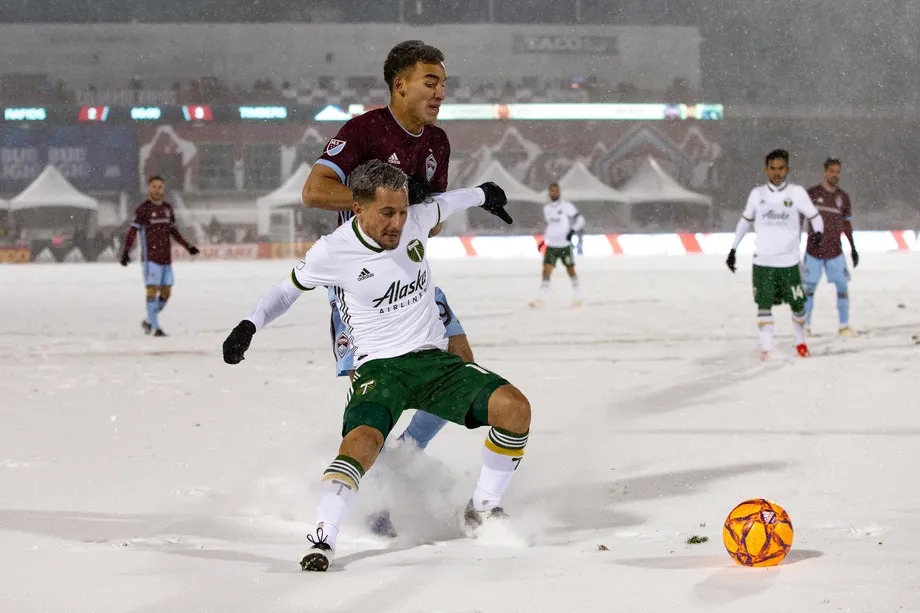
But the heat and humidity are just one problem. Much of the MLS season takes place in the summer, but it begins and ends in the winter. Temperatures dropped to near -10 degrees Celsius when the Portland Timbers vs. Colorado Rapids game began in the 2019 season on a snow-covered field and continued to plummet until the end of the game. After the game, one player said, "My hands were freezing. I couldn't even feel my fingertips or toes."
In 2013, the championship match began in temperatures of -6 degrees Celsius with harsh winds that caused the keyboards of some reporters in the outdoor press boxes to freeze.
Constant travel. MLS matches take place across North America. When Inter Miami plays Vancouver Whitecaps, Messi and his teammates will have to fly over 4,500km, which is further than the flight from Barcelona to Baku, Azerbaijan. The flight to Western Canada from Miami takes about seven hours.
Previously, Messi's longest away trips with Barca in La Liga were only about an hour and a half to Sevilla or two hours to Celta Vigo. Travel distances in Ligue 1 were even shorter, with trips from Paris to Toulouse or Nice potentially taking less than 90 minutes.
Not only that, Messi also has to contend with commercial flights. When playing for DC United, Rooney once tweeted : "I'm so excited about a 12-hour commute that could be completed in six hours, but this is MLS."
MLS has also recently removed the requirement for teams to use chartered flights according to the club's itinerary. Therefore, Messi will have to get used to traveling on commercial flights, meaning he will no longer have the privacy he had when flying to matches with Barca or PSG.
Playing on baseball and American football pitches, Messi is used to playing at Camp Nou, Parc des Princes, or other top-quality stadiums in front of huge, sold-out crowds. The seven-time Ballon d'Or winner can still experience that in America, but will be disappointed on some other trips.
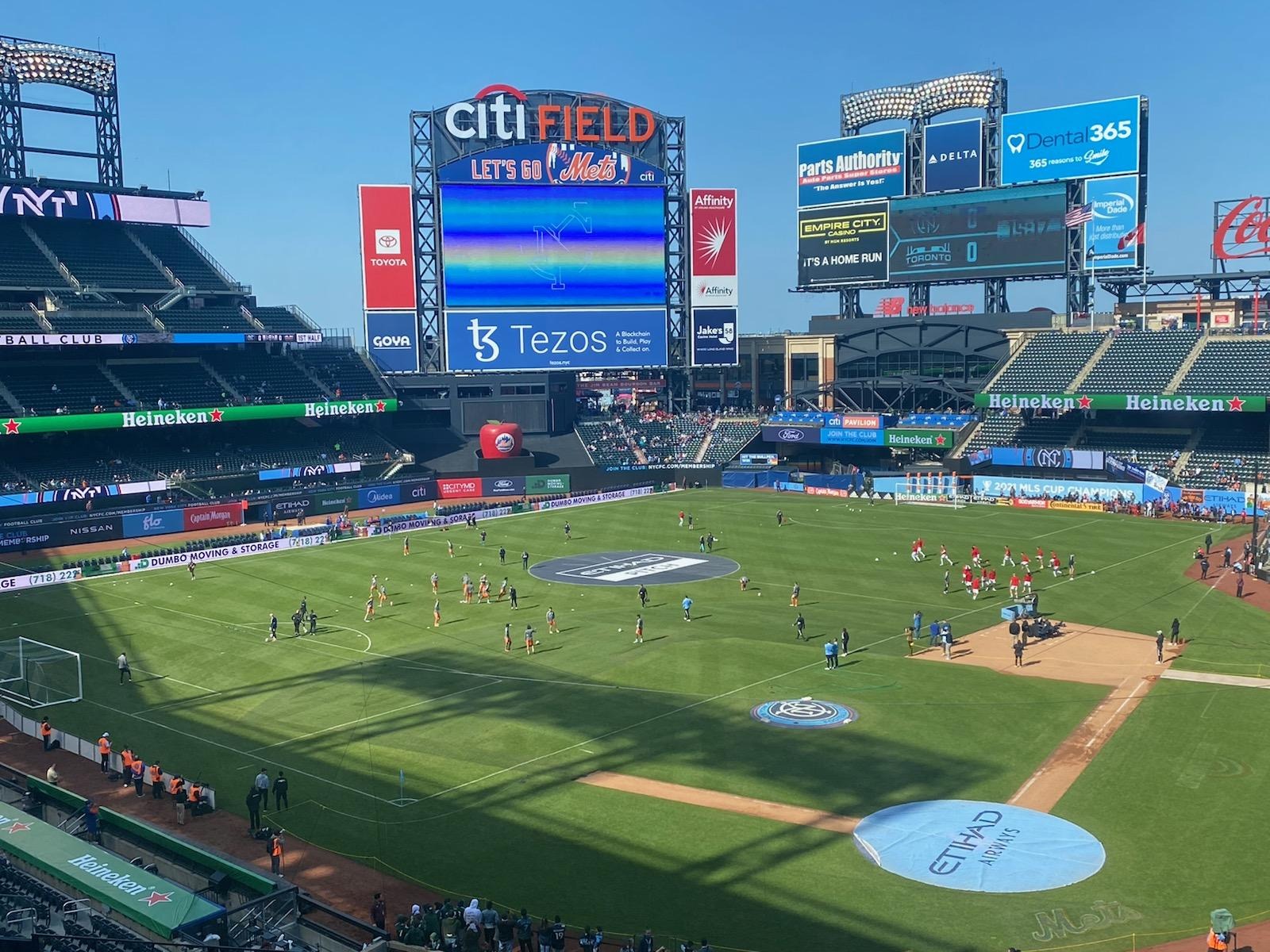
Most MLS clubs play in beautiful stadiums with capacities ranging from 18,000 to 30,000 seats, featuring roofs and resembling top-tier soccer stadiums around the world. Some stadiums even cost billions of dollars to build, but are used for baseball or American football games. These include Atalanta United's Mercedes-Benz Stadium, which hosts NFL games, and New York City FC's Yankee and City Fields, originally baseball stadiums, unsuitable for soccer.
Even Inter Miami's home stadium, DRV PNK, is unusual. It's not even in Miami, but in Fort Lauderdale, about a 40-minute drive from the city under ideal conditions, and it's a modular, detachable stadium. DRV PNK is expected to be Inter Miami's home stadium until the club completes construction of the 25,000-seat Miami Freedom Park stadium, planned for 2025.
Playing on artificial turf. Even some of the best MLS pitches aren't ideal for players. The aforementioned Mercedes-Benz Stadium has an artificial turf surface, as do five other stadiums in the league. Artificial turf makes switching between soccer and rugby, concerts, and other events easier, with a sliding, retractable, or modular surface that can be swapped around depending on the event being held.
However, players dislike artificial turf, as it's a harder surface and makes them more prone to injury. Zlatan Ibrahimovic once angrily protested against LA Galaxy, stating he would only play on artificial turf if it was a "life or death" situation, while Thierry Henry refused to play most games on this surface during his time with New York Red Bulls. Other superstars like David Beckham and Robbie Keane have repeatedly spoken out about the negative impact of artificial turf on LA Galaxy's away games.
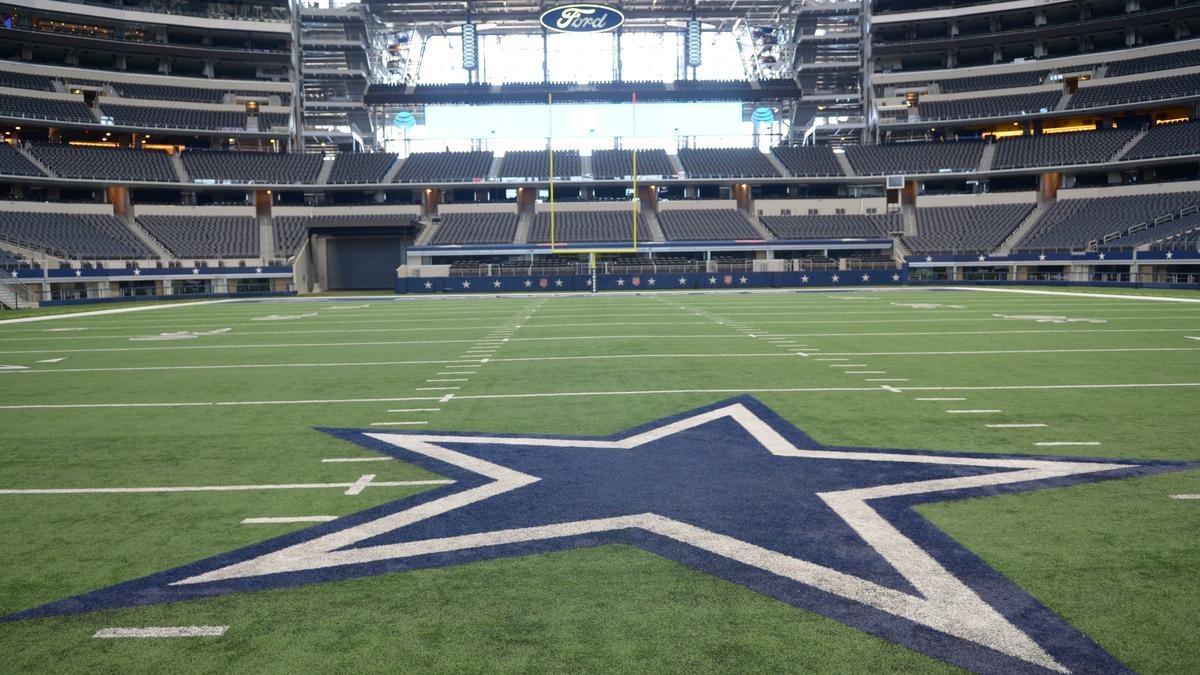
Meanwhile, solutions to mitigate the impact of artificial surfaces also have shortcomings. Messi was injured during a friendly match between Argentina and Mexico at the Dallas Cowboys' AT&T Stadium in 2015. At the time, the stadium owners requested real grass be laid over the artificial turf, which made things worse when Messi slipped and twisted his knee.
Over the past few years, the number of natural grass pitches has increased, but in the near future, artificial turf pitches will still exist in MLS.
However, less-than-ideal surfaces aren't limited to artificial turf. Yankee Stadium is too small to fit standard soccer pitches, and the grass on baseball fields gets dirty, causing the ball to bounce and making it harder for players to control.
The US Open Cup features unusual venues. Artificial turf or baseball pitches pale in comparison to the unfamiliar locations where MLS teams compete in the US Open Cup – a tournament founded in 1914 and the oldest soccer competition in the United States. This tournament features top clubs competing against teams from various divisions, including semi-professionals. This means matches against clubs many have never heard of, potentially taking place in unfamiliar cities.
This season, Minnesota United faced Detroit City at Keyworth Stadium, owned by Hamtramck Public Schools and hosting high school games. San Jose Earthquakes played Monterey Bay FC at Cardinale Stadium, a 6,000-seat venue at California State University. Meanwhile, Pittsburgh Riverhounds and Birmingham Legion caused upsets by reaching the quarterfinals.
Other clubs that have faced MLS representatives in the league include Tampa Bay Rowdies, who play on the site of a former baseball stadium, and Harrisburg City Islanders, who play in a minor league baseball stadium. Christos FC, an amateur team representing the Christos Discount Liquors in Maryland, didn't get to play DC United in a game a few years ago, but that makes things even more memorable.
"So, if you think it's strange to see Messi playing in a borrowed baseball stadium, just wait for the possibility of the Argentinian star playing at the US Open Cup in a baseball stadium that isn't even part of a major league anymore," ESPN commented.
The MLS All-Star Game. MLS has an annual All-Star game, typically featuring a team of the best MLS players competing against a team from overseas. The opponent could be a European club on preseason tour, such as Arsenal on July 19, 2023, at Audi Field, Washington, D.C., and sometimes an all-star team from Mexico's Liga MX.
The main purpose of the match is to showcase the best players in MLS, including some who have been voted onto the team by fans. But players aren't always willing to participate, to the point that the league has issued a one-match ban to any player who, being fit, refuses to play. Ibrahimovic was once suspended under this rule, and said: "I think it's ridiculous, but I have no comment. They can do whatever they want. I come from a different world, a real world."

The MLS organizers may also name some players to the All-Star team, which will almost certainly include some of the biggest stars in MLS. In 2015, Liverpool legend Steven Gerrard was selected despite having joined LA Galaxy just weeks earlier and playing very little. Similarly, Frank Lampard, who hadn't even played for New York City FC, made his American debut in the All-Star game.
Messi could therefore play in the All-Star game against Arsenal on July 19th.
Many rules are complicated. Messi is used to playing with high-level teammates from all over the world at Barcelona and Paris. Those two clubs have the ability to recruit any player, while being mindful of UEFA's Financial Fair Play rules, but Messi will find there is no such open market in MLS.
European clubs must adhere to strict spending rules, meaning they cannot spend more than they earn. But the rules in MLS are even stricter and more complex.
First, Major League Soccer has a salary cap. It sounds simple, but there are many exceptions. There's a designated player rule, which essentially allows a club to register a maximum of three players whose salaries aren't fully factored into the cap. This rule was created so LA Galaxy could sign David Beckham, and has since been used to sign even the biggest stars on the planet, like Messi himself, or promising young talents like Miguel Almiron, who played for Atlanta United before being sold to Newcastle.
In addition, there is a rule for players who have come through the club's academy – those who are not counted towards the salary cap.
And then there are the acronyms, GAM and TAM. In MLS, players are constantly traded between teams in the league, which is unusual in European soccer but common in American sports. Transfers into and out of MLS are also common, but from one team to another, swapping players or trading under GAM and TAM is standard practice.
GAM stands for General Allocation and TAM stands for Target Allocation, which are distributed to teams annually and can be traded between teams to generate additional funds, essentially increasing each team's salary cap. This is a confusing rule; even some members working for the clubs don't fully understand the team structure. Inter Miami, Messi's new club, was once fined a league-record $2 million for violating these rules.

Essentially, MLS is a single-player league, meaning all team owners are technically investors in the league as a whole. Player contracts are primarily handled by the league organizers, not the individual teams. That's why the organizers can "allocate" money to teams through these roster rules.
While La Liga and Ligue 1 clubs compete directly for players, MLS manages and ensures that this doesn't happen. That's why Messi's negotiations to join Inter Miami took place at the league level, including a cut in revenue from the league's streaming packages.
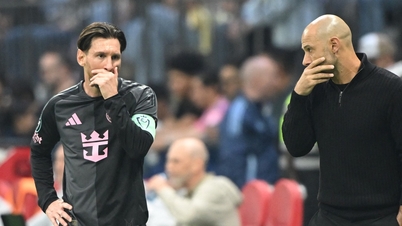
Reporters are allowed into the locker rooms. In many parts of the world, the media can only ask questions of players at a press conference or mixed quarters. In MLS, according to American sports standards, journalists can go straight into the locker rooms after a game and interview anyone. In fact, MLS mandates that locker rooms be open to such media access.
Upon joining Atlanta United after stints in Europe and South America, forward Josef Martinez found it difficult to adapt to the style of play. "To be honest, it felt very strange," the Venezuelan player admitted. "I felt that a certain level of respect had been lost, along with the camaraderie within the team." Teammate Gonzalez Pirez agreed, saying that in Argentina, even some coaches aren't allowed into the dressing room because it's considered sacred.

"So, after a brilliant match with a hat-trick or a terrible, disappointing one, Messi might be greeted by journalists waiting in the dressing room with questions. Messi has done everything a footballer can do, but this will be a new experience. Welcome to MLS, Messi," ESPN commented.
Hong Duy (according to ESPN )
Source link



















































































Comment (0)