

The G20 summit in Rio de Janeiro, Brazil, concluded on November 19th with commitments , however modest, that nonetheless raised hopes...
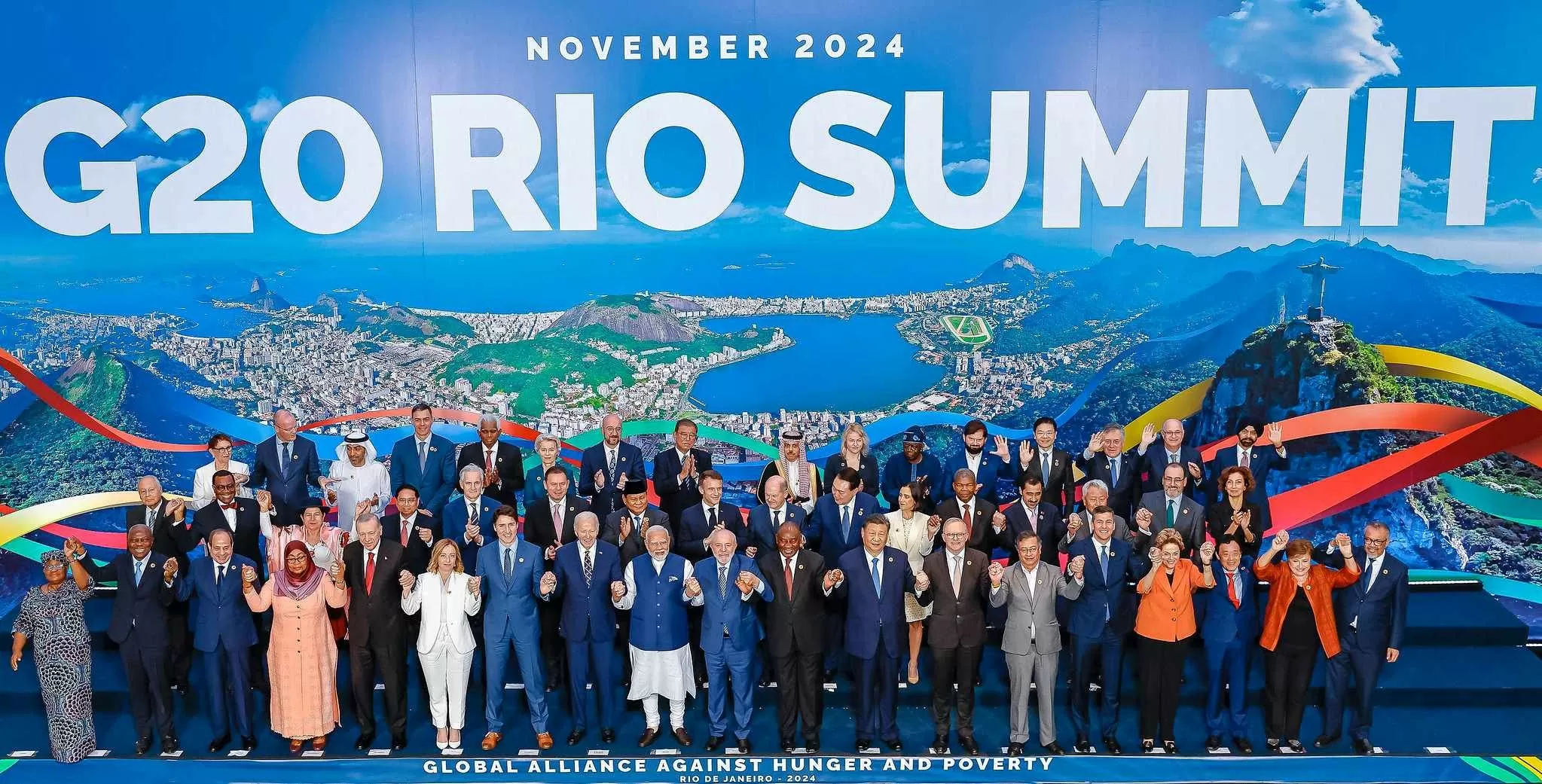 |
| The 2024 G20 summit will take place from November 18-19 in Rio de Janeiro, Brazil. (Source: G20.org) |
Despite being dominated by divisions on several geopolitical issues, G20 leaders still reached some important agreements, including raising taxes on the super-rich, providing financial support for the fight against climate change, and addressing humanitarian crises.
With the ambition of "Building a just world and a sustainable planet," the Rio de Janeiro Summit brought together leaders of the world's largest economies, including the United States, China, Japan, India, Germany, Italy, France, and others, to discuss global challenges ranging from combating poverty and reforming global governance to taxing the super-rich, promoting gender equality, and addressing climate change.
Notably, this conference also marked the first-time participation of the African Union (AU) as a full member.
Fairer taxation
One of the highlights of the Summit was the commitment to cooperate in ensuring that the ultra-wealthy are taxed more fairly. In their joint statement, G20 leaders affirmed their commitment to building effective mechanisms to combat tax evasion and promoting the collection of taxes from those with substantial assets.
Taxing the super-rich is one of Brazil's top priorities during its 2024 G20 presidency. In February, host nation Brazil proposed a minimum 2% annual tax on the world's 3,000 wealthiest individuals with assets exceeding $1 billion in an effort to narrow inequality.
Brazil put forward this proposal after the Latin American nation commissioned French economist and inequality expert Gabriel Zucman to conduct research on the impact of a global minimum tax rate for billionaires.
Research indicates that billionaires currently pay taxes equivalent to only 0.3% of their assets. If a minimum tax rate of 2% were implemented, the world would raise approximately $200-250 billion annually from around 3,000 individuals with assets of $1 billion or more. This money could fund public services such as education, healthcare, and the fight against climate change.
However, G20 members were unable to reach a consensus on implementing a minimum 2% annual tax on the super-rich, as called for by Brazil. France, Spain, South Africa, Colombia, and the AU supported the proposal, while the US and Germany opposed it.
According to a report by Oxfam International, the wealth of the richest 1% of the planet has increased by $42 trillion over the past decade, nearly 36 times the total wealth of half the world's poorest population. The G20 countries are home to almost 80% of the world's billionaires.
Calculations by Oxfam International show that in G20 countries, less than 8 cents of every dollar of tax collected from billionaires is wealth tax. “Inequality has reached shocking levels. The richest 1% are continuing to fill their pockets, while the rest struggle to make ends meet.”
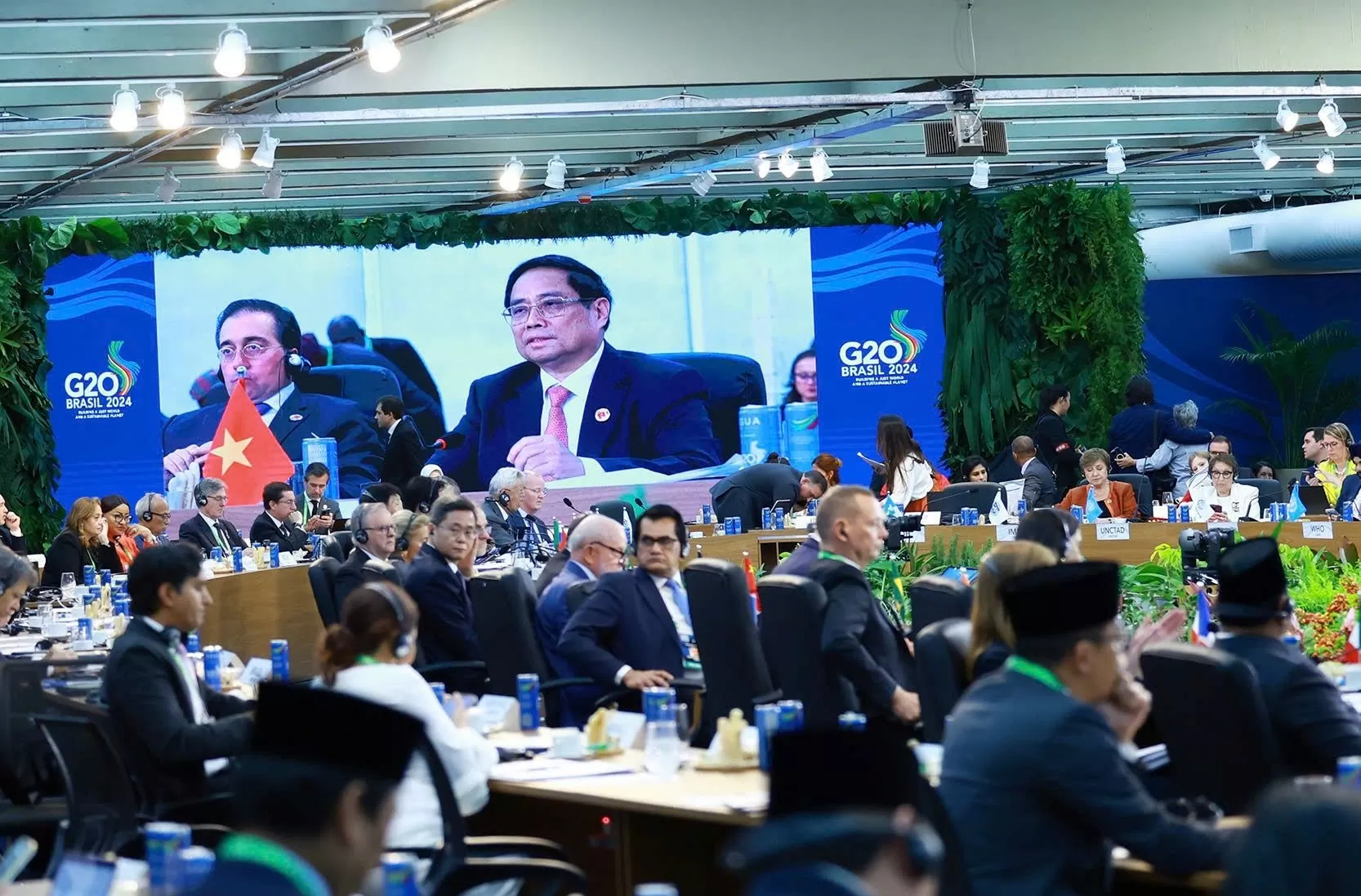 |
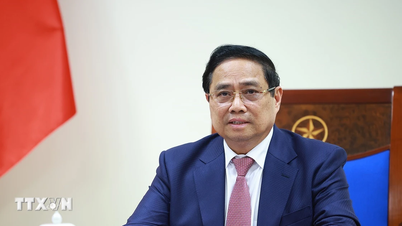
| Prime Minister Pham Minh Chinh speaks at the discussion session on sustainable development and energy transition within the framework of the G20 Summit. (Source: VGP) |
Financing for climate change
Regarding the fight against climate change, one of the hot topics at this G20 summit, some progress was also made, although leaders were unable to make clear commitments on funding for developing countries to increase their capacity to respond to the impacts of climate change. The G20 joint statement acknowledged that the necessary financial resources would come from “all sources,” but did not specify how the funds would be allocated.
Meanwhile, negotiations at the 29th Conference of Parties to the United Nations Framework Convention on Climate Change (COP29) in Azerbaijan on climate financing remain deadlocked, due to disagreements between developed and emerging economies over the sources and levels of financial contributions. Beyond finance and climate, the G20 also called for a gradual reduction in subsidies for inefficient fossil fuels, but did not address the complete cessation of their use.
The crisis in the Gaza Strip and the conflict in Ukraine were also mentioned in the G20 joint statement, with a strong commitment to promoting ceasefires and protecting civilians. The G20 expressed “deep concern” about the dire humanitarian situation in Gaza and called for comprehensive ceasefires in Gaza and Lebanon.
Efforts in the fight against poverty
The G20 summit also made some progress in the fight against poverty. According to the Multidimensional Poverty Index report by the United Nations Development Programme, more than 1 billion people worldwide are currently living in extreme poverty, with more than half of them being children.
Poverty rates in war-torn countries are three times higher. In 2023, approximately 713 to 757 million people faced hunger, meaning that one in every 11 people in the world was hungry.
Speaking ahead of the Summit, host country President Luiz Inacio Lula da Silva called for strong action from G20 leaders in the fight against poverty, aiming to eradicate extreme hunger worldwide by the United Nations' 2030 deadline.
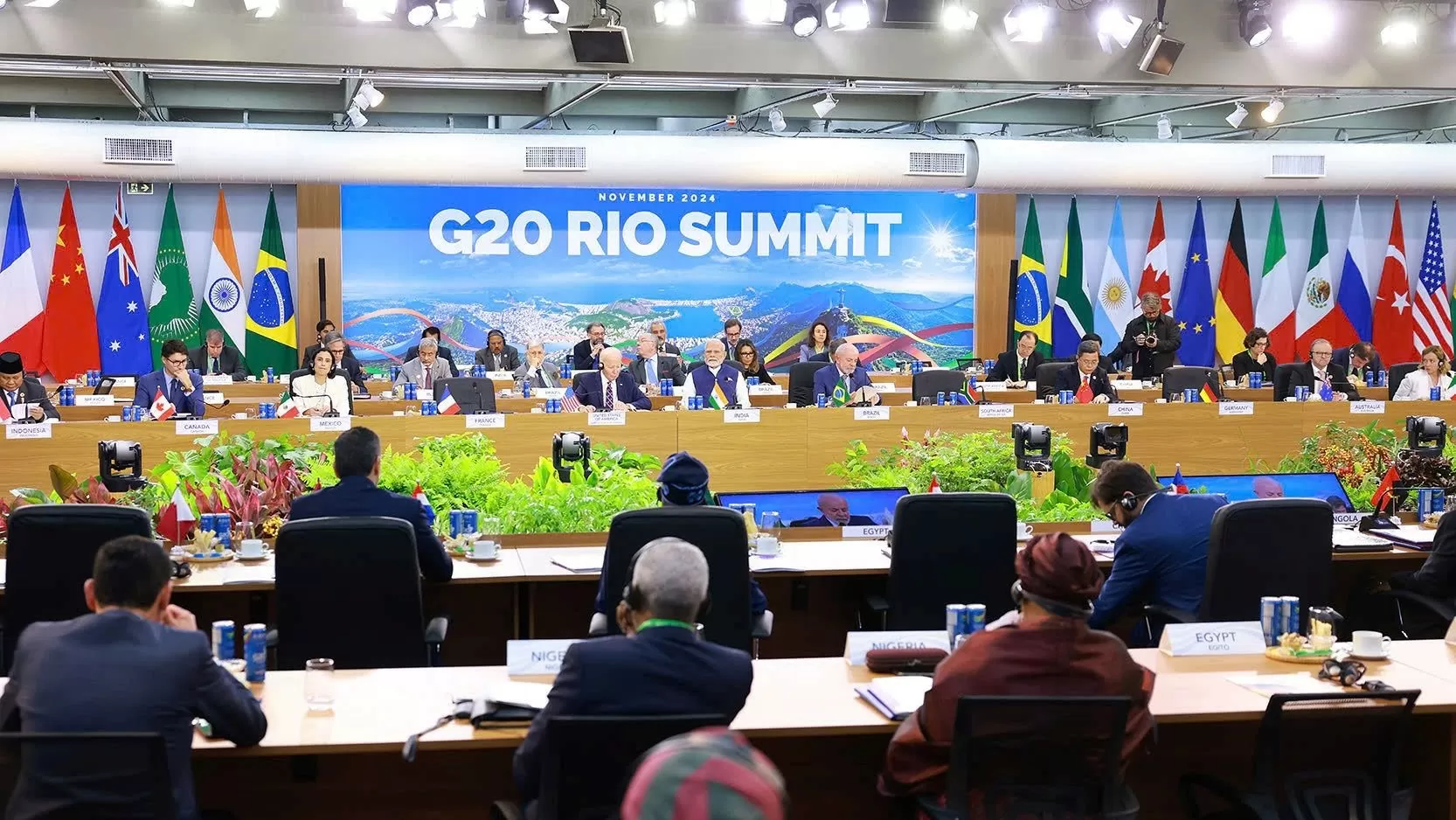 |
| The G20 summit achieved certain progress in the field of combating poverty. (Source: G20.org) |
The challenges that cast a shadow
This year's G20 summit is taking place against a backdrop of heightened geopolitical tensions. The divisions between Western and other nations, particularly the strategic competition among major powers, are altering the world order. Attending the summit, Chinese President Xi Jinping emphasized Beijing's role in maintaining international order and pledged support for Southern Hemisphere economies through cooperative initiatives and the reduction of trade barriers.
Conversely, the United States under the upcoming leadership of President-elect Donald Trump is trending back towards an "America First" policy, with protectionist trade measures that could challenge the global trading system, affect the future of multilateral organizations, and undermine shared commitments.
Furthermore, it must be acknowledged that global governance reform remains stalled. Southern Hemisphere countries are increasingly demanding more power within international organizations such as the World Bank, the International Monetary Fund, and the United Nations. The Elysée Palace commented: "President Emmanuel Macron wishes to continue discussions on this issue, recognizing that the current international financial system is no longer suitable for today's world."
Japanese Prime Minister Ishiba Shigeru also emphasized the urgent need to reform the United Nations Security Council to maintain a rules-based international order. He also stated that, in the context of rapid digitalization, reforming the World Trade Organization (WTO) is a pressing issue, particularly the need to restore its effective dispute resolution function.
Against this backdrop, in their concluding joint statement, G20 leaders reaffirmed their commitment to sustainable development goals, while emphasizing that current challenges, from climate change to global conflict and inequality, can only be addressed through multilateral cooperation.
That was a great success for the conference.
Source: https://baoquocte.vn/thuong-dinh-g20-nhung-dong-thuan-thap-len-hy-vong-294453.html














































































Comment (0)