

Apple is getting closer to launching a foldable iPhone, and a recent report has revealed key information about this promising device.
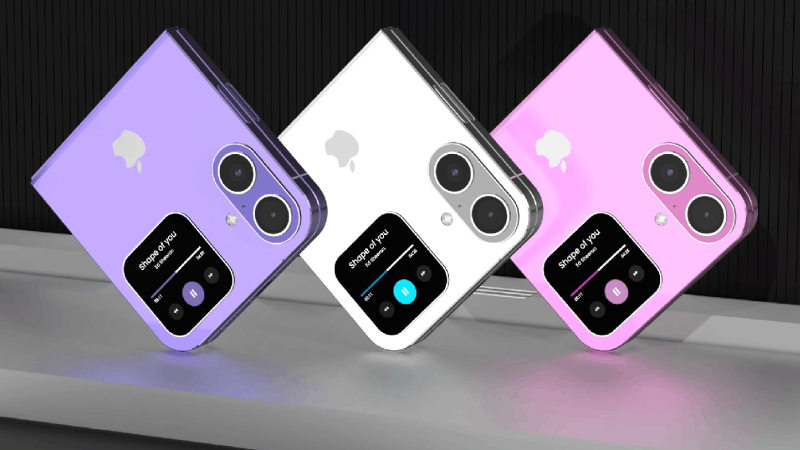 |
| The latest revelations about Apple's foldable iPhone. |
Apple's solution to the screen crease.
Apple is gradually finalizing its plan to launch a foldable iPhone, with one of the key milestones being the selection of component suppliers. According to ETNews (South Korea), this process will be completed in April, paving the way for mass production, expected to begin in the second half of this year. This indicates that Apple is accelerating its progress to officially enter the foldable smartphone market.
One of the major differences Apple is aiming for is to completely resolve the issue of the screen crease – an inherent drawback of current foldable devices. " Apple has decided to eliminate the crease at all costs, regardless of the expense, to differentiate itself from current foldable phone models. They appear to have developed a new material that makes the crease disappear completely ," an industry source revealed to ETNews. This is a bold ambition, demonstrating Apple's efforts to provide a more seamless user experience.
Over the years, the screen crease has been a persistent problem for the foldable smartphone industry. Although Samsung, Huawei, and many other tech companies have continuously improved, the crease remains, detracting from aesthetics and user experience. Therefore, if Apple can completely overcome this drawback, it would be a major leap forward in foldable screen technology.
Eliminating the crease not only makes the foldable iPhone unique but also gives Apple a strong competitive advantage in the premium smartphone segment. A completely flat screen when unfolded not only improves the visual experience but also enhances durability and long-term usability. This could help Apple quickly dominate the market and set new standards for foldable phones in the future.
Apple is gradually finalizing its component supply chain for the foldable iPhone, with several strategic partners selected to ensure optimal quality and performance. According to industry sources, Samsung Display is likely to become the sole supplier of OLED panels for the device. The South Korean tech giant began developing displays specifically for Apple last year, leveraging its expertise and experience in large-scale production of foldable OLED displays.
In terms of design, the foldable iPhone is expected to have an inward folding mechanism, similar to a book, providing better protection for the main screen. To increase durability, Apple may collaborate with Corning – a renowned American glass manufacturer – to equip the device with ultra-thin glass (UTG). This type of glass not only increases resistance but also significantly improves the smoothness of the folding and unfolding process.
The hinge is also a crucial element in the design of the foldable iPhone, and Apple is seeking a suitable supplier to ensure durability and flexibility in use. Amphenol, a company specializing in manufacturing hinges for the MacBook Pro line, is currently considered the most promising candidate for this role. With years of experience in the electronic components field, Amphenol can provide a robust hinge mechanism, ensuring the device operates smoothly for a long time without experiencing wear and tear issues.
Specifications and release date
The launch date of the foldable iPhone is becoming a topic of intense interest in the tech world, with many predictions coming from reputable sources. Based on Apple's typical product development roadmap, ETNews predicts that the device could be unveiled in the second half of 2026. Sharing this view, Bloomberg expert Mark Gurman also recently confirmed that Apple is focusing its efforts on perfecting its first foldable iPhone, aiming for a launch within the same timeframe.
In addition, many leading analysts, including Ming-Chi Kuo and Jeff Pu, have also released reports on the timing of the foldable iPhone's release. Major news outlets such as The Information and The Wall Street Journal suggest that Apple could introduce the device in late 2026 or early 2027. This indicates that the company is being cautious in its development process, aiming to ensure the product meets the highest standards before officially entering the highly competitive foldable smartphone market.
Recent leaks have revealed many interesting details about the design and specifications of the foldable iPhone – one of Apple's most anticipated products. According to Digital Chat Station (China), the device may feature a 5.49-inch outer screen and a main inner screen of up to 7.74 inches when unfolded. Notably, both screens are said to have an "unprecedented aspect ratio," promising a novel display experience compared to other foldable phones on the market.
One notable difference is the size and aspect ratio of the outer screen. Sources indicate that the foldable iPhone may have a shorter but wider outer screen compared to the Oppo Find N5 – a foldable smartphone recently introduced. This could optimize content display when folded, while also providing a more comfortable feel when held in the hand.
Regarding the camera system, the foldable iPhone is predicted to continue maintaining the impressive image quality of the current Pro series. The device may be equipped with a triple 48MP rear camera setup, including a wide-angle, ultra-wide-angle, and telephoto camera. These sensors will most likely be housed in a rectangular camera module with rounded corners, offering a modern design while retaining Apple's signature style.
Inside, Apple may use two stainless steel batteries with a total capacity of up to 5,000mAh to ensure extended usage time. However, the battery specifications are not yet fully verified, so more information is needed to assess their accuracy. If it truly has a large battery capacity, the foldable iPhone will have a competitive advantage in maintaining strong performance throughout the day.
Beyond just hardware, Apple could also fine-tune iOS to optimize for foldable devices, similar to what it did with iPadOS. This means the interface and apps would automatically adjust dynamically between folded and unfolded states, providing a smoother and more optimized experience. With its experience in developing software for large screens, Apple could create an operating system that is best optimized for foldable iPhones, maximizing the advantages of this new design.
Source






































































































Comment (0)