

As the economic powerhouse of the country, Ho Chi Minh City is not only home to towering skyscrapers and shopping malls representing the era of globalization, but also preserves an ecosystem of cultural and educational heritage with a rich historical value.
The system of century-old schools in Ho Chi Minh City not only plays a role in purely educational endeavors but also serves as historical witnesses, living museums documenting the transformation of the megacity through different periods.
Centuries-old schools in Ho Chi Minh City: Architectural landmarks reflecting the interplay of different eras.
According to documented records, the late 19th and early 20th centuries marked the first attempts to establish a Western-style education system in Saigon. The most notable example is Le Quy Don High School, the city's first public secondary school, founded in 1874/1875.

The location of the school on prime land opposite the Reunification Palace clearly reflected the status of elite education serving the administrative structure of the time. Initially operating entirely according to the French curriculum and for the privileged, the school was renamed the Le Quy Don Education Center in 1967, but its classical French-style spatial structure has been fully preserved amidst the changes of the urban landscape.
Alongside French architectural standards, Saigon University (founded in 1908 under the name Bac Ai School) offered a unique architectural symphony in the heart of the bustling Cholon area. This building proudly possesses a unique and harmonious beauty, blending Western geometric standards with arched structures and materials characteristic of the Chinese.

The pinnacle of architectural and microclimatic fusion is undoubtedly Marie Curie High School (established in 1918), the only public building in the heart of District 3 (formerly) completely surrounded by four main thoroughfares. The complex of eight yellow classroom blocks, with its extremely wide corridors, high ceilings, antique water tower, and bell cast in 1918, creates a spacious heritage area, defying the sweltering southern climate.
From elite schools to the "cradle" of revolution
Entering the second decade of the 20th century, the surge in demand for education led to a gender-separated educational model. Tran Van On Junior High School (originally named Richaud in 1911) was specifically designed for male students under the name Le Van Duyet Primary School, reflecting the strict gender role assignments in society at that time.
Conversely, the establishment of the Saigon Girls' School (1915, now Nguyen Thi Minh Khai High School) was a brilliant milestone in women's education, with the mission of training a generation of female intellectuals with high moral and academic standards.
The first class had 42 female students from families living in Saigon and surrounding areas. Gradually, more students from the provinces came to study, so the school began to have boarding facilities. This was the first school for girls in Saigon. The purple ao dai (traditional Vietnamese dress) was used as the main uniform, so the school was also known as the Purple Ao Dai Girls' School.
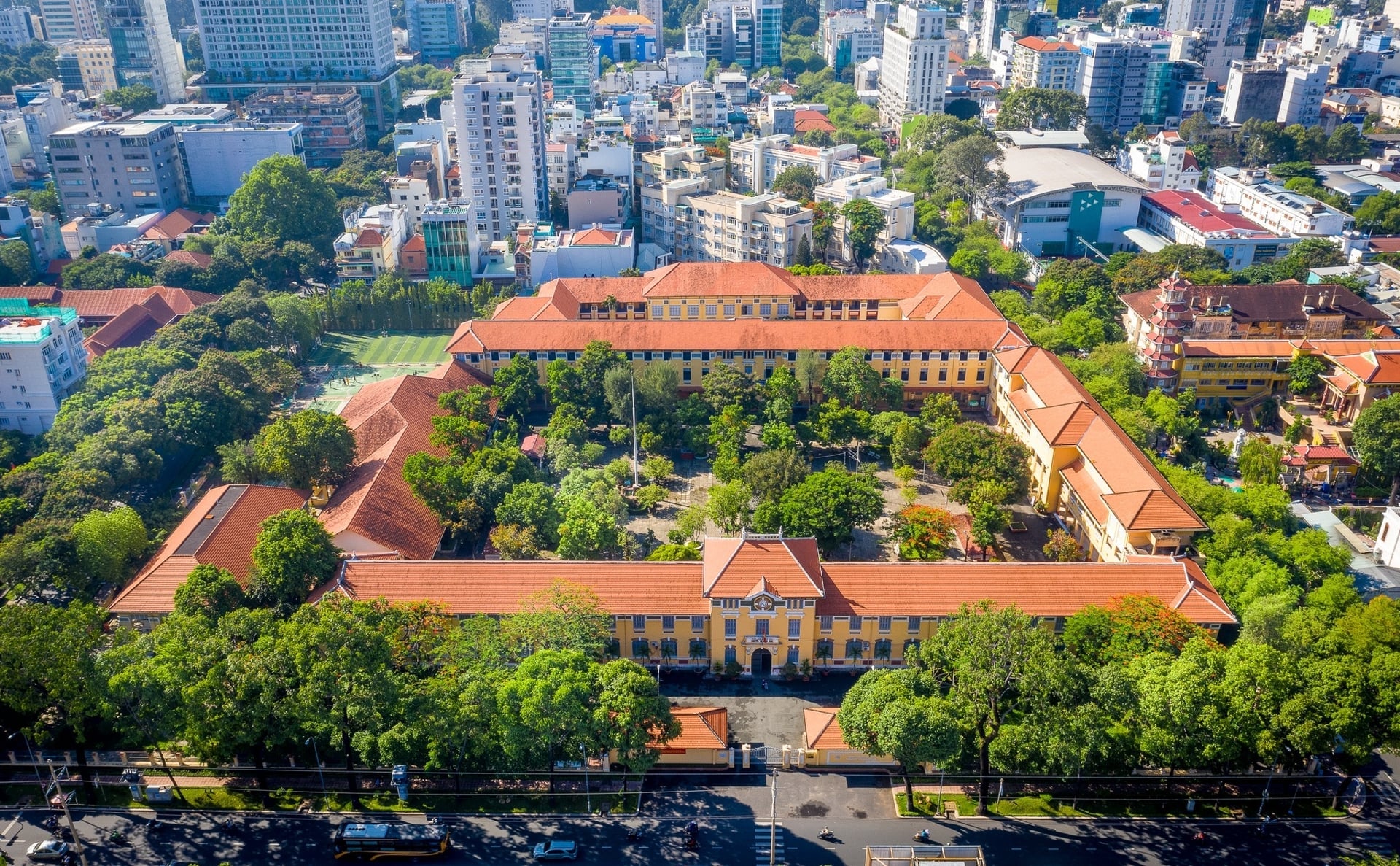
From an elite stronghold exclusively for French schoolgirls and Vietnamese nobility, Marie Curie School (founded in 1918) underwent a profound transformation as young intellectuals began to embrace liberal ideas.
During the brutal period of the war, along with Petrus Ky School and Gia Long School, Marie Curie High School's female students put aside their books and bravely took to the streets, forming a solid triumvirate and becoming the fiery "cradle" of the student and youth struggle movement in South Vietnam demanding peace and independence.
The school, covering an area of over 21,000 square meters, is designed in the French architectural style, from the entrance gate, gardens, fountains, and classroom blocks. In 2015, the school was recognized by the Ho Chi Minh City People's Committee as a historical, cultural, and scenic landmark of the city.
The popularization of education and its enduring vitality amidst the flow of integration.
The 1920s marked a turning point in the popularization of basic education and the rise of the patriotic private education movement.
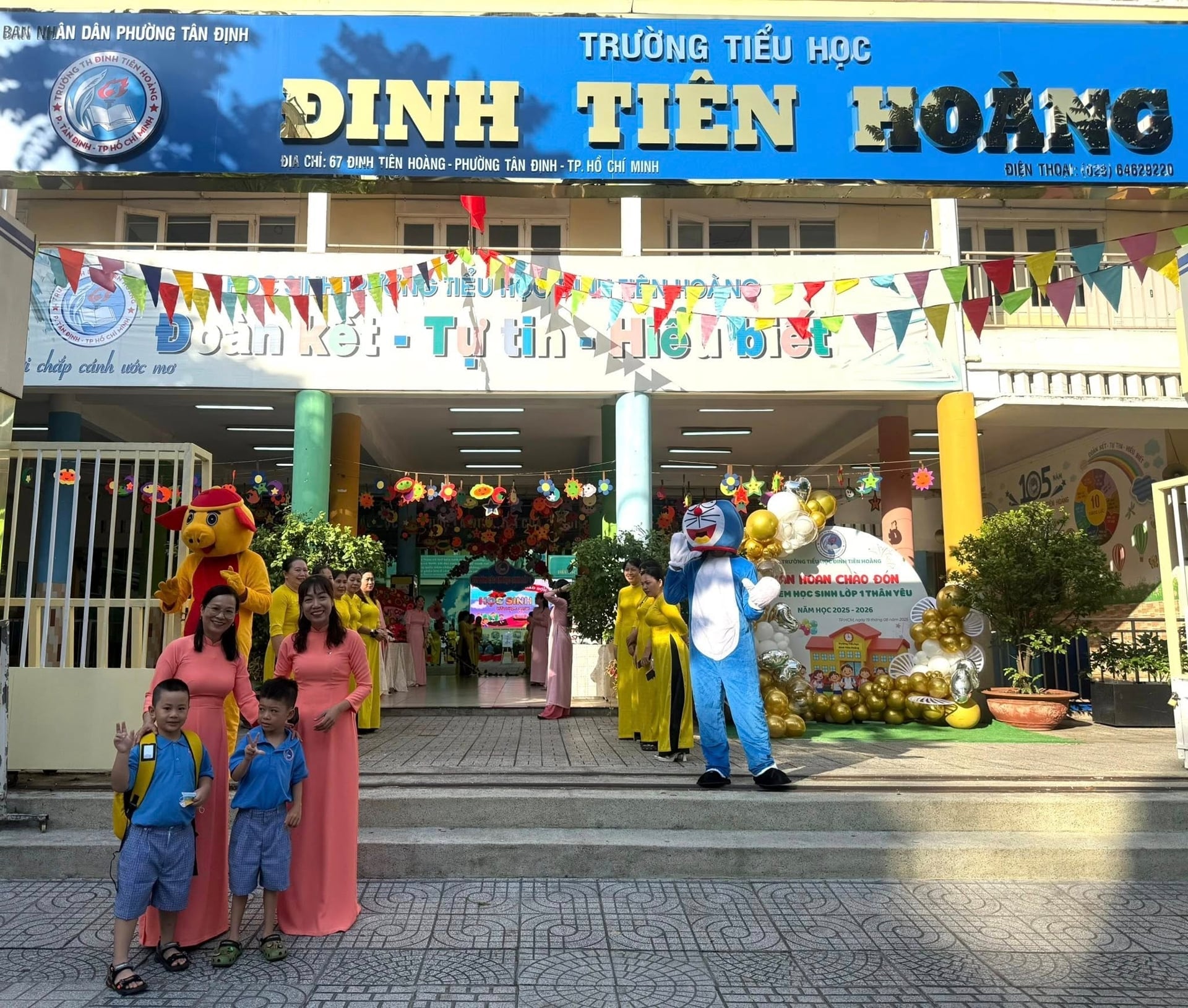
Dinh Tien Hoang Primary School (established in 1920) is a pioneering institution in educational reform with the first comprehensive boarding school model, professional transportation services, and pilot enhanced English classes. It was honored to receive the First Class Labor Medal on its 100th anniversary.
Meanwhile, Huynh Khuong Ninh Secondary School (established in 1922) is a symbol of the self-reliance of the local intellectual class, founded by a patriotic teacher to impart knowledge without being completely dominated by the French colonial system.
At the end of 2022, on the occasion of its 100th anniversary, the school officially received the national accreditation certificate for Level 1 and achieved high educational quality standards.
As one of the century-old schools in Ho Chi Minh City, Hai Ba Trung Secondary School, formerly Thien Phuoc private school belonging to the St. Paul's Order before 1975, boasts a unique and classic architectural style.
In addition, Colette Junior High School, established approximately 100 years ago, is named after a renowned female writer and literary icon of France. The school's predecessor was an educational institution built and managed by the French in Saigon, specializing in teaching the French curriculum.
Having undergone a century of development intertwined with the ups and downs of Ho Chi Minh City's history, the school has been transferred, reformed, and renamed as a public school in Vietnam. The school retains its original name, Colette Junior High School.
Centuries-old public schools not only provide a quality, state-subsidized education but also offer invaluable intangible values: identity and rich traditions.
Source: https://danviet.vn/nhung-ngoi-truong-tram-tuoi-o-tphcm-d1429010.html












































































Comment (0)