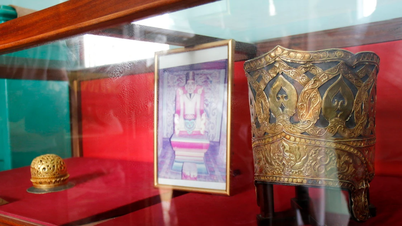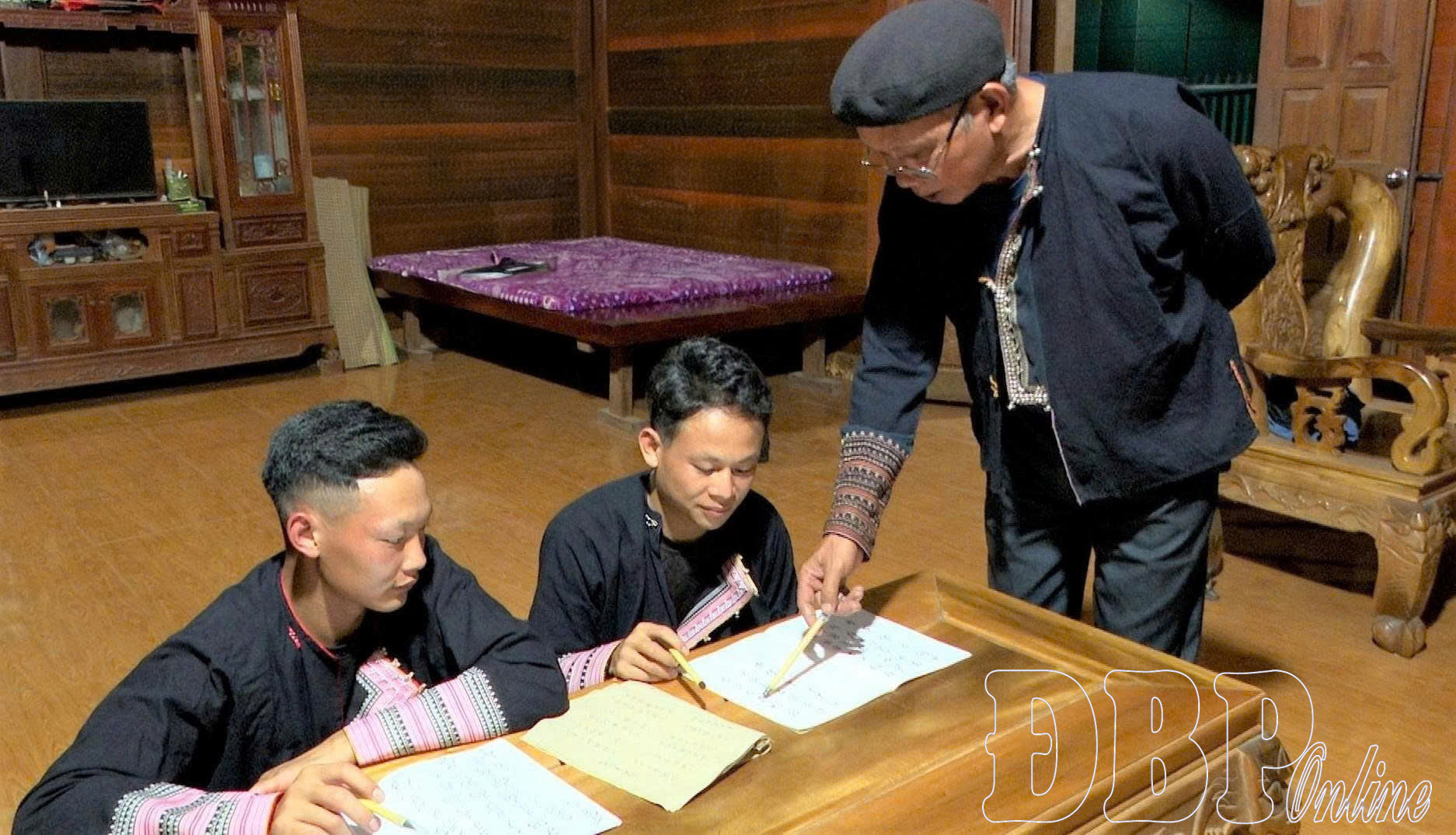
With a deep love for the Dao Nôm script, from a young age, the distinguished artisan Lý Lìn Siểu, from Sín Chải village, Nà Hỳ commune, was fascinated by ancient handwritten books in ink on time-worn dó paper. For him, each page was not simply an ancient text but also contained folk knowledge, beliefs, customs, and the long history of the Dao people, carefully preserved through generations.
His love and appreciation for that heritage motivated him to diligently collect, research, and preserve the Dao Nôm script as an integral part of his people. Besides teaching the Dao Nôm script, drawing on valuable source materials, Mr. Siểu also tirelessly compiled numerous books to serve the purpose of teaching future generations.
Distinguished artisan Ly Lin Sieu expressed his concern: “The Dao Nôm script books are a repository of folk knowledge, customs, beliefs, and culture of the ethnic group. Therefore, my greatest wish is that all descendants of the Dao ethnic group will know the Dao language and that many will be knowledgeable and proficient in Dao Nôm script so that the ethnic culture can continue to be preserved for many future generations.”
Ms. Ly Lai Hoang shared: “Previously, I only knew how to speak the Dao language but couldn't read or write the Dao Nôm script. Since participating in the class, I have not only learned the writing system of my ethnic group but also gained a deeper understanding of the origins, customs, traditions, and cultural values of the Dao people. The more I learn, the more proud I feel and the more conscious I am of preserving my ethnic cultural identity.”
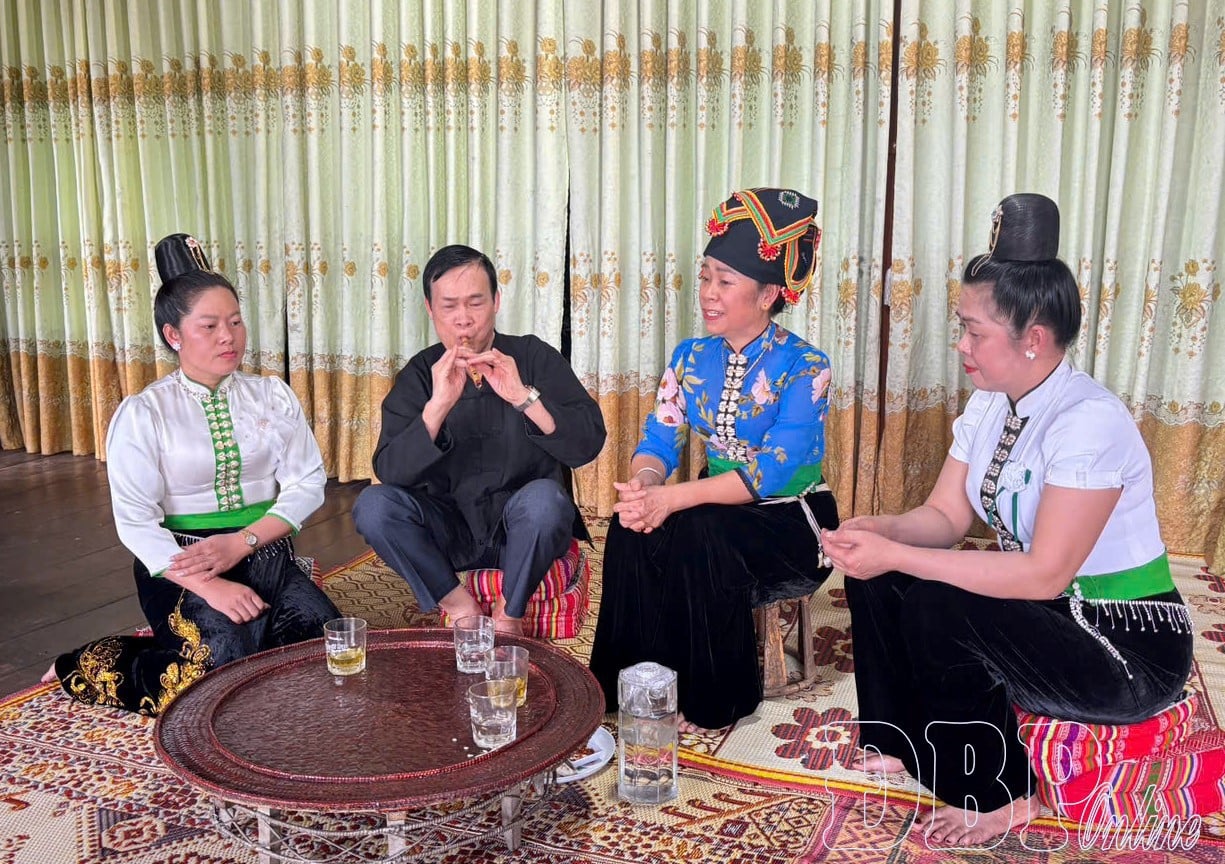
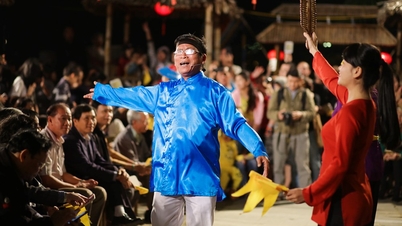
In his cozy home in Hamlet 15, Dien Bien Phu Ward, traditional Thai ethnic musical instruments such as the tinh tau, double pi papa, single pi papa, etc., are cherished and preserved by the distinguished artisan Lo Hai Van. For him, preserving these instruments is not only about preserving traditional sounds but also about preserving the soul, identity, and spiritual life of the ethnic group amidst the ceaseless flow of time.
Even though he is now over 70 years old, Mr. Lo Hai Van still strives to keep the "flame" of his passion for folk songs and traditional musical instruments alive, as if preserving a part of the soul of his homeland. To bring traditional culture closer to life, he also creates, adjusts rhythms, and modernizes melodies based on traditional values, helping the music retain its national identity while being suitable for modern life and easily appealing to young people.
Particularly during village festivals, cultural events, or art exchange programs, one can still see the image of the white-haired artisan engrossed in playing the zither, the sound of the flute echoing through the mountains and forests.
Mr. Lo Hai Van said: "I am ready to go to any village or commune that needs guidance on how to play, appreciate, and preserve traditional musical instruments. I only hope that today's young generation will continue to love, understand, and preserve the traditional sounds of their people."
Ms. Lo Thi Dong, from Him Lam 2 village, Dien Bien Phu ward, emotionally shared: “Every time the sound of the flute played by artisan Lo Hai Van resonates, I feel inspired to sing Thai folk songs. The simple sounds blended with the lyrics evoke memories of my village, of past festivals, making me love and be proud of my ethnic culture even more.”

Mr. Dao Duy Trinh, Head of the Cultural Heritage Management Department (Department of Culture, Sports and Tourism), said: “Outstanding artisans and folk artisans play a particularly important role in preserving and transmitting the traditional cultural values of ethnic minorities. In recent years, Dien Bien province has always paid attention to issuing many mechanisms and policies to support, encourage, and create conditions for artisans to develop their passion and abilities in teaching, practicing, and preserving cultural heritage.”
In particular, the process of preparing dossiers for the conferment of the titles "People's Artisan" and "Outstanding Artisan" not only demonstrates recognition and honor for individuals who have made significant contributions to national culture, but also encourages artisans to continue dedicating themselves and passing on their passion to the younger generation.
Dien Bien province is also stepping up efforts to inventory and document intangible cultural heritage; developing projects and plans for heritage preservation; and organizing the restoration of traditional rituals and festivals associated with tourism development and community life.

Currently, Dien Bien province has 24 intangible cultural heritage sites listed in the National List of Intangible Cultural Heritage, and two of them have been inscribed by UNESCO: the Then ritual practices of the Thai, Tay, and Nung people in Vietnam, and the Thai Xoe dance art in Vietnam.
Respecting, honoring, and promoting the role of artisans is an important and practical solution in preserving and conserving the fundamental values of ethnic cultures. This contributes to building and developing culture and people in harmony with socio-economic development, aiming towards building an advanced Vietnamese culture rich in national identity.
Source: https://baoangiang.com.vn/nhung-nguoi-gin-giu-hon-cot-dan-toc-a485154.html












![[Video] Weather forecast for July 5, 2026: Typhoon No. 1 causes strong sea disturbances, very heavy rain in the North, many areas warned of thunderstorms and tornadoes.](https://vphoto.vietnam.vn/thumb/402x226/vietnam/resource/IMAGE/2026/07/05/1783206051427_thum-sang-ok-png.webp)