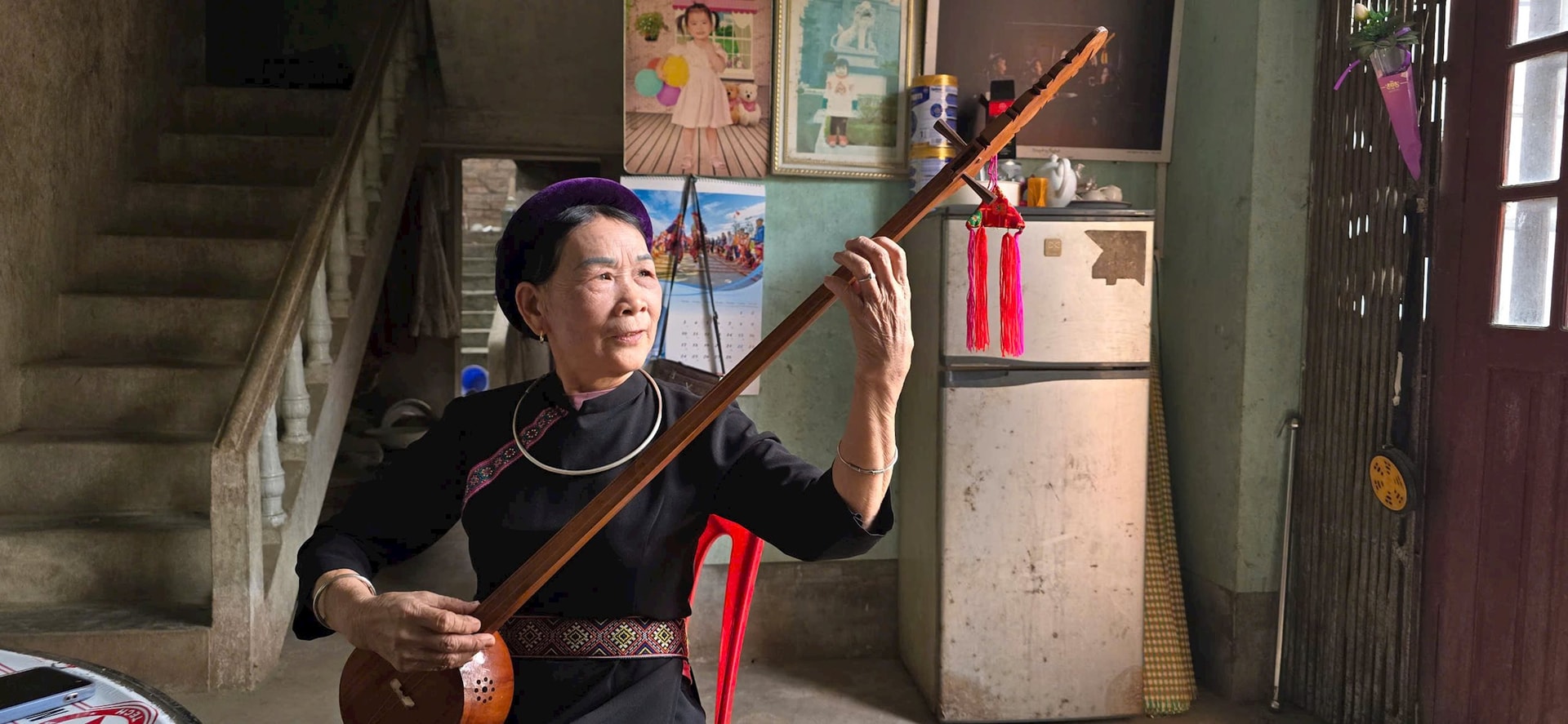
Artisan Hoang Thi Vien.
The House of Festivals
In Na Lang area, Binh Lieu town, Binh Lieu district ( Quang Ninh province), the locals are familiar with the sound of the zither blending with the melodious then singing emanating from the house of Mrs. Hoang Thi Vien.
"Anyone who has free time, is in a good mood, or is feeling down, comes to Mrs. Vien's house to watch singing and listen to music. Every day at Mrs. Vien's house is a festival," a staff member from the Binh Lieu District Communication and Culture Center introduced me to when she took me to Mrs. Vien's house.
Although nearly 70 years old this year, Mrs. Vien still diligently works every day collecting and teaching the culture of the Tay people, especially the traditional Then dances of her ethnic group, to the younger generation.
According to artisan Hoang Thi Vien, Then singing is not simply a form of expressing content through music, a method of interaction and courtship between men and women, but it was also closely associated with religious and spiritual activities by the ancient Tay people. In the past, Tay families would prepare offerings to invite Then masters to their homes to perform rituals to ward off misfortune, pray for blessings and good health to embark on new endeavors. Over time, Then singing transcended these rituals, becoming a way for families to interact and for men and women to court each other among the Tay people of Binh Lieu.
There was a time when Then singing faced the risk of gradually disappearing from the cultural and spiritual life of the Tay people in Binh Lieu. To preserve and protect this precious cultural heritage, Ms. Vien and other artisans dedicated all their passion and effort to reviving Then singing in the community; helping the younger generation not only to sing, but also to understand the origins and meaning of each song.
To prevent singing lessons from becoming boring, Ms. Vien combined teaching with performances at village festivals and traditional holidays. She and other artisans encouraged young people to join the arts club, helping them to love and be proud of their national culture.
Besides passing on the traditional cultural beauty of the Tay people to the younger generation, artisan Hoang Thi Vien also diligently composes new songs, thereby contributing to enriching the artistic repertoire of the Tay ethnic group's Then singing tradition.
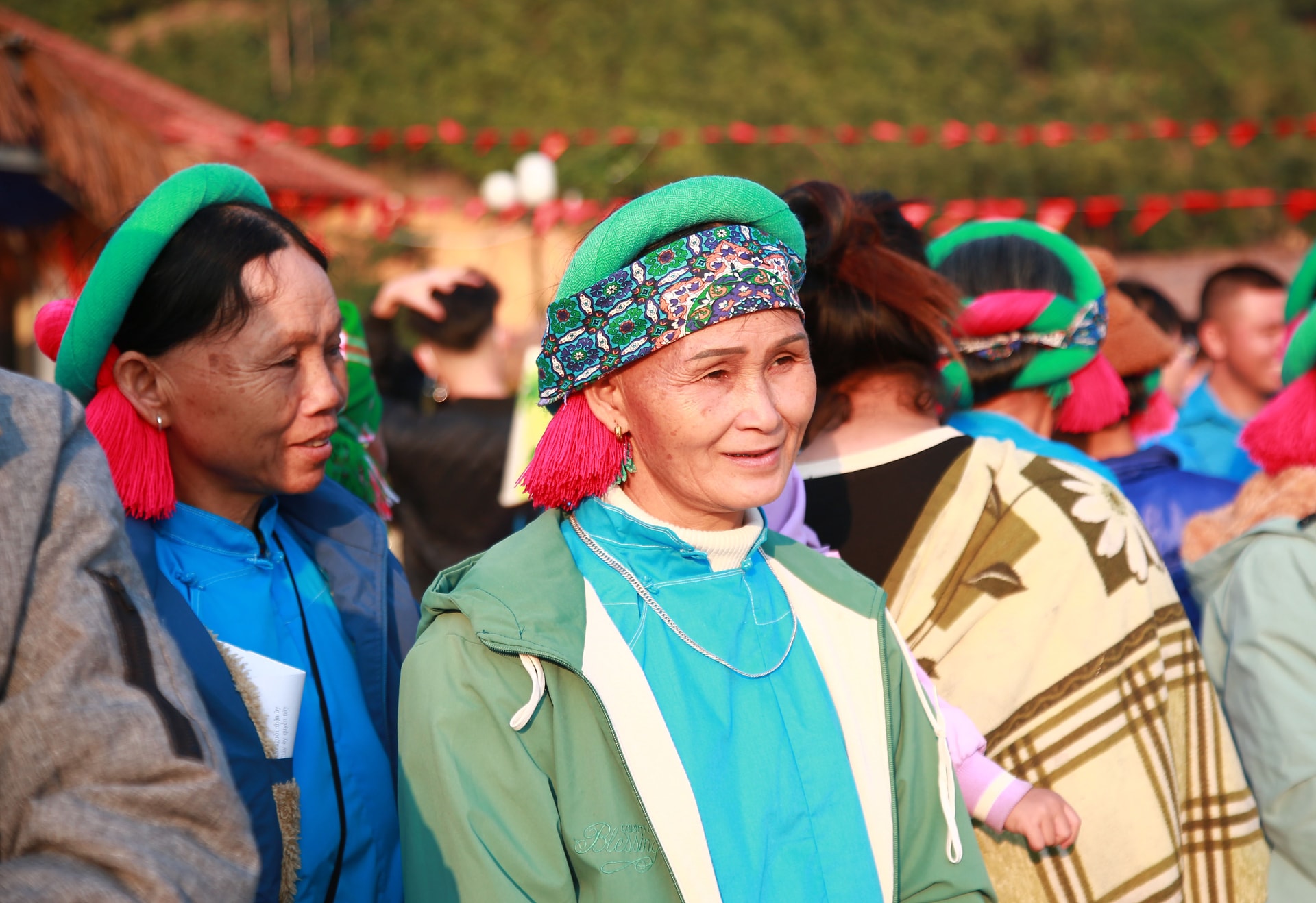
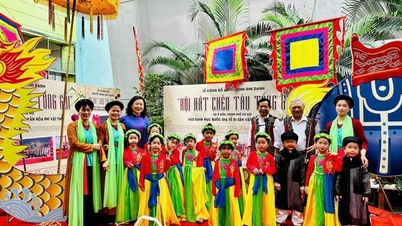
The San Chi people in Dai Duc during the Soong Co festival.
The village elder guards the "treasure" for the villagers.
Dai Duc commune in Tien Yen district is no longer a remote and disadvantaged area. The San Chi people here have learned to develop community tourism , building homestay accommodations. Besides its pristine natural scenery, the San Chi people understand that Dai Duc also possesses unique cultural values that are particularly attractive to tourists.
That's what the distinguished artisan Ly Minh Sang (75 years old, Phai Giac village, Dai Duc commune) always reminds his descendants and the younger generation of the San Chi people. As one of the few people who still know by heart the performance, singing, dancing, and practices of the harvest prayer ritual – one of the traditional rituals of the San Chi people in Tien Yen – Mr. Sang has been passionate about the traditional rituals of his ethnic group since childhood.
In his small house in Phai Giac village, Mr. Sang recounted: In 1986, he went to the house of an elder in the commune to ask to learn to read and write, and to learn the traditional singing and dancing rituals of the San Chi ethnic group. It took him three years to become proficient and begin participating in the rituals for the villagers. Gradually, Mr. Sang gained the trust of the villagers and became the village's head priest. During traditional festivals and holidays, Mr. Sang represents the wishes of the entire village in presenting petitions for peace and a good harvest.
Showing off his "treasure," Mr. Sang flipped through the pages of his handwritten book, filled with Soóng Cọ songs. He explained that Soóng Cọ songs cover many themes: themes of romantic love, with witty questions, suggestions, and playful exchanges between young men and women; themes praising the contributions of previous generations; songs remembering and honoring ancestors; and songs praising labor and production, and songs about the four seasons…
"Not only did Mr. Ly Minh Sang contribute to preserving the original harvest prayer ritual, but he also made significant contributions to preserving Soong Co - the traditional singing style of the San Chi people in Tien Yen district," said Mr. Hoang Viet Tung, Secretary of the Party Committee of Dai Duc commune.
Occasionally, the people of Dai Duy would see Mr. Sang walking to schools in the area, coordinating with the commune to organize classes to teach literacy, traditional ethnic dances, the art of conducting ceremonies, the San Chi people's harvest rituals, and Soong Co singing…
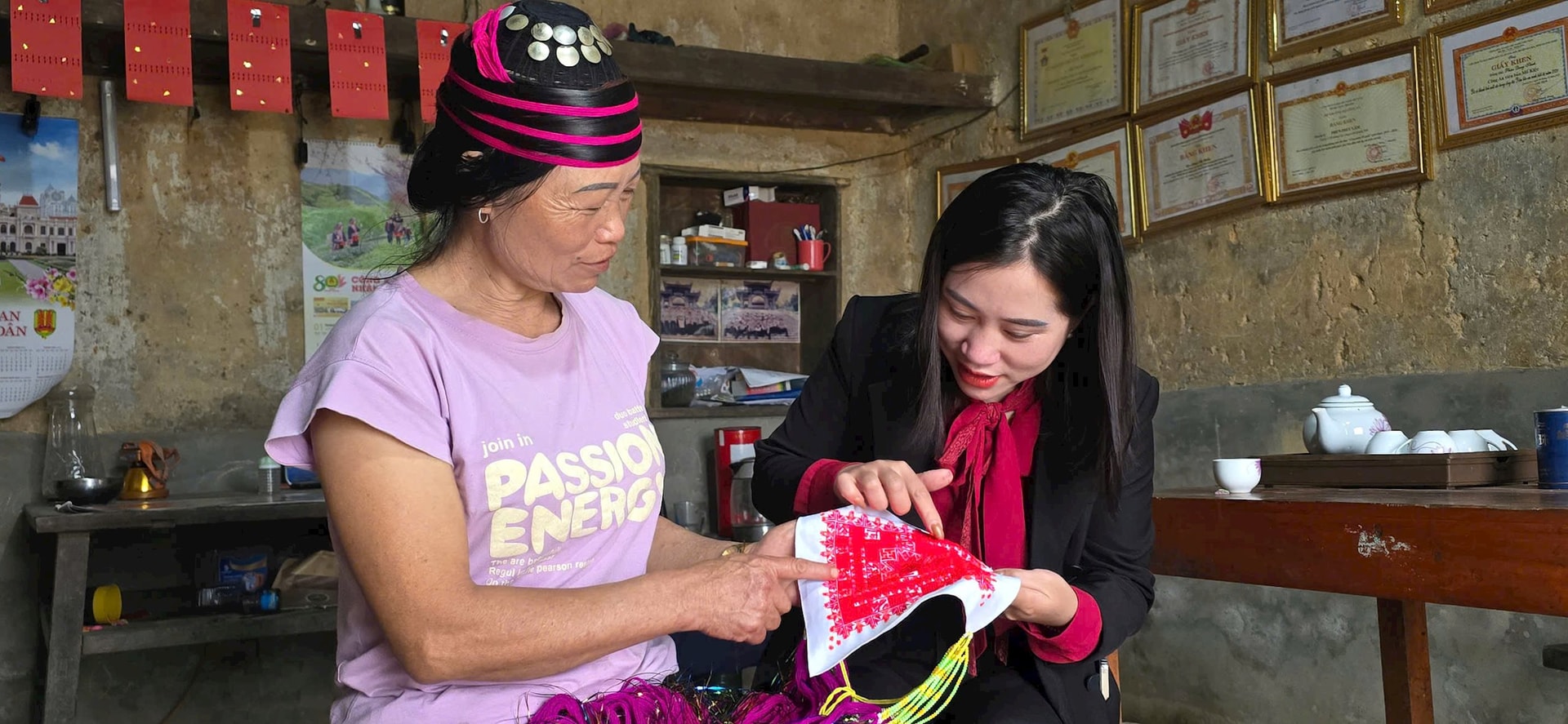
Artisan Chìu Thị Lan introduces the embroidery techniques used to create traditional costumes of the Dao Thanh Y people.
In Quang Son commune (Hai Ha district), everyone knows artisan Chiu Thi Lan from Mo Kiec village, who has made many positive contributions to preserving and teaching the traditional embroidery techniques and hair-tying methods of the Dao Thanh Y people.
Every day, outside of work hours, Mrs. Lan meticulously works at her embroidery frame, her nimble hands threading each stitch to create vibrant patterns on the black fabric.
Stopping her embroidery work, artisan Chìu Thị Lan shared: "For Dao Thanh Y women, the traditional costume is very elaborate, with many patterns and motifs that must be hand-embroidered and color-coordinated in a unique and distinctive way. To make a complete traditional outfit, each embroiderer needs at least 3 months of embroidery, and those unfamiliar with it may take up to a year. Because it's difficult to learn and time-consuming, not many people in Mố Kiệc village know how to sew traditional clothing anymore."
Not wanting the traditional craft to fade away, artisan Chìu Thị Lan proactively organizes training sessions for women in the village. She also actively encourages young people to wear traditional clothing during festivals, celebrations, and weddings, so that the Thanh Y Dao costume remains present in community life.
More than anyone else, people like Ms. Vien, Ms. Lan, and Mr. Sang have been contributing to enriching the cultural identity, preserving valuable resources for tourism and cultural development, and working towards the sustainable development of the land and people of Quang Ninh.
Source: https://daidoanket.vn/nhung-nguoi-gin-giu-van-hoa-ban-lang-10305310.html





















































































Comment (0)