Go through conflict to understand the value of peace.
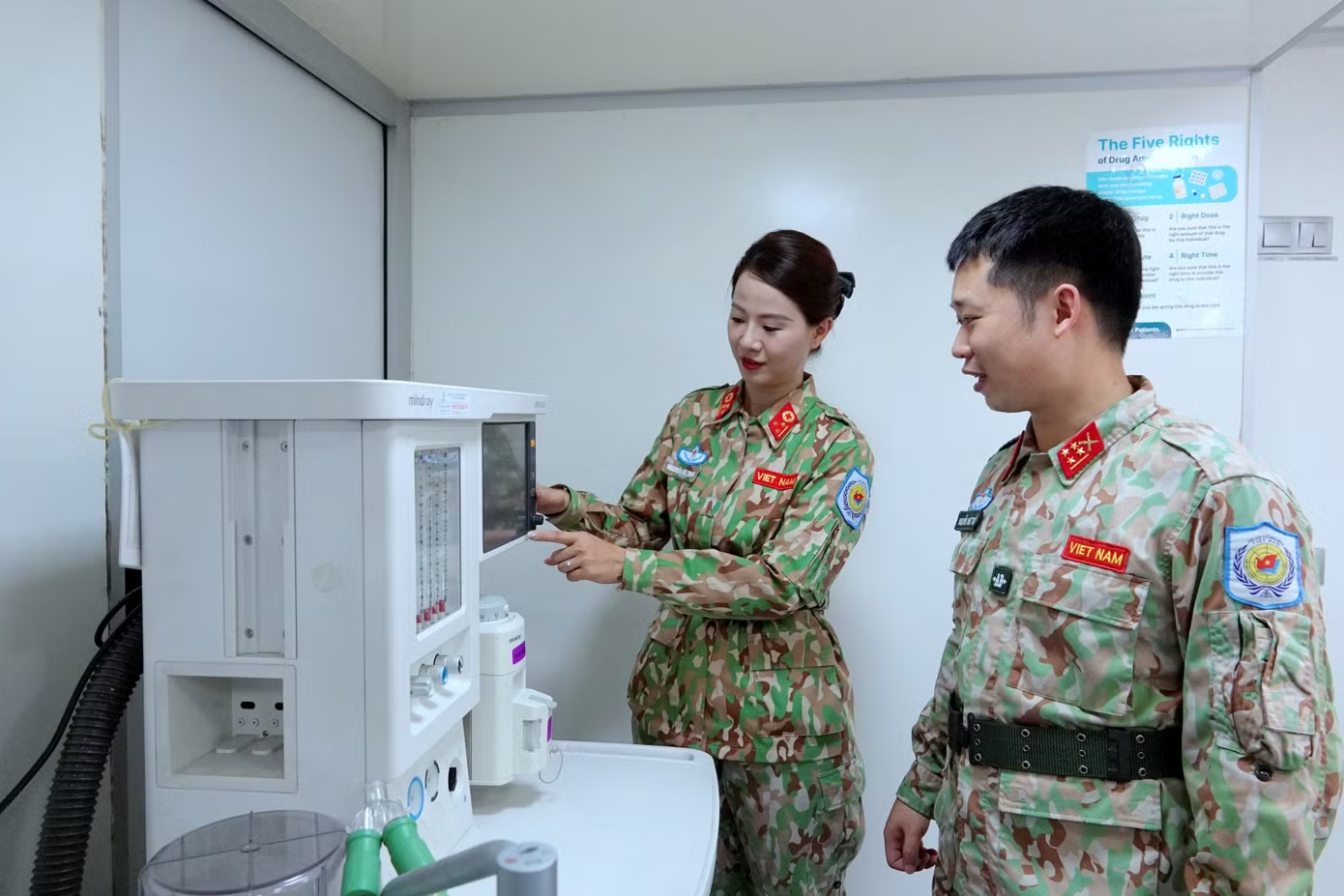
These days, the soldiers in the 2.8th Field Hospital are entering a crucial training phase before deploying for international missions.
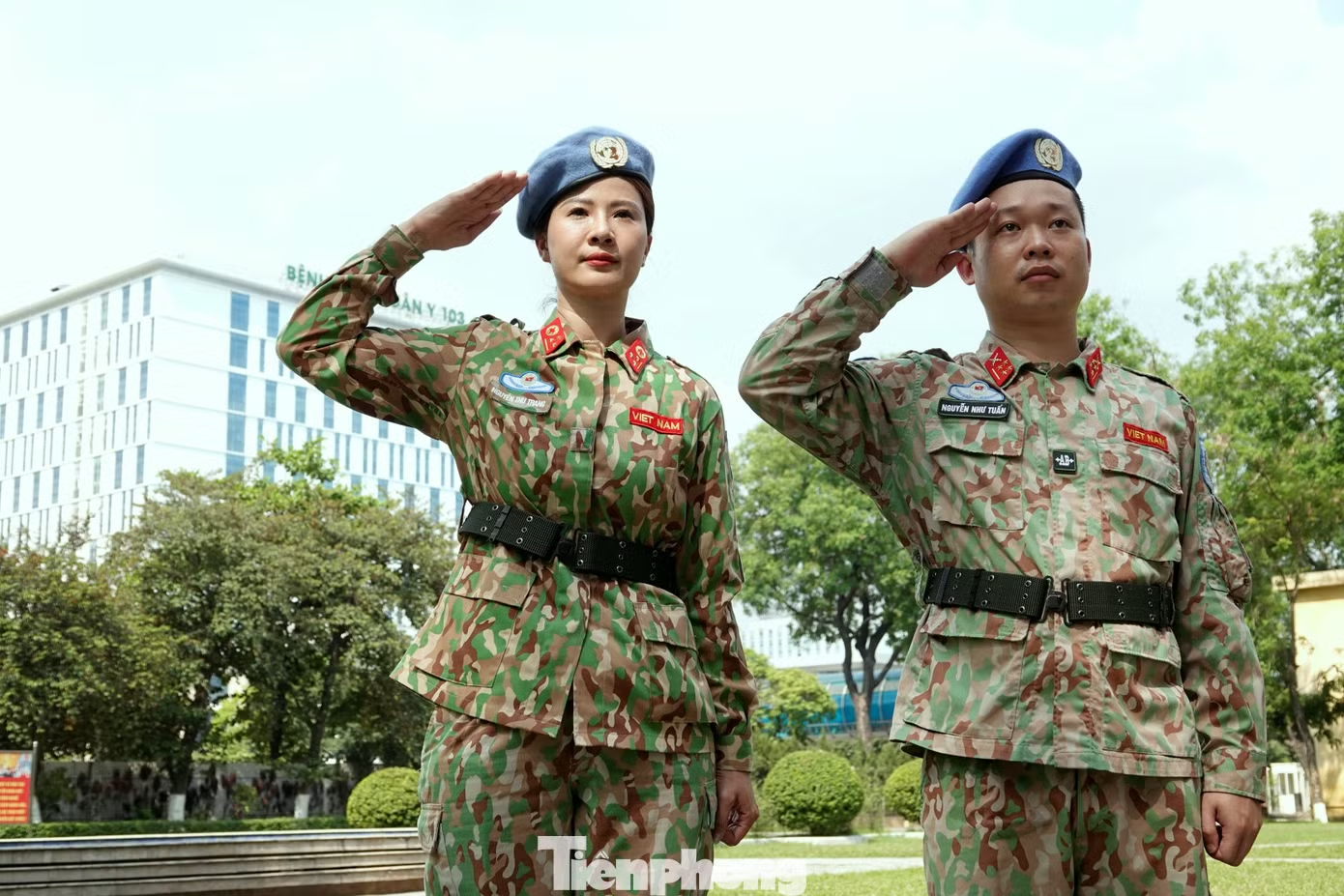
Having previously served as a Military Observer at the UNMISS mission in South Sudan from 2023-2024, Captain Nguyen Nhu Tuan (born in 1994, an officer of the Vietnam Peacekeeping Department) will return to this region in a completely new role: Administrative and Financial Assistant at Field Hospital 2.8.
According to Captain Tuan, during his tenure as a military observer in South Sudan, he had the opportunity to go deep into conflict zones and witness firsthand the difficulties and shortages in both security and healthcare faced by the local population.
In the young officer's memory, one of the most vivid was a long-distance patrol lasting several days to a remote village situated between the control lines of conflicting parties. When the patrol arrived, land and water disputes had just erupted between local tribes. A tense atmosphere hung over the area, and the risk of escalation into violence was imminent.
In that context, the role of military observers is not to use force to intervene. Their responsibility is to engage with the population, gather information, assess the situation, and contribute to de-escalating tensions between the parties.
“We started with sincerity, warm handshakes, and empathy for the losses and hardships they were enduring. Then, people gradually opened up and shared what truly mattered to them,” Captain Tuan recalled.
In Juba, the capital of South Sudan, he visited local schools many times. Although not too far from the city center, many schools were extremely underprivileged. The corrugated iron roofs were leaking, the classrooms were rudimentary, and desks, chairs, and textbooks were scarce. Some students had to walk 10-15km every day to get to class.
However, what surprised him was that many children here knew about Vietnam. During the exchange sessions, the students enthusiastically asked about the country that had experienced war and wanted to hear the story of how Vietnam rose up and rebuilt the country to achieve the peaceful life it enjoys today…


“Returning to Vietnam with practical experience regarding the local area, culture, and coordination mechanisms, I feel a responsibility to continue sharing and supporting my comrades at Field Hospital 2.8 in the upcoming deployment,” Captain Tuan confided.
“My wife is also a soldier. She understands that continuing to serve is not just a duty, but also a passion I’ve always pursued. That understanding is what gives me peace of mind to carry out my duties,” said Captain Nguyen Nhu Tuan.
From A80 to South Sudan
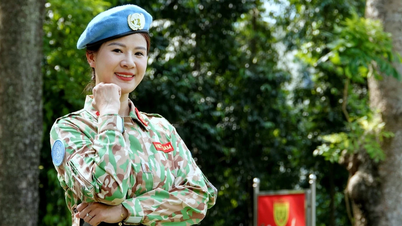
While Captain Nguyen Nhu Tuan chose to return to places he had been before, for Senior Lieutenant Nguyen Thu Trang (born 1993, nurse in the Intensive Care Unit, Military Hospital 103), South Sudan was the starting point of a completely new journey, in her role as Head Nurse of Field Hospital 2.8. Few know that the idea of joining the UN peacekeeping force came to her during the A80 mission in 2025.
At that time, Nguyen Thu Trang was a member of the Vietnamese Women's Peacekeeping Unit participating in the parade and march on National Day, September 2nd. The months of intense training, the long practice sessions under the scorching sun, and the strict requirements regarding conduct and regulations became a special milestone in her military career.
“What I remember most is the spirit of solidarity among the team. We came from many different units, but we always encouraged each other to overcome fatigue and complete our mission. When we marched in the peacekeeping force's uniform, the cheers of the people on both sides of the road filled me with very special emotions,” she recounted.
During the execution of the A80 mission and the period afterward, Lieutenant Trang gained a deeper understanding of the UN peacekeeping mission and the contributions of Vietnamese officers and staff at these missions, seeing them in a broader context of dedication, and decided to register to participate in Field Hospital 2.8.
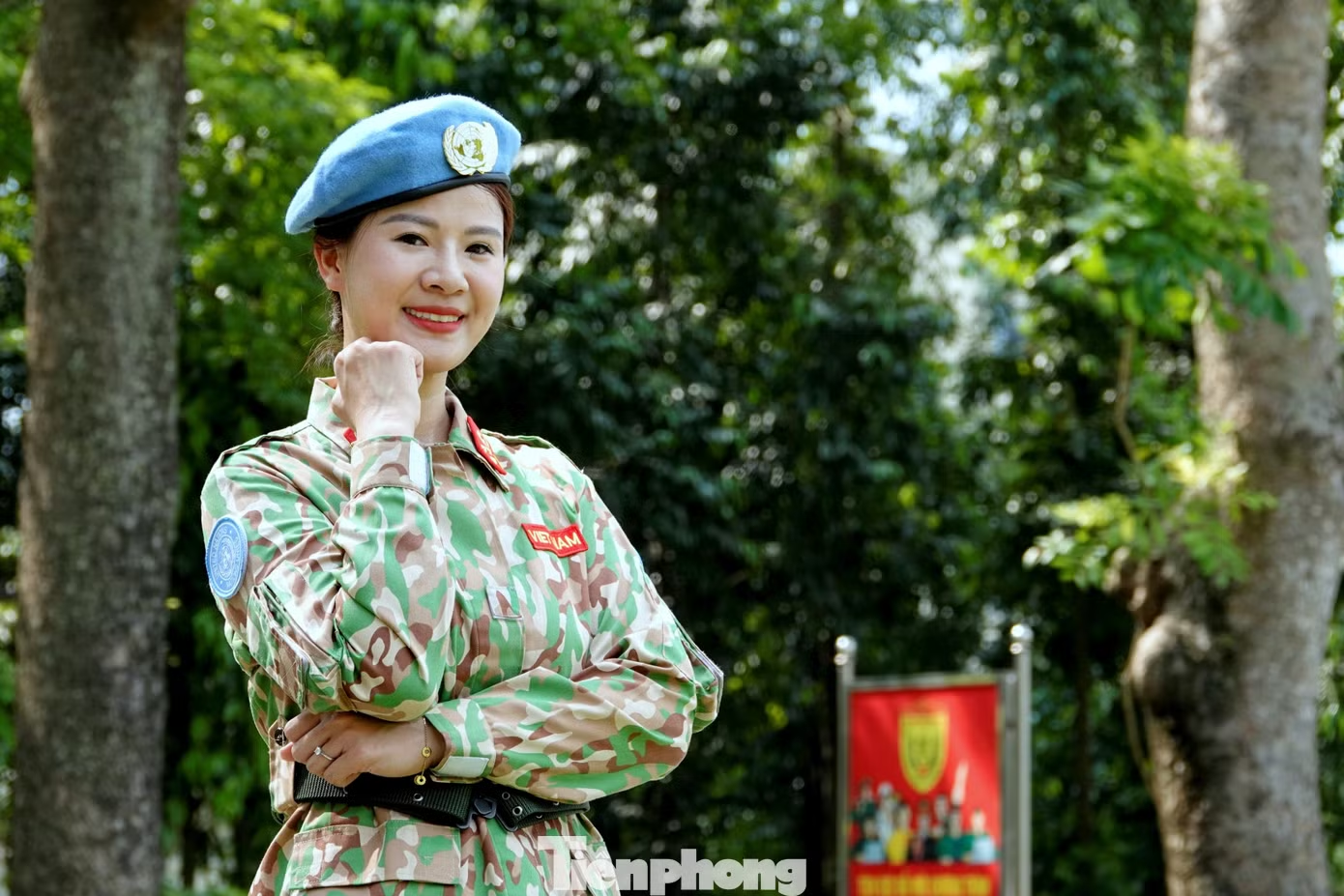
“My trip and that of my teammates to South Sudan will be a journey to showcase the image of a peace-loving Vietnam to international friends through the dedication, responsibility, and aspirations of Vietnamese youth in the new era,” said Senior Lieutenant Nguyen Thu Trang, a professional military officer.
For her, the biggest challenge during the selection and training process was the language barrier. Besides professional qualifications, members also needed knowledge of the local culture, skills for working in a multinational environment, survival skills, and the ability to adapt to the climate and living conditions in Africa.
"Initially, my English communication skills were limited, so I had to spend a lot of time self-studying, practicing listening and speaking every day, and participating in training courses organized by my unit. Thanks to that, I gradually became more confident," Lieutenant Trang said.



Unlike Captain Tuan, Lieutenant Trang's biggest challenge lies not only in the mission ahead but also in being temporarily separated from her two young children, born in 2015 and 2017. When they learned their mother was about to go to South Sudan for an extended period, both children were curious.
“The older child asked a lot of questions, like, ‘How long will you be gone? Will you miss me? Will you be able to call home?’ ‘If you’re gone for so long, what will I do if I miss you?’ And the younger one innocently asked me, ‘Are you going to teach the other children?’” she recounted.
Her husband and both sets of parents always encouraged her. This loving support helped Lieutenant Trang feel secure as she prepared for her first trip to Africa – where she and her teammates would bring their professional skills, sense of responsibility, and the image of a Vietnamese soldier to one of the most challenging UN missions.
Field Hospital 2.8 has a total of 70 personnel, including 25 officers and 13 female soldiers; 12 have served in UN peacekeeping missions for one term and one has served for two terms. The total training time before deployment lasted 9 months, including: English, military science, politics , logistics and technical skills, military medical expertise, pre-deployment training and field exercises.
Source: https://tienphong.vn/nhung-nguoi-tre-di-ve-phia-hoa-binh-post1855020.tpo
![[Image] A look back at the capital's preparations for the century-long master plan.](https://vphoto.vietnam.vn/thumb/1200x675/vietnam/resource/IMAGE/2026/06/29/1782750453122_quy-hoach-100-nam-minh-duy-1-2118-jpg.webp)
![[Photo] General Secretary and President To Lam works with the Party Committee of the Government on the work of preventing and combating storms, floods, extreme natural disasters and climate change.](https://vphoto.vietnam.vn/thumb/1200x675/vietnam/resource/IMAGE/2026/06/29/1782729441945_a1-bnd-0385-9454-jpg.webp)
![[Photo] National Assembly Chairman Tran Thanh Man attends the Conference to announce the Master Plan for Hanoi Capital City with a 100-year vision.](https://vphoto.vietnam.vn/thumb/1200x675/vietnam/resource/IMAGE/2026/06/29/1782709639728_ndo_br_1-jpg.webp)