Beyond changing how children learn and interact with the world around them, AI also opens up new opportunities and poses significant challenges in ensuring a safe and nurturing environment for children.
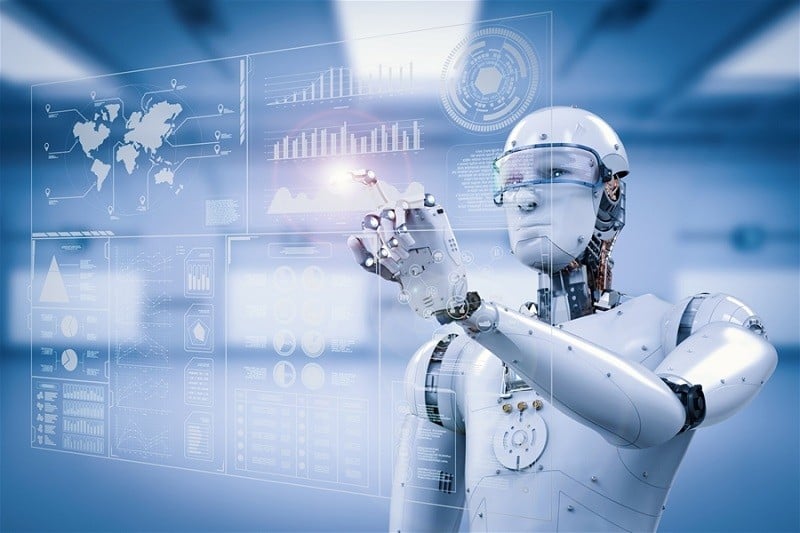 |
| Artificial intelligence (AI) is becoming an increasingly important field with a profound impact on many aspects of modern life. |
Risks come with convenience.
With its intelligence and computing power, AI has become an indispensable part of human life, including that of children. AI creates trends whenever children access the internet, interfering with their studies, entertainment, etc.; bringing many benefits and conveniences but also posing risks to children, including issues of privacy protection, safety, and impacts on their psychology and behavior.
AI has created breakthroughs in improving the education system and learning methods for children in Vietnam; opening up many opportunities, helping to improve and develop children's skills; providing interactive online learning applications; supporting personalization; creating an interesting and engaging learning environment... Children can access a vast amount of knowledge and exercises and receive instant feedback from AI systems.
Currently in Vietnam, several online educational software and programs applying AI technology are used by many schools, such as Hocmai.vn, VnEdu, GoMaths, STEM science and technology for children, Codelearn, CoderSchool, etc.
Children's thinking and creativity are also fostered when they engage in recreational activities and play on AI-based software such as smart video games (Garena Liên Quân Mobile, PUBG Mobile, or Foody Crush), and drawing applications (Colorize, Adobe Photoshop)...
These software programs not only provide relaxation and unique entertainment experiences but also stimulate children's intelligence, creativity, and logical thinking.
With its intelligence and convenience, AI brings an easier, more automated, and more convenient life to children. Applications like virtual assistants such as Siri, Google Assistant, and Grab are no longer unfamiliar and are used proficiently by children, supporting them in daily life such as controlling smartphones to find information, ordering rides, shopping online, or scheduling. AI has also been applied in smart home appliances, controlled by voice commands, such as smart washing machines and refrigerators, to best serve children's needs and improve their lives.
However, the risks posed by AI are also significant. AI is changing the way humans interact with machines and with each other; it affects the psychology and behavior of children; and it infringes on confidentiality and privacy.
Today, children are almost overly dependent on technology, especially smart software and applications that use AI. The more time children spend interacting with technology, the greater the risk of depression, behavioral disorders, and even addiction. They become heavily dependent on AI, especially in their studies, reducing their ability to think, research, work, and be proactive.
Furthermore, with its intelligent algorithms, AI can easily infiltrate children's private lives, collecting all kinds of information from their preferences, personal details, and images with ease; making children's lives and secrets insecure. This is especially true when children lack the ability to understand and assess risks, and do not recognize the serious consequences of providing personal information and images.
Furthermore, children also face the risk of accessing inappropriate information. All AI calculations are based on copying and "machine" computation, without selection or control, and therefore can provide harmful information such as fake news, pornography, obscenity, and violence.
Furthermore, the development of AI in education inadvertently leads to inequality, pressure, and comparisons among children today.
Recently, UNICEF also issued a warning about the risks to children related to AI, mentioning that AI could exacerbate inequality and bias, such as when some schools use machines to sort application forms for admissions, inadvertently excluding certain groups of students. Or, AI algorithms could intensify comparisons between children and others, leading to self-doubt. This could negatively impact children's self-confidence and mental health.
Another significant risk is the imbalance and disconnect between people. Over-reliance on AI and technology can stifle children's social skills, face-to-face communication, and relationship-building abilities. This can have negative consequences for children's overall development, particularly in their emotions and behavior. Children may not know how to control or express their emotions; they may not know how to interact with those around them.


| According to data published by service providers, as of March 2023, vnEdu is being used in 57 provinces and cities with over 3 million student records from 9,000 schools nationwide; considering only high school students, FUNiX currently has 3,090 students participating in its programming courses; by the end of 2020, hocmai.vn had over 4.5 million registered students. |
Protecting children from the dangers of AI.
For children, the use of AI requires caution and careful supervision from adults. Most importantly, it's crucial to ensure children are educated and guided on how to use technology safely, while maintaining a balance between technological advancements and other developmental factors for children. Therefore, a proper understanding and reasonable solutions are needed to ensure children access and use AI safely.
First, it is necessary to create a safe technological environment for children. The government and relevant authorities need to issue regulations related to content censorship before the release of applications and software using AI technology. This should include requiring service providers to provide warnings about content relevant to children.
Secondly, to enable children to protect themselves from the dangers of AI, awareness education is the most important measure. Children need to be equipped with basic knowledge about AI, technology, engineering, etc., as well as soft skills in using technology and social media.
This includes integrating instructions on using technology and smart applications, along with warnings about safety risks and negative aspects of these applications for children, as well as basic awareness of privacy rights and online responsibility.
Thirdly, measures are needed to monitor and manage children's use of AI technology. This means not allowing children "free" access to these technologies. Management can focus on time, content, and usage patterns to ensure children's safety and avoid unwanted consequences and impacts. This includes establishing rules for technology use, monitoring children's online activities, and creating an environment for conversation and discussion where children can openly and easily share their thoughts.
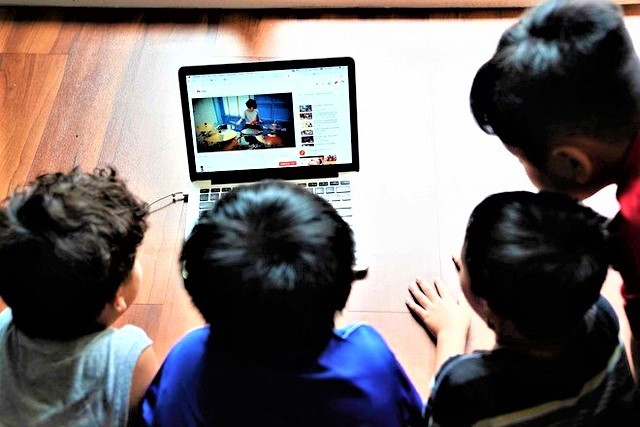 |
| Protecting children in cyberspace needs to be given special attention in child protection efforts in the coming period. (Source: Internet) |
Fourth, guidance is needed in how children approach and use AI. Instead of letting children use AI technology solely for entertainment, which can easily lead to negative influences, parents should encourage children to use AI technology creatively and beneficially; guiding them to access useful software and applications that support learning, research, critical thinking, and creativity.
Fifth, to prevent children from passively using AI and to fully exploit its features, it is necessary to build life skills and critical thinking in them. This includes equipping them with the ability to evaluate information, analyze, solve problems, and work in teams. In this way, children will not become dependent on AI, can protect themselves from potential risks, and truly master the technology.
This equipping can be achieved through organizing programs and courses on life skills, technology usage and mastery, and how to protect oneself from online dangers such as abuse, intrusion, and harmful content.
Sixth, to address the challenges of AI, coordination is needed among parents, teachers, schools, authorities, and service providers. This includes clearly defining the responsibilities of each party in protecting children from the risks posed by AI.
In addition, clear policies and regulations are needed to protect children's privacy and personal data; AI service providers need to make commitments to protecting personal information to create a safe environment and protect children from abuse.
In Vietnam, AI training programs for children are still relatively new and not yet widely available. Some organizations, educational centers, and companies have implemented AI training activities for children, such as robotics and programming classes, giving children the opportunity to experience and learn.
However, investment and support from the Government and relevant agencies are needed to make AI training programs for children an integral part of education in Vietnam.
Understanding and addressing the impact of AI on children is crucial. We need to leverage the opportunities that AI technology offers while ensuring that children are protected and safe during their interactions with AI.
Close coordination among the State, relevant agencies, families, schools, and service providers is needed to build a new, equitable, and diverse educational environment that supports children in understanding and using AI intelligently and safely. Only then can we ensure that children will benefit from and thrive on the advancements of AI, becoming confident, creative individuals who make positive contributions to society in the future.



Some suggestions on rules for using AI technology with children.- Usage time: Clearly define the time spent using AI technology, clearly separating learning time from playtime, limiting the amount of time children spend on entertainment, and specifying prohibited activities during learning time… - Application content: managing and controlling the content of AI software that children are using; understanding what children are learning, playing, and exploring; clearly outlining what children are allowed and not allowed to do. - Children's personal information: strictly manage children's personal information; set a rule for children that they should never publicly disclose personal information such as their full name, school, address, house number, phone number, etc.; explain to children that this information can be collected and used by others for malicious purposes. - Establish rules and punishments for children who don't comply. This should be discussed with the child before requiring them to follow the rules. Parents should also maintain a firm and consistent approach to punishment to help establish good habits. - Teach children how to refuse invitations from friends. |
(*) Department of Cyber Security and High-Tech Crime Prevention, Ministry of Public Security.
Source