

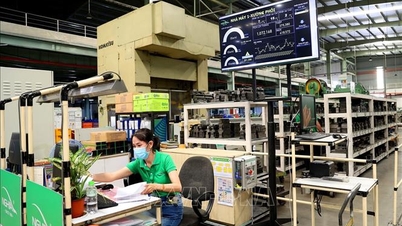
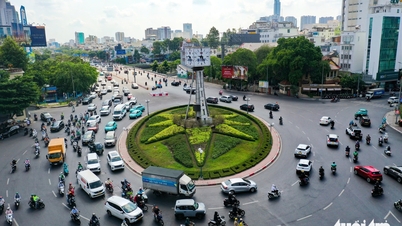
In the context of continued global instability, the 20% retaliatory tariff on Vietnamese goods exported to the US, announced by President Donald Trump, will impact various sectors, especially key industries in Vietnam and Ho Chi Minh City such as electronics, footwear, and textiles, depending on the tariff levels and the relative competitiveness of other countries exporting to these key sectors.
Next, how will the 40% tariff on transit goods impact the situation? It's crucial to clearly understand the basic terms of "transshipment" to ensure a flexible response. Accordingly, goods exported from countries enjoying preferential tariffs must have their entire production process, or most of it (except for certain exempted goods), located within that country. Furthermore, information regarding the origin of exported goods must be truthful and free from deception throughout the entire production process. Therefore, will manufacturers using transit routes in Vietnam either terminate their projects or adjust their actual production investment plans and prioritize domestic supply chains?
While the 0% tariff on US goods entering Vietnam presents an opportunity for Vietnam to access high-quality technology and products from American manufacturers at lower costs, it presents a significant challenge. It impacts not only trade but also investment, supply chain shifts, technology, and human resources. Therefore, the optimal solution remains the genuine awakening of the country's internal strengths. Specifically, it requires revitalizing the three traditional growth drivers—investment, consumption, and exports—while simultaneously promoting new growth drivers such as the digital economy , green economy, circular economy, sharing economy, knowledge economy, and night-time economy.
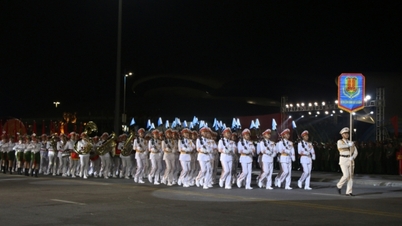
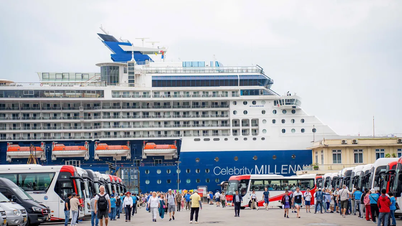
In fact, in the first six months of the year, the service sector contributed the most (8.58%) to the GRDP growth. Specifically, total retail sales of goods and consumer service revenue reached an estimated VND 654,279 billion, an increase of 15.8%. Tourism recovered strongly, with total revenue increasing by 27.3%. In the remaining six months, the most anticipated highlight is the 80th anniversary celebration of the founding of the nation. With a larger scope (covering the entire country and the newly reorganized city after administrative restructuring), the appeal of tourism, services, and consumption continues to be a breakthrough opportunity for Ho Chi Minh City, with the "celebration" aspect already proven to contribute significantly to economic growth through the 50th anniversary of the Liberation of the South and National Reunification in the three months prior.
Furthermore, the disbursement of public investment in the first six months of the year was relatively good, reaching over 31,716 billion VND, achieving 37.1% of the total plan, higher than the same period last year in absolute value and percentage, and exceeding the set plan by 10%. Total social investment, including public and private investment, has seen many positive changes, especially with many projects being resolved, bringing capital into market circulation – evidence of the city government's efforts in "unblocking" and "opening up" the market. Piloting the creation of a "green channel" for 10 priority projects for public and private investment, along with a "cutting-off" program to significantly reduce administrative procedures, should be a priority action.
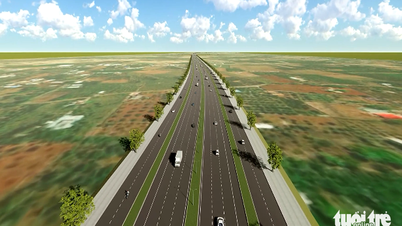
With new development opportunities, existing potential, and inter-regional connectivity of the Ho Chi Minh City megacity, transportation infrastructure and the challenge of mobilizing resources are highly attractive and feasible. From metro lines, ring roads, expressways, to the Saigon-Dong Nai river system, these are certainly powerful catalysts for significant growth.
New institutions ready to operate, such as international financial centers, multi-functional service centers, and big data centers, along with policies, infrastructure, and personnel, will create the "pathway" to form exhibition and service complexes compatible with each satellite city, such as: South Saigon, Thu Dau Mot - Tan Uyen, and the Ho Tram - Vung Tau integrated tourism complex…
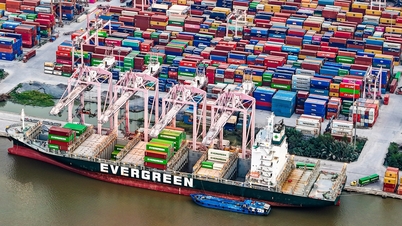
Ho Chi Minh City will accelerate renewable energy projects and expand the development of marine economic services with the Can Gio international transshipment port, the Cai Mep Ha free trade zone, and the Con Dao special economic zone. In addition, the green transformation and digital transformation strategies across transportation, energy, and consumption will be carefully planned and implemented with the combined strength of space, infrastructure, people, and institutions.
Source: https://www.sggp.org.vn/no-luc-tang-toc-ve-dich-post803152.html


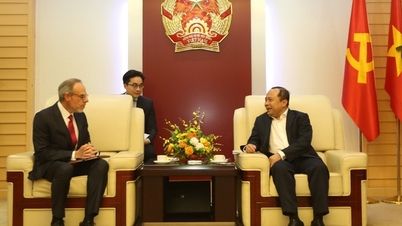
![[Photo] General Secretary and President To Lam receives Amazon's Senior Vice President David Zapolsky](https://vphoto.vietnam.vn/thumb/1200x675/vietnam/resource/IMAGE/2026/05/22/1779466547770_a1-bnd-3513-6601-jpg.webp)
























































Comment (0)