Recently, many people have reported receiving phone calls from delivery drivers informing them that their orders have been received. If the customer is not present at the delivery location, the driver says they will return the item and request payment via bank transfer.
However, these are fake orders, and gullible people who transfer money will be scammed by imposters posing as delivery drivers. Furthermore, if victims click on links sent by the scammers, their phones could be taken over, and money could be stolen from their bank accounts.
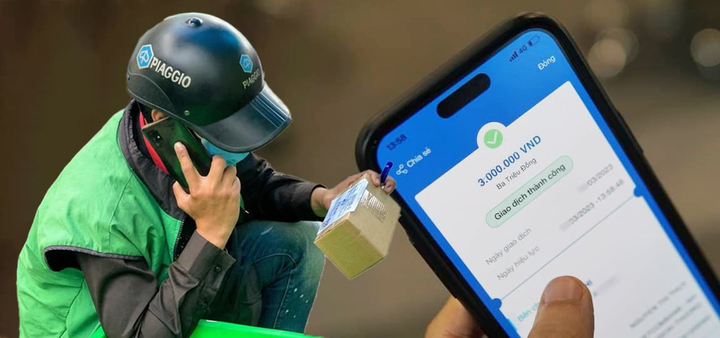
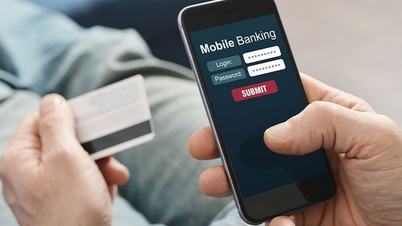
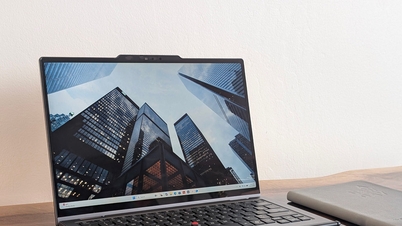
Scams involving impersonating delivery drivers to commit fraud and steal property have become rampant recently. (Illustrative image)
Being scammed because of fear of losing money unfairly.
Lieutenant Colonel Phan Quang Vinh, Head of the Crime Prevention and Combat Team for Property Offenses (PC02, Criminal Police Department - Hanoi City Police), said that impersonating a shipper to call and deliver goods is a new scam tactic.
"The perpetrators exploit live streaming sales on social media platforms (TikTok, Shopee, Facebook, etc.) to collect order information, including name, phone number, address, type of goods, and amount to be paid... After about 1-2 days, the perpetrators will contact the buyer using the phone number provided in the order," a representative from the PC02 Department stated.
The scammers' tactic is to contact customers during business hours when no one is home for deliveries to private residences; and outside business hours for deliveries to offices, agencies, or workplaces.
Because online shopping is popular, happens frequently, and orders are always placed correctly, people tend to be complacent, trusting, and often request to leave the goods and then transfer the payment.
“At this point, the scammers send bank account information for people to transfer payment. After about 1-3 hours, they contact you again and say they sent the wrong account number for registering a delivery driver. After the transfer, the driver will automatically register as a driver, money will be deducted monthly, and then they will ask for instructions on how to unregister,” Lieutenant Colonel Phan Quang Vinh pointed out the scammers' tactics.




Lieutenant Colonel Phan Quang Vinh, Team Leader of the Crime Prevention and Combat Team against Property (Criminal Police Department - Hanoi City Police).
Due to the fear of losing money unfairly, people will follow the requests and instructions of these individuals.
At this point, the scammers will use other accounts to contact people through social media applications (Zalo, Telegram, Viber, etc.) and instruct them to unsubscribe by requesting them to transfer money to designated bank accounts. Then, the scammers will use various excuses, claiming the victim's transfer was incorrect, the account number was wrong, the transaction was not in the correct format, etc., and ask them to repeat the transaction or transfer more money.
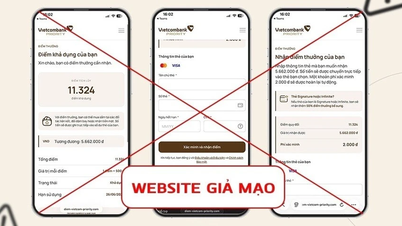
In addition, they also send fake website and application links, requesting victims to access and install the applications, then seize control of the mobile device and transfer all the money in the victim's account to another bank account to steal it.
Fraudsters often contact victims through fake phone numbers and "burner" social media accounts with profile pictures similar to those of delivery companies (Giao Hang Nhanh, Giao Hang Tiet Kiem, Viettel Post, EMS) to exploit their victims' lack of trust and gain their confidence.
To avoid falling into scams, people need to verify information related to orders and delivery services; absolutely do not publicly share personal information such as phone numbers and addresses on social media; do not transfer money until you are sure you will receive the goods; absolutely do not click on strange links, and do not provide OTP codes to anyone.
People should not accept any orders they did not order, transfer money, or pay for orders that do not have clear photos of the tracking number and recipient information. If they detect any unusual activity, they must immediately stop the transaction and report it to the authorities.
Tracing difficulties
According to Lieutenant Colonel Phan Quang Vinh, high-tech fraud criminals adapt very quickly. These criminals update and change their tactics frequently, following the political situation in the country and the world, and even related events. Therefore, the key to preventing and combating high-tech fraud is the vigilance of the people.



Sharing his thoughts on the problem of victims having their phones taken over through fake links and applications, the team leader said that this situation often occurs on phones running the Android operating system, because this operating system is "open".
After creating malware-laden software, these perpetrators trick and manipulate victims into installing it on their computers via links. Preventing this tactic is extremely difficult, as the perpetrators only need to change one character for the link to become active again.
After gaining control of the victim's phone, the scammers will have software that can execute multiple money transfers simultaneously, from the victim's bank account to various other accounts.
Notably, the beneficiary bank accounts are often fake accounts, not owned by the actual individuals, making it very difficult to trace the source of the money. In some cases, even after tracing the source of the money and identifying the perpetrators, law enforcement faces significant obstacles because the culprits are not in Vietnam.
In addition, Lieutenant Colonel Phan Quang Vinh also warned people to be cautious when investing in stocks, as many individuals intentionally create links and websites with interfaces that are similar to or ambiguously resemble legitimate stock exchanges. As a result, people transfer money under the pretext of trading stocks, but in reality, they are depositing money into the accounts of these scammers.
Source: https://vtcnews.vn/no-ro-chieu-gia-mao-shipper-de-lua-dao-canh-sat-chi-cach-pha-bay-ar903704.html