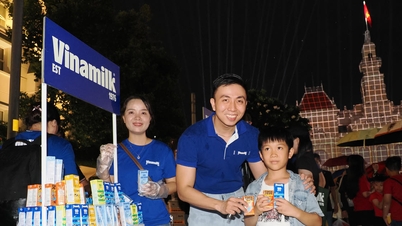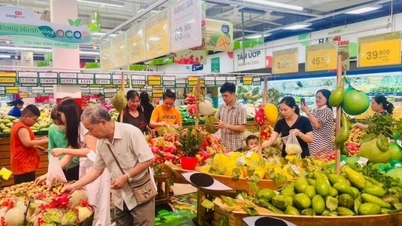
Especially during the Lunar New Year season, OCOP (One Commune One Product) specialties and traditional craft products with sophisticated designs, specific origins, and environmentally friendly features are increasingly chosen by many families. This is also an opportunity for local agricultural products to move beyond seasonal consumption and become products with long-term cultural and economic value.
Behind this shift lies a change in production mindset, from selling what one has to producing what the market needs. In this, the role of young intellectuals stands out, dedicating their efforts to researching, processing, and expanding markets for local agricultural products.
From farmland to new value chains
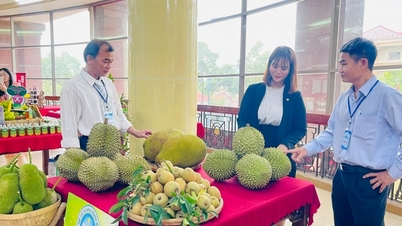
In Tuyen Quang province, Mr. Hoang Van Nghiep, residing in Hamlet 7, Luc Hanh commune, has chosen to innovate the way pomelos are shaped, a familiar fruit in the traditional Tet fruit platter. Since 2020, Mr. Nghiep has developed a line of pomelos shaped like gold bars, gourds, Buddha faces, and the characters for "Wealth" and "Fortune," preserving traditional auspicious meanings while meeting modern aesthetic demands. These products sell for many times the price of regular pomelos and are highly sought after by customers.
Simultaneously, Mr. Nghiep experimented with grafting Dien pomelo with red velvet pomelo to improve quality and commercial value, contributing to affirming the position of Tuyen Quang's agricultural products. It is noteworthy that Mr. Nghiep proactively shared his techniques with many households, from fruit shaping to care and propagation. His "working together" mindset contributed to the formation of a linked production area, helping people stabilize their output and increase their income.
On another front, deep processing is helping agricultural products extend their "seasonal shelf life". Many units are investing in drying and crisping lines, such as the Chieu Yen Clean Banana Cooperative and the Tuyen Quang Dried Fruit Production Company...
According to Mr. Ta Huu Quang, Director of Phuc Ninh Organic Fruit Cooperative (Xuan Van commune), processed products not only increase value but also help ensure proactive consumption during peak season, are convenient for preservation and transportation, and are suitable as gifts during Tet.
In Phong Quang commune (Thai Nguyen province), the Na Oi chrysanthemum field is creating a new approach to agriculture linked with culture and tourism. Nearly 20 households are participating in growing both dwarf and ancient chrysanthemums on an area of more than 2 hectares.
Since 2023, Duong Quang Cooperative has invested in a modern drying system to produce chrysanthemum tea and dried chrysanthemums. According to Nong Thanh Nha, Director of the Cooperative, the goal is to diversify chrysanthemum products and expand promotion through trade fairs and online channels.
On weekends, the chrysanthemum fields welcome hundreds of tourists who come to visit and learn about the planting, harvesting, and processing process. These activities help to not only sell agricultural products but also promote them in a friendly and lively way.
Technology gives wings to agricultural products.
Besides deep processing, digital transformation is helping local agricultural products access wider markets, aligning with modern consumer trends.
In Cam Ha kumquat village (Hoi An Tay ward, Da Nang city), Ms. Nguyen Thi Phuc started her business with organic products made from kumquats such as tea, wine, syrup, jam... among which, kumquat jam achieved OCOP 3-star rating.
With many years of experience in the tourism industry, Ms. Phuc clearly identified her target customer group as domestic and international tourists visiting Hoi An. Dried kumquat strips or kumquat tea have become a culinary cultural experience and a unique local gift. In the future, Ms. Phuc aims to develop the kumquat growing area in a green agricultural direction combined with experiential tourism, gradually building a tourism-oriented craft village model similar to Tra Que vegetable village.
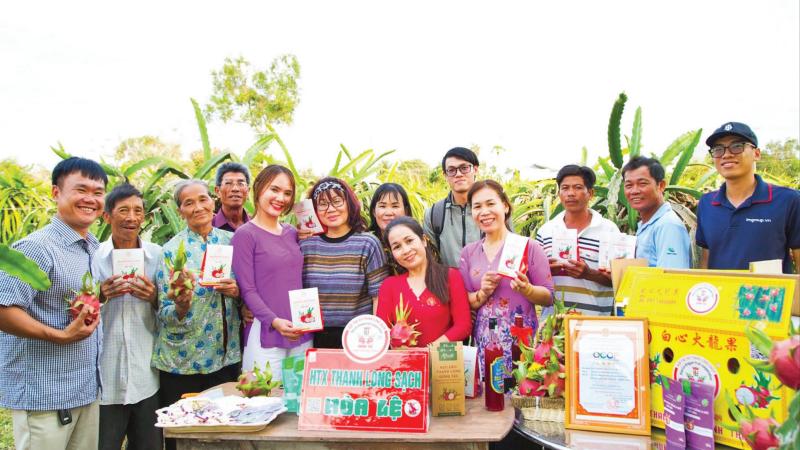
Driven by the aspiration to bring local specialty fruits to a wider market, in Lam Dong province, Ms. Nguyen Hoang Thu Huong, Director of Hoa Le Clean Dragon Fruit Cooperative (Ham Thuan commune), has dedicated many years to research aimed at enhancing the value of dragon fruit. The cooperative currently boasts 17 OCOP 3 and 4-star products, 5 outstanding provincial-level rural industrial products, and 3 outstanding regional-level products, with products widely distributed nationwide through digital platforms and e-commerce centers.
The products developed are diverse, derived from dragon fruit, flowers, and by-products, such as seed oil, dragon fruit flower tea, and dragon fruit wine. To ensure the quality of the raw materials, Ms. Huong encourages farmers to switch to cultivating according to Good Agricultural Practices (GAP).



Currently, the cooperative manages over 200 hectares of dragon fruit according to GAP standards, supplying 8,000 to 10,000 tons annually for export, while also processing approximately 1,000 tons at its factory, creating jobs for nearly 100 workers, mostly women.
From various rural areas, numerous models are quietly contributing to enriching the value of Vietnamese agricultural products. When young people choose to return to farming, but with a new mindset, agricultural products are no longer limited to a single harvest, but extend through multiple product forms, markets, and generations of consumers. Delicious, clean, and visually appealing fruits and vegetables are not only gifts of spring but also the fruits of knowledge, creativity, commitment, and responsibility to their homeland by these young people...
Source: https://nhandan.vn/noi-dai-mua-hoa-trai-que-huong-post943051.html































![[Video] Experts predict: Typhoon No. 1 is likely to enter the Gulf of Tonkin, causing very heavy rain in the Northeast region.](https://vphoto.vietnam.vn/thumb/402x226/vietnam/resource/IMAGE/2026/07/03/1783084195895_z8004474966557-2e5d8dd84c53d976b830d2de88ab7766-3999-jpg.webp)
![[Video] Weather forecast for tonight and tomorrow, July 4, 2026: The remnants of Typhoon No. 1 will cause widespread and prolonged heavy rain in Northern Vietnam.](https://vphoto.vietnam.vn/thumb/402x226/vietnam/resource/IMAGE/2026/07/03/1783083905760_thum-dem-png.webp)