

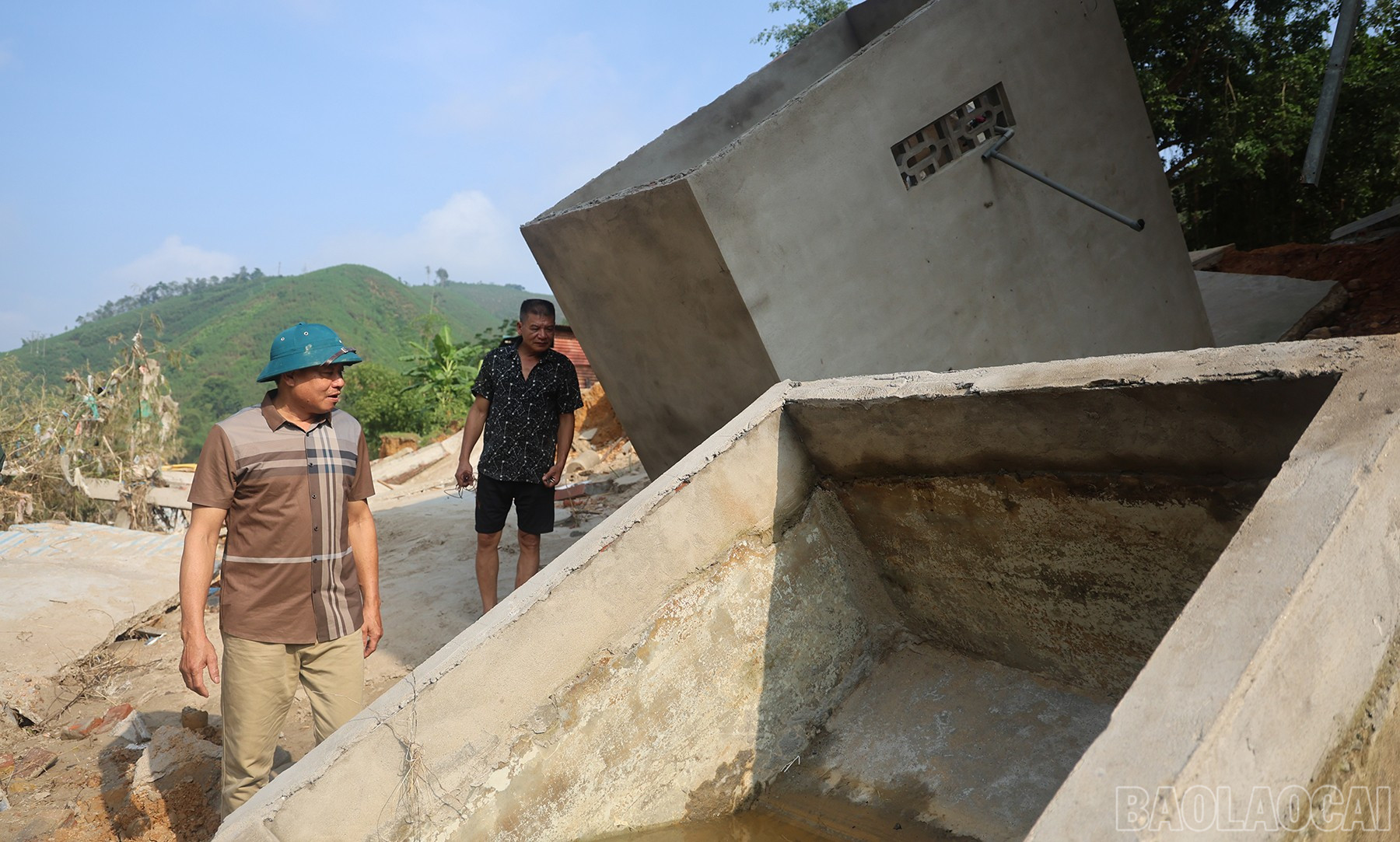
The remnants of Typhoon No. 3 in September 2024 swept away Mr. La Van Ha's family home into the river. This year, before they could even move into their newly completed house, heavy rains and floods caused by the remnants of Typhoon No. 10 continued to erode the riverbank, collapsing the entire foundation of the house.
Mr. Ha shared: "Our family saved up to build this house to have a stable place to live after typhoon number 3 last year, and now it's all gone down the river. With such continuous losses, it will be difficult for our family to recover."
About 100 meters from Mr. Ha's house is the family of Ms. La Thi Tuyet. For many days now, after the riverbank collapsed, taking with it the entire livestock system and outbuildings, Ms. Tuyet's family has remained worried. Cracks have started appearing more frequently and are spreading, causing the family sleepless nights.
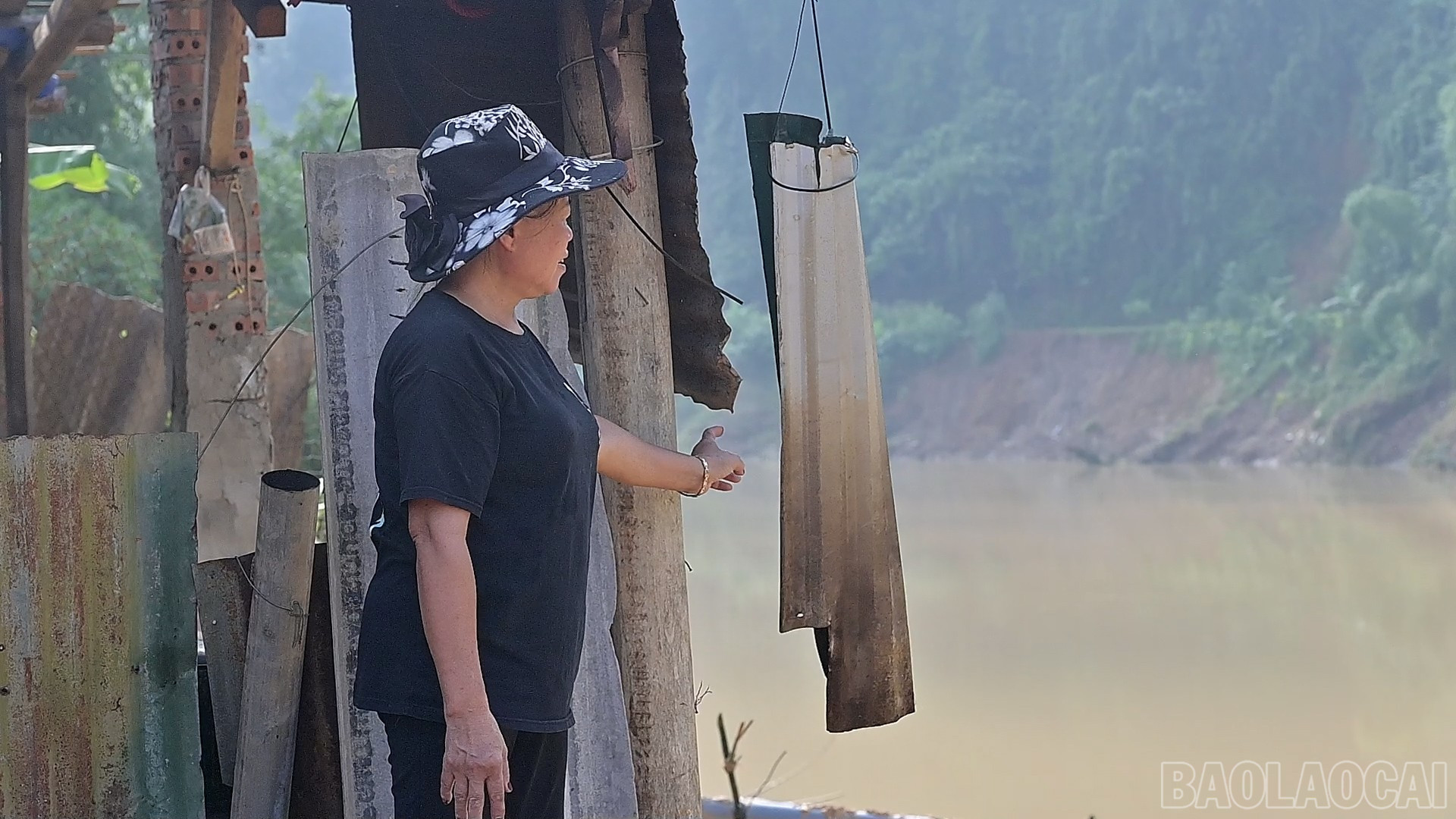
Ms. Tuyet said: "Last year, our family built a farm on the hillside, but it was completely buried by a landslide. This year, we borrowed money to build barns by the river, but they were all swept away. Since the floods, we haven't had the appetite to eat or drink, and with the forecast of another storm approaching, we don't know how our family will cope."
Residents of Hamlet 2A, Pho Rang, said they have lived there for many years. Previously, the riverbed was narrow, only a few tens of meters from the foundations of their houses, but since the Phuc Long hydroelectric plant started impounding water and generating electricity, subsidence and landslides have become more frequent.
During the annual rainy season, the river water rises quickly and recedes slowly, always hovering near the foundations of the houses, weakening the soil and making it prone to landslides. Watching the land around her house being gradually swallowed by the river, Ms. Vu Thi Men worried, unsure how long her family's livestock pens and shops could remain standing.
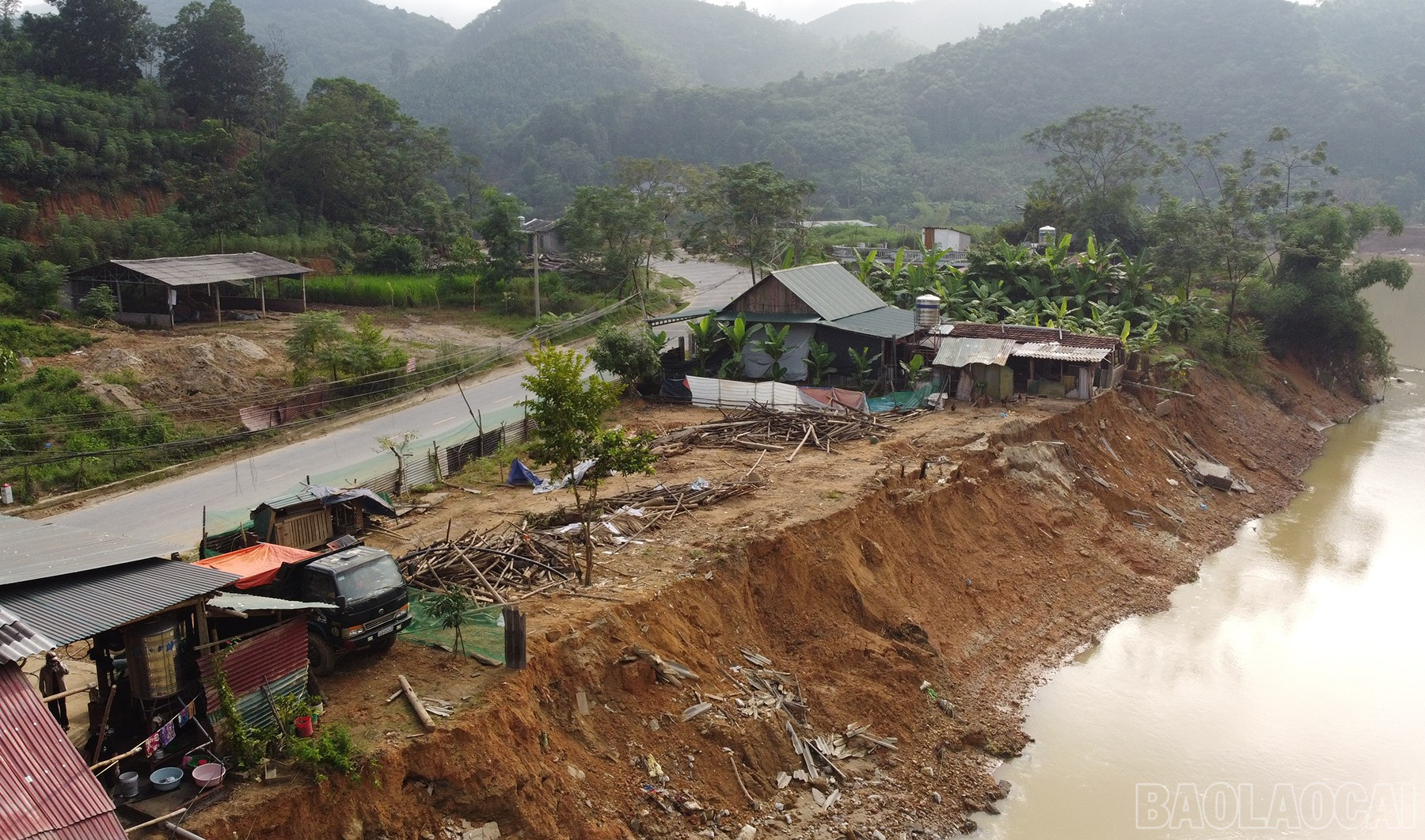
According to the Civil Defense Command of Bao Yen commune, the recent floods caused significant damage to people and property in the area. This included 11 houses collapsing and 27 houses being flooded. In particular, heavy rains combined with the release of water from hydroelectric dams and the damming of the Chay River caused the water level to rise, resulting in deep flooding in many riverside residential areas.
After the floodwaters receded, numerous landslides occurred, affecting the lives of local residents. The large volume and duration of the landslides mean that remediation requires significant resources. To ensure the safety of people's lives and property, based on weather and hydrological conditions, local authorities have reviewed the situation and urged residents to move to safe areas before the floods occur.
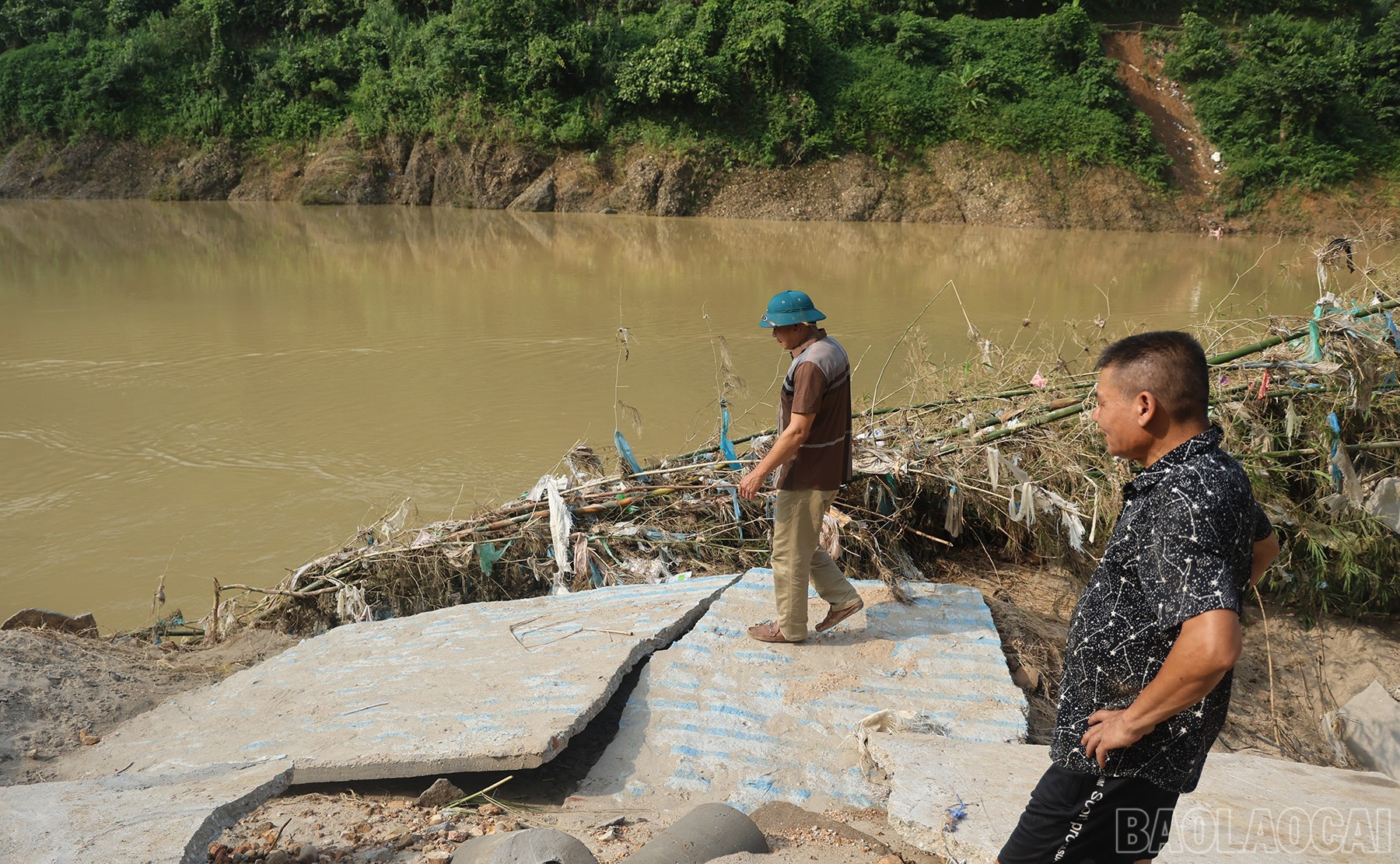
Ms. Dang Thi Hong Nhung, Deputy Head of the Economic Department of Bao Yen commune, said: "The recent floods caused damage to some areas along the Chay River. Currently, we are mobilizing forces to assist people in evacuating their homes and property from areas at risk of landslides. Afterwards, we will continue to survey and encourage people to move to safer locations."
Along the main course of the Chay River, from the upstream to the end of the former Lao Cai province, there are eight hydroelectric power plants. With the current operation of the hydroelectric reservoir system in this basin, landslides will continue to occur in vulnerable areas during heavy rains and floods. Mobilizing resources to build embankment systems will be very difficult; therefore, to ensure long-term stability for the lives of the people, consideration should be given to planning safer locations for them to live in.
Source: https://baolaocai.vn/noi-lo-ben-bo-song-sat-lo-post883833.html





























![[Photo] Prime Minister Pham Minh Chinh receives the Chinese Ambassador to Vietnam](https://vphoto.vietnam.vn/thumb/1200x675/vietnam/resource/IMAGE/2026/04/05/1775397481797_ndo_br_dsc-5512-jpg.webp)































































Comment (0)