

Following Mrs. Moong Thi Minh to her peanut harvest in Khanh Thanh village, Nam Can commune (Ky Son district). This year, Mrs. Minh's family planted nearly 1 hectare of peanuts, with the harvest season beginning at the end of October 2023. "This year's peanuts aren't as plentiful, but they're very firm. In good years like this, we earn about 15-16 million VND. But a good peanut harvest often means a poor rice harvest," Mrs. Minh shared.
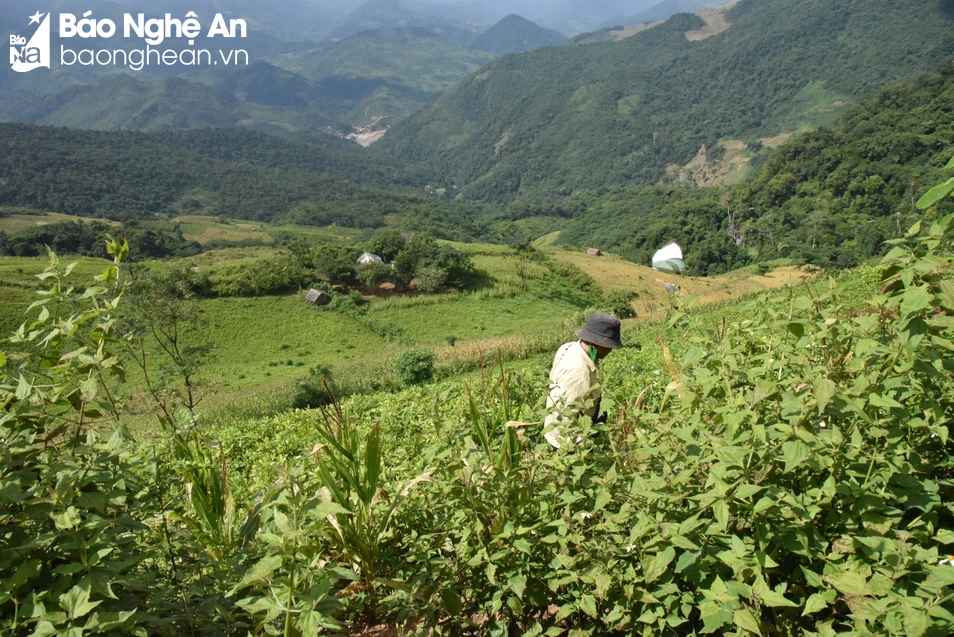
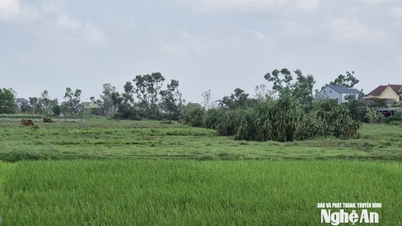
Then, Mrs. Minh pointed towards the rice paddies next to the peanut field. From a distance, the yellowing of the rice under the midday sun looked desolate and withered; the rice grains were few, the percentage of empty grains was high, and the plants had burnt, yellowing leaves.
The rice paddies in Khanh Thanh village, where people cultivate their summer-autumn rice crop, are mostly located on the peaks or along the steep slopes of hills and mountains. In 2022 and 2023, the entire village planted 38 hectares of upland rice.
Ms. Lu Y Khun, a resident of Khanh Thanh village, said that this year the rice crop was almost entirely lost due to prolonged drought, coupled with the steep slopes of the rice fields which prevented water retention. Fortunately, there are still peanut fields to "support" the farmers, providing them with a source of income as they prepare for the cold winter season.
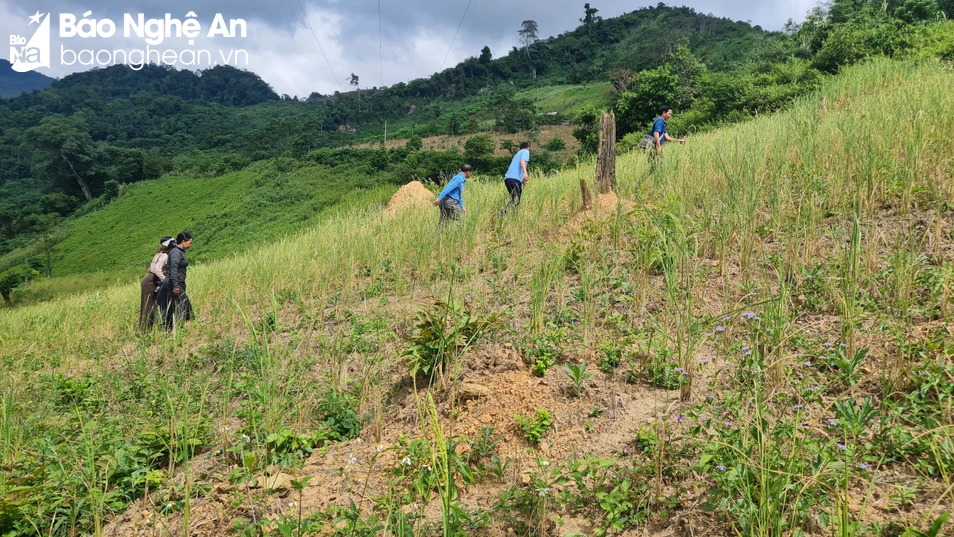

The Khánh Thành hamlet in the border commune of Nậm Cắn is home to 100% Khơ mú ethnic minority people, with 74 households and 410 inhabitants. The hamlet is located quite far from the commune center, about 4km away. The roads are mostly unpaved and rocky, and according to the villagers, the only way to get to their fields and check on their crops is on foot during rainy weather.
According to Mr. Ho Ba Po, Chairman of the Farmers' Association of Nam Can commune, in the 2023 summer-autumn crop season, the entire commune planted approximately 365 hectares of upland rice, distributed across 6 villages, with an estimated harvest of 394.8 tons. Of these, Huoi Poc village had the largest area with 100 hectares, Truong Son with 95 hectares, and Tien Tieu with 80 hectares, while Noong De village had the smallest with 15 hectares.
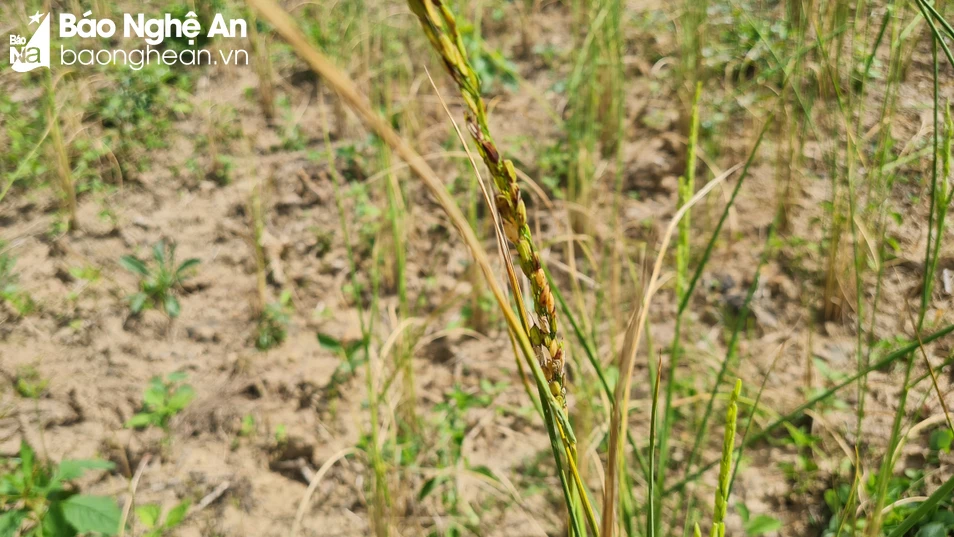
“This year, two villages, Khanh Thanh and Pa Ca, experienced crop failures in their upland rice fields, affecting a total area of over 60 hectares. The main reasons were drought followed by heavy rain, which resulted in insufficient water retention during the hot season and severe erosion during prolonged rainfall.”
The people of Nam Can also shared that in recent years, the weather has been erratic, with many prolonged and consecutive heatwaves affecting people's lives and economic development, especially farming. As a result, some households have abandoned rice cultivation and switched to growing other crops, or skipped the entire cropping season.
Therefore, for upland rice cultivation in 2022, the entire Nam Can commune only met 90.13% of the planned planting area. The situation is expected to be similar in 2023.

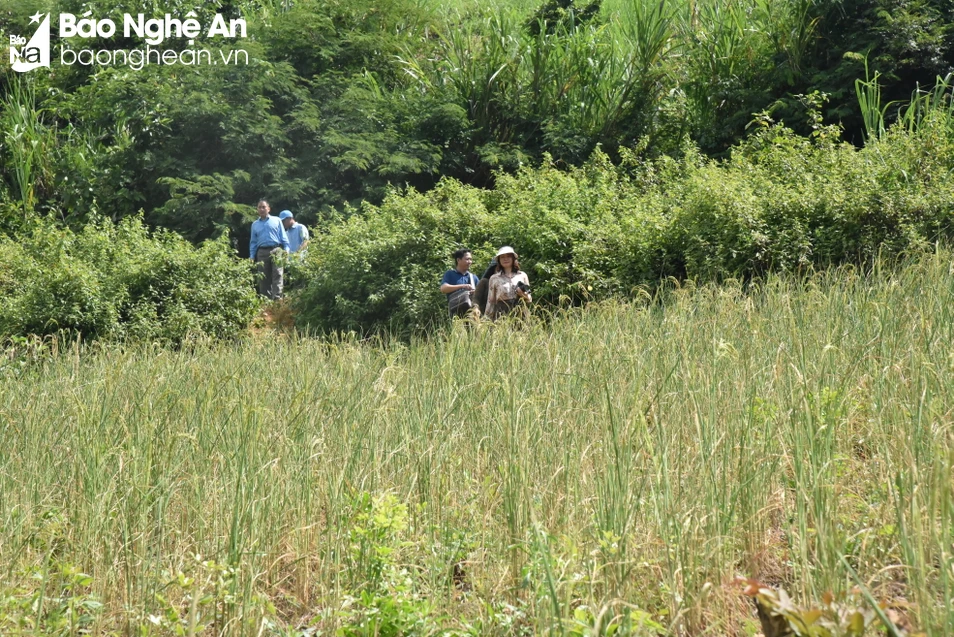
It is known that Ky Son district has more than 8,000 hectares of summer-autumn rice, and the people have almost finished harvesting. The average yield is about 4 tons/ha, with a total production of 3,233.2 tons; of which upland rice accounts for about 5,000 hectares, with a yield of 12 quintals/ha, and a production of 6,128 tons.
Source











































![[Video] Sunset at Lap An Lagoon – Where the sun sets over the fishing nets](https://vphoto.vietnam.vn/thumb/1200x675/vietnam/resource/IMAGE/2026/05/31/1780192137701_beach-landscape-sea-water-nature-grass-745871-pxhere-com.jpeg)
































Comment (0)