

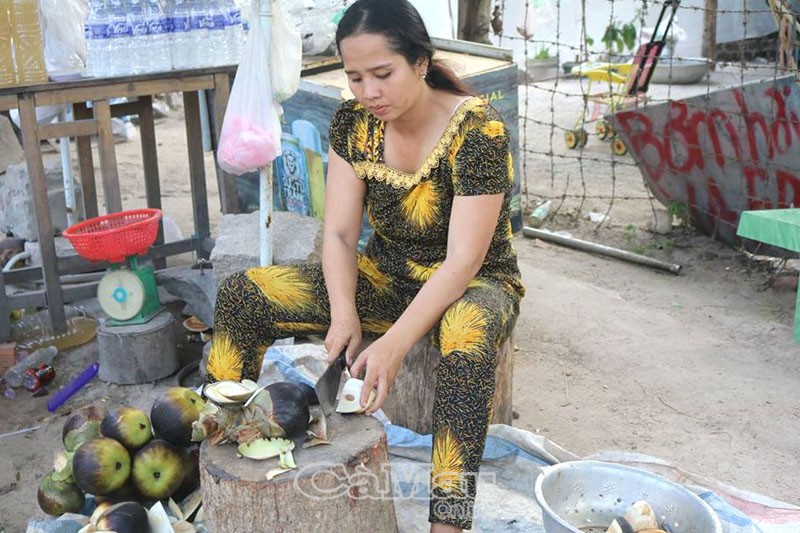
The palmyra palm is a type of palm tree with a fan-shaped canopy and a tall, thick trunk similar to that of a coconut tree, but less rough. Palmyra palms produce large clusters of fruit, growing in bunches like coconuts. The fruit is dark purple when unripe, turning chestnut-colored when ripe, with a yellow interior, a strong aroma, and a green stem. However, unlike coconuts, palmyra palms do not contain water; they must be cut open to extract the soft, smooth flesh inside.
 |
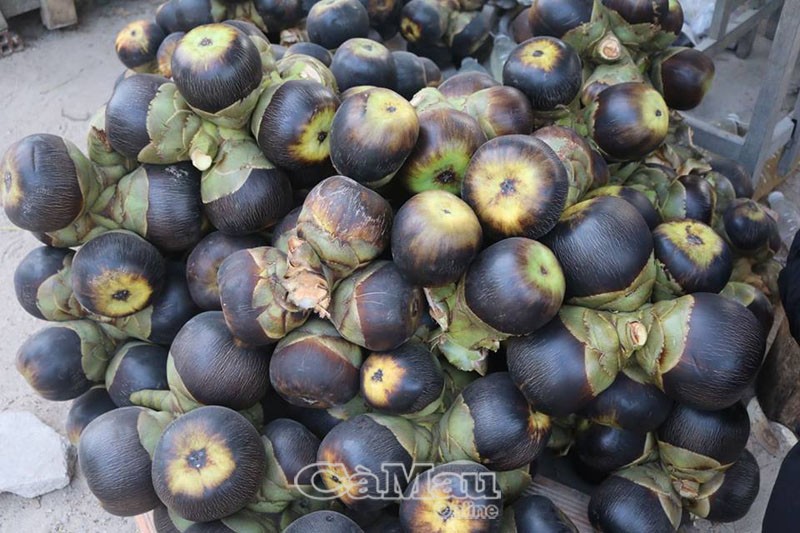 |
| Fresh palm fruit, with its flesh extracted and mixed with chilled palm juice, makes a wonderful refreshing drink for hot days. |
Palm trees grow abundantly in border provinces such as An Giang and Kien Giang, and are closely associated with the lives of the Khmer ethnic minority. The name "palm tree" originates from the Khmer word "th'not," which locals sometimes mispronounce as "thốt lốt." All parts of the palm tree are utilized by the people, from the trunk to the leaves and fruit. During the dry season, when the rice fields begin to rest, the people here rely on income from the palm tree. Some families harvest the fruit, while others collect the sap to make sugar or cakes. Although the income isn't particularly substantial, many families still maintain their traditional occupation, making a living from this multi-functional tree.
The palm sap harvesting and sugar-making season usually begins in November and lasts until around May (lunar calendar) of the following year. During this time, the palm sap is very sweet, and the yield of sugar after cooking is also higher. Palm sap is harvested early in the morning. During the harvest, the sounds of people picking fruit from the tops of palm trees dozens of meters high, and the sound of knives striking the rough palm bark, echo across the palm hills, creating a rustic and simple sound.
After the palm sap is extracted, it is filtered through a thin membrane to remove any impurities and insects. Then, it is poured into a large pan; on average, 8 liters of sap must be cooked for about 6-7 hours to concentrate into a batch of sugar. The concentrated palm sugar, made from palm sap, retains its mild sweetness and is molded into small round cakes or stored in jars. Connoisseurs often choose the yellowish-brown variety as it retains its natural flavor, while white palm sugar is considered refined.
Children who accompany their parents in harvesting palm fruit, as young as ten, can already distinguish between unripe and ripe fruit, and identify the seeds on which side to pick carefully without damaging them. During the rainy season, the palm tree trunks become slippery, making climbing and harvesting much more difficult. Therefore, from June onwards, the price of palm fruit is higher than in the dry months.
To make a glass of palm sap, locals painstakingly insert bamboo tubes into the flower stalks from night until morning to extract the fragrant liquid. Served with palm rice and ice, it creates a uniquely delicious and unforgettable flavor. The palm sap blends with the palm rice to create an indescribably soft, chewy, and sweet dish. The sap smells like forest flowers, is cool and pure, while the rice is crispy, soft, and chewy like young coconut rice. If left to ferment for too long, the sap turns sour, and locals have even created a type of wine with a very special flavor. For ripe palm fruit, the mature flesh (pulp) is pounded and the juice is extracted and mixed with rice flour and palm sugar to make palm rice cakes. When steamed, palm rice cakes are golden brown and light and fluffy. The most famous palm rice cakes are made by the Cham people in Tan Chau and Chau Giang (An Giang province).
Born from the hard work and dedication of the local people, from a simple, rustic flavor found in the kitchens of yesteryear, this specialty made from the palm tree has now become familiar to tourists near and far, a fragrant and heartfelt gift from the homeland.
Nghia Huu
Source: https://baocamau.vn/nong-nan-vi-thot-not-a248.html


![OCOP during Tet season: [Part 3] Ultra-thin rice paper takes off.](/_next/image?url=https%3A%2F%2Fvphoto.vietnam.vn%2Fthumb%2F402x226%2Fvietnam%2Fresource%2FIMAGE%2F2026%2F01%2F28%2F1769562783429_004-194121_651-081010.jpeg&w=3840&q=75)


Comment (0)