

.jpg)
"The key to unlocking" Cham music
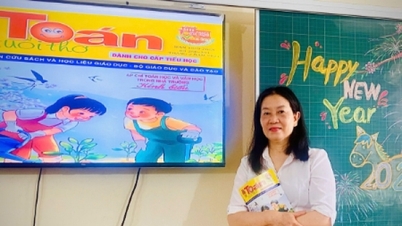
The story begins with the article "The Process of Interaction and Transformation of Cham and Vietnamese Music" by musician Van Thu Bich (published in Quang Nam Newspaper in May 2023). This article is one of 12 works that helped Van Thu Bich's name be announced at the Vietnam Music Awards ceremony in the field of music criticism (organized by the Vietnam Musicians Association at the end of 2024).
Since her first book, "Music in the Rituals of the Cham Brahman People" (National Ethnic Culture Publishing House - Hanoi ), published in 2004, musician Van Thu Bich has had many more valuable research works published in central and local specialized newspapers and magazines.
Van Thu Bich has a burning passion for Cham music. From a very young age, the ancient capitals of Tra Kieu, the My Son Sanctuary, the Cham Sculpture Museum, and their priceless value have captivated the musician.
"Living in Quang Nam province, a land that witnessed the golden age of Champa civilization, I, out of love for what remains, have ventured to explore a glimpse of Champa art and music," the female musician shared.
Venturing into a field with few researchers in the 1990s, she encountered numerous obstacles, especially since the Cham community was very closed off in sharing its traditional cultural values.
She vividly remembers the villagers' words, which implied reproach, saying, "Many people have come to learn about it, but there has been no response." That caution made her realize that, to obtain the "key" to unlock the treasure trove of Cham music, nothing is better than sincerity and patience.
"When people trust you, they'll share anything. I'm fortunate to have recorded, filmed, and preserved valuable materials about the folk music and rituals of the Cham people," said musician Van Thu Bich.
Cham musical material
The deeper musician Van Thu Bich delved into her research, the more troubled she became by the reality of the gradual disappearance of generations of Cham musical artisans, while the next generation showed little interest.
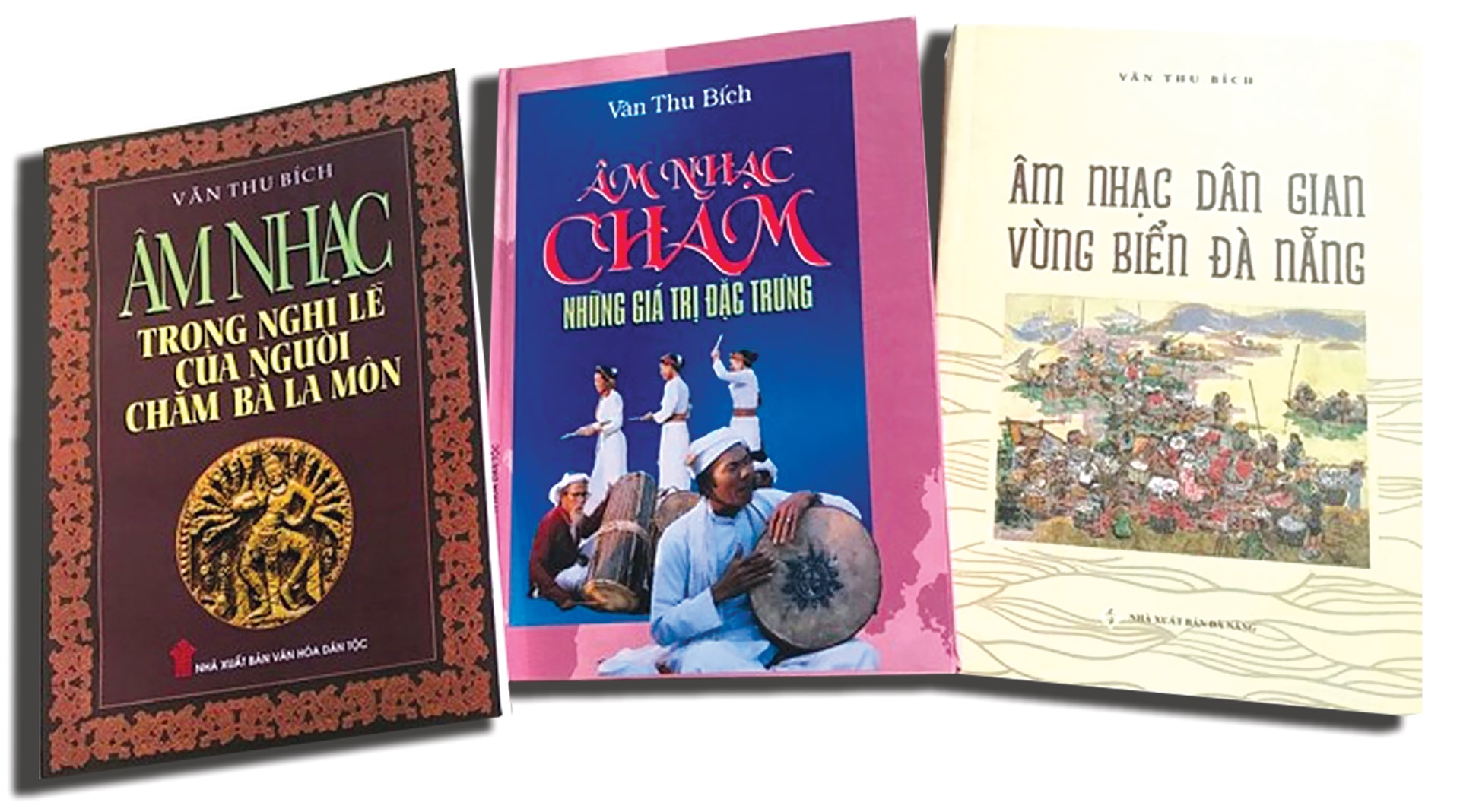
Scholar Thien Sanh Canh, artist Truong Ton - famous for his mystical saranai horn playing at the My Son Sanctuary in the past… have all passed away, leaving her with much regret.
According to musician Van Thu Bich, fortunately, for a long time, Quang Nam invited artisan Truong Ton to teach at the My Son temple complex, giving many locals and foreign tourists the opportunity to learn about the treasure trove of Cham music. Cham folk dances were also promoted more widely.
"In recent years, more researchers and lecturers have collected, recorded, and filmed Cham festivals and musical activities such as the Katê festival, and published traditional Cham music publications. Many musicians have also incorporated Cham music into their contemporary compositions, helping to spread it to the community."
However, research, collection, and dissemination efforts still face many limitations. Therefore, the restoration and promotion of Cham music requires systematic steps. It shouldn't just stop at individual collection and recording, but requires long-term investment from the central level down to the grassroots, such as: introducing Cham music into schools, theaters, and other cultural exchange activities,” musician Van Thu Bich analyzed.
Reshaping the value of traditional art
In her research on Cham music, the female musician embarked on a journey of immersion and experiences that few others have. The culinary story about the pink melon is a rather interesting example.
Ms. Bich recounted that when the Cham people cook soup, they use a hammer to crush a watermelon, which makes the soup sweeter and more flavorful. She also mentioned that the ritual of offering sacrifices on the ground instead of on a table is another unique aspect of Cham culture.
The way she immersed herself in reality, living among the Cham community, made Van Thu Bich feel a responsibility to speak out and offer constructive criticism to preserve traditional cultural values.
“There have been regrettable misunderstandings regarding the performance of Cham music and dances. As a music researcher, in addition to my published books, I will continue to write articles and conduct research to clarify issues that many people have long mistakenly believed. For example, the performance space for Cham music is on a mat spread out on the floor. Yet, nowadays, many places make artists stand and play the ghi-nang drum or hold the para-nung drum while dancing, believing that this is what makes it more attractive. This only causes Cham music to lose its essence and fade its inherent identity,” she lamented.
Another common misconception, which researcher Van Thu Bich believes needs correction, is that many people misunderstand the image of ancient Apsara dancers wearing revealing, "two-piece" costumes. These costumes were only used in the royal court, to serve the emperor.
In fact, dances such as fan dances, hat dances, or water-carrying dances are all polite and reflect a "discreet culture." When studying Cham statues in museums, one can clearly see the modesty of the costumes depicted on the statues, showing thin layers of fabric, not the somewhat revealing modern Cham dance styles that many might mistakenly believe to be traditional Cham dances.
"In the future, I will continue to write articles aimed at redefining the true nature of Cham art. Through this, I hope to help people have a correct understanding and avoid the misrepresentation and promotion of Cham music and dance values within the community," the female musician shared.
Source: https://baoquangnam.vn/nu-nhac-si-say-am-nhac-cham-3153934.html










































































Comment (0)