

Accordingly, the water level in the upstream of the Mekong River fluctuates with the tide, gradually rising and peaking around October at alarm level 1. This year's flood in the Mekong Delta is likely to be a minor one. Flood levels will be low and vary significantly with the tide from mid-July, increasing in the latter half of July to mid-August and reaching the flood peak.
In the Đồng Tháp Mười region (Tây Ninh province), since the beginning of July, floodwaters have started to arrive but are still very low, with an average daily increase of 1-2cm in rice fields in areas such as Tân Hưng, Vĩnh Hưng, and Tân Thạnh communes. At the Hồng Ngự canal, the water level measured in Tân Hưng commune is 98cm, 26cm higher than the same period in 2024. The Dương Văn Dương canal in Thạnh Hóa commune also saw a rise of about 50cm. According to Tây Ninh provincial authorities, over 186,500 hectares of summer-autumn rice crops in the Đồng Tháp Mười region, currently in the harvesting stage, are at risk of being affected, especially those located in low-lying areas prone to flooding. Farmers need to proactively reinforce dikes to avoid damage.
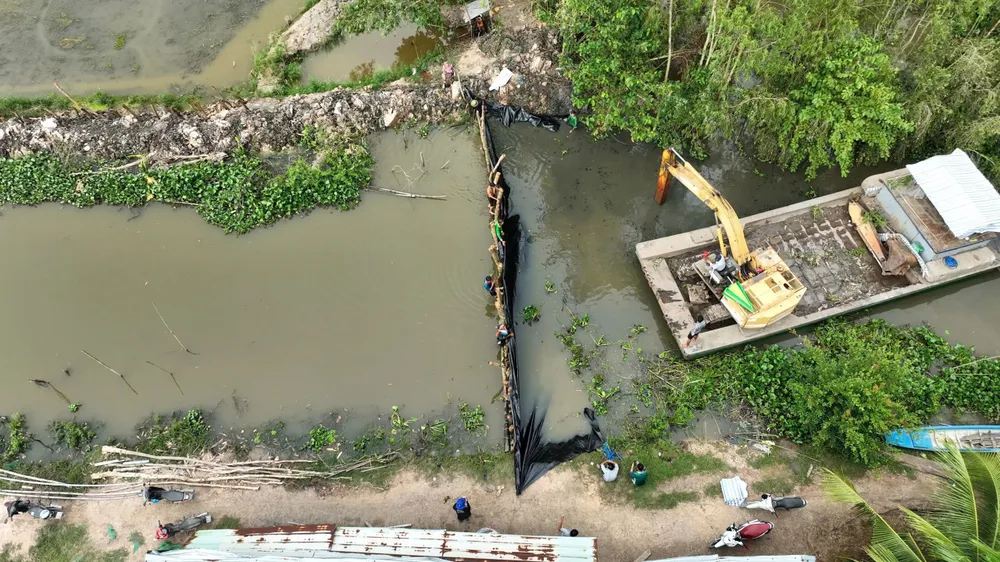
Authorities and relevant agencies in the Dong Thap Muoi region have mobilized machinery and equipment to build stone embankments and dikes to prevent flooding. At the same time, they are urgently repairing and reinforcing weak sections of dikes, embankments, and structures at risk of collapse, and operating irrigation systems to prevent and control flooding.
Source: https://www.sggp.org.vn/nuoc-lu-bat-dau-do-ve-dong-thap-muoi-post803566.html

































































































Comment (0)