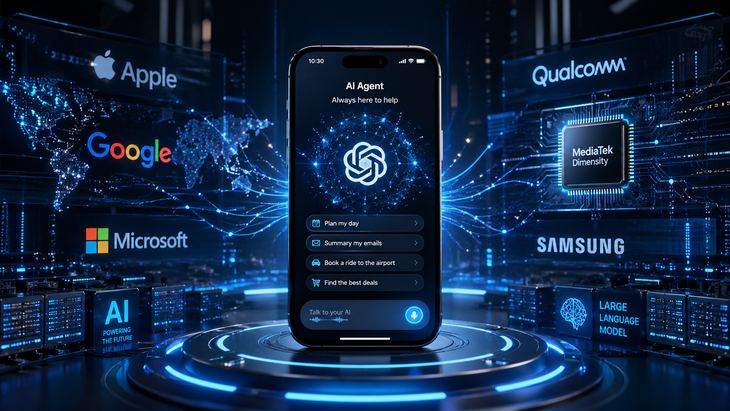
OpenAI is developing AI smartphones to replace traditional apps.
After revolutionizing how people interact with technology, OpenAI is reportedly preparing to enter a new arena: smartphones. This device could completely eliminate apps, replacing them with a central AI that controls all tasks.
OpenAI wants to break free from its dependence on Apple and Google.
According to Tuoi Tre Online 's research, OpenAI is building its own hardware ecosystem instead of continuing to rely on Apple or Google's platforms.
The goal isn't simply to create a new smartphone, but to possess a device where artificial intelligence can operate most deeply, powerfully, and with the fewest limitations. In the current model, operating systems like iOS and Android tightly control app access, making it difficult for AI to comprehensively intervene in all user tasks.
Analysts believe that only by controlling both the hardware and the operating system can OpenAI deploy a comprehensive AI agent system. Smartphones are the only devices capable of capturing real-time user information, from location, habits, schedules to daily usage behavior. This is the most important data source for AI agents to operate effectively.
Owning a personal phone also gives OpenAI access to a much richer source of contextual data compared to an app installed on a third-party device.
Smartphones no longer have apps; they're just AI agents.
The biggest difference this phone has is its ability to eliminate the traditional app model.
Instead of opening separate apps to order a ride, food, check email, or manage tasks, users only need to interact with a single AI agent. The AI will understand the request, the usage context, and automatically perform the necessary tasks.



For example, instead of opening a ride-hailing app and entering an address, users can simply say "book a ride to the meeting at 8 AM tomorrow," and the AI will handle the entire process automatically. This is a completely different approach compared to current smartphones.
OpenAI is said to combine small AI models running directly on devices to ensure processing speed and privacy, with large AI models on a cloud platform to handle more complex tasks.
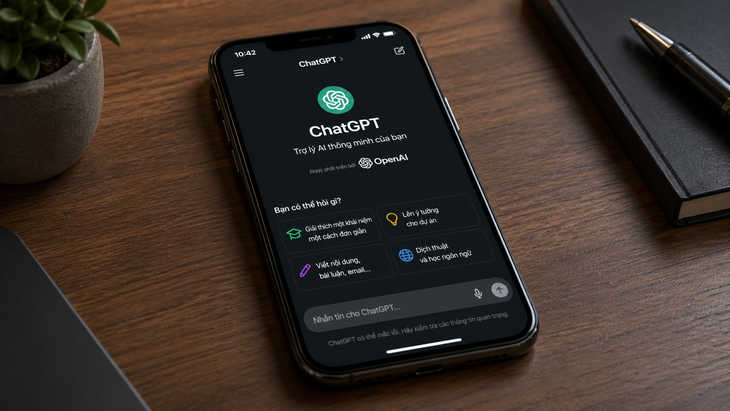
Future phones will operate using intelligent AI agents.
Qualcomm, MediaTek, and Luxshare join the game.
To realize this ambition, OpenAI is reportedly forging alliances with major players in the semiconductor and electronics manufacturing industries.
Specifically, Qualcomm and MediaTek will participate in developing dedicated processors for OpenAI's AI smartphones. These chips are optimized to process large language models directly on the device, rather than relying entirely on cloud connectivity.
Meanwhile, Luxshare, a key assembly partner of Apple in China , is expected to take on the primary role of manufacturing and finishing the hardware.
Previously, OpenAI's global director of external affairs also revealed that the company is on track to announce its first hardware product in the second half of 2026. Some sources suggest that the first device could be AI-integrated wireless headphones before the complete smartphone is launched.
A new competition with Apple and Samsung.
Information about OpenAI's AI phone project quickly generated a reaction in the market.



If OpenAI were to actually enter the smartphone market, it would pose a significant challenge to Apple and Samsung, the two companies currently holding around 40% of the global smartphone market share.
With ChatGPT's weekly user count nearing 1 billion, OpenAI possesses a rare advantage: a loyal user base and well-established habits of interacting with AI. This provides a favorable foundation for the company to expand into consumer hardware.
Meanwhile, Amazon's rumored re-entry into the smartphone market suggests that smartphones will continue to play a central role in people's lives. However, the form of these devices may change dramatically, from a repository of apps to a fully personalized artificial intelligence hub.
If that becomes a reality, the phone of the future may no longer be defined by the number of installed apps, but by the level of intelligence of the AI that accompanies the user every day.
Source: https://tuoitre.vn/openai-phat-develop-smartphone-ai-replace-application-20260429113942097.htm