

Despite their growing role in the economy , the majority of women-owned businesses operate on a micro or small scale and still face numerous obstacles.
The community of female entrepreneurs is contributing to shaping Vietnam's economic future; however, many of them still face significant challenges due to a lack of training and financial resources, as well as persistent gender stereotypes.
Women currently own more than 20% of businesses in Vietnam, and the proportion of businesses owned or operated by women is expected to reach at least 30% by 2030. In response to the commitment to net-zero emissions by 2050, many Vietnamese female entrepreneurs are leading efforts in sustainable production, waste reduction, and promoting green supply chains.
Despite their growing role in the economy, the majority of women-owned businesses operate on a micro or small scale and still face numerous obstacles.
Understanding these challenges is a prerequisite for finding solutions. A recent study by RMIT Vietnam, published in the scientific journal Journal of Small Business and Enterprise Development, has highlighted the drivers and barriers affecting female entrepreneurs in Vietnam today.
The identified barriers include gender stereotypes, lack of training and financial support, lack of personal skills, and challenges in balancing work and life.
The research highlights the urgent need to address these challenges through training, inclusive financial solutions, and cultural shifts to ensure that the community of women entrepreneurs has a thriving ecosystem in the coming decades.
Transforming education and training
Education is the foundation of success in entrepreneurship. However, according to Ms. Pham Thanh Hang, a lecturer in Human Resource Management at RMIT University, current training programs often fail to equip women with sufficient practical business skills.
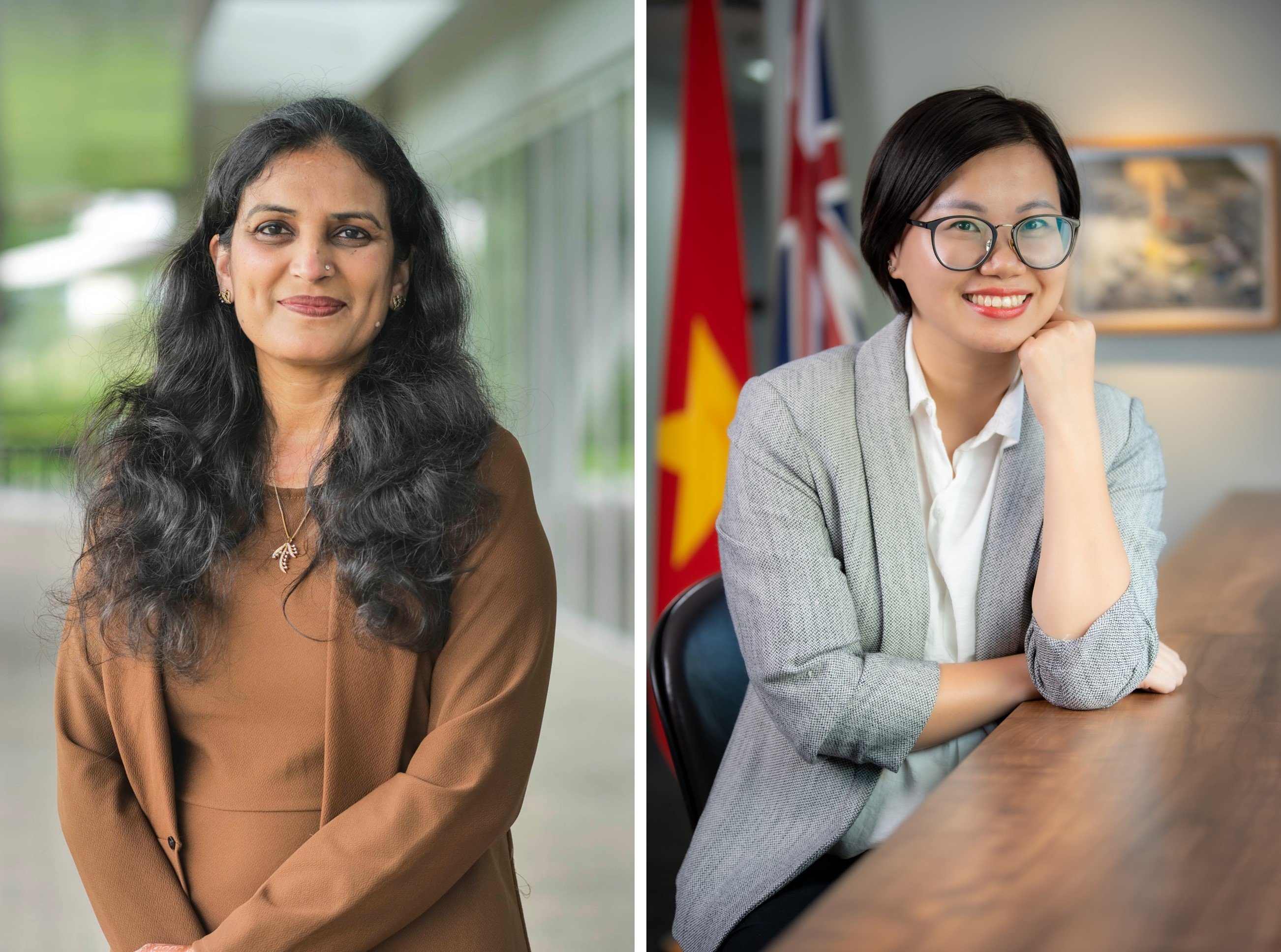
Dr. Greeni Maheshwari and Ms. Pham Thanh Hang (right)
"Current programs are too theoretical and don't focus enough on crucial skills like negotiation, digital literacy, and strategic planning," Ms. Hang stated. She also emphasized the need for more specialized training by industry, particularly in fields such as consulting, tourism, and retail, where the skills gap is most pronounced.
Ms. Hang also noted that integrating entrepreneurship education into the general education curriculum from a young age is crucial. In particular, specific support measures are needed for girls to cultivate an entrepreneurial mindset.
According to Dr. Greeni Maheshwari, Senior Lecturer in Management at RMIT, efforts are needed to enhance high-quality education for women and girls, especially in STEM fields, for successful digital transformation and improved economic empowerment.
"Integrated business and STEM programs can bridge the gender gap in cutting-edge industries, ensuring women cultivate both technical expertise and business acumen," said Maheshwari.
Expand financial support
Access to capital remains one of the biggest barriers for women entrepreneurs, especially in the retail sector.
To mitigate this barrier, the RMIT research team suggests that the government could develop platforms or mobile applications that provide women with information on available funding sources. Additionally, investment funds targeting women could be a crucial source of support for high-growth, high-impact businesses founded by women.
Dr. Maheshwari mentioned initiatives such as the Women's Entrepreneurship Acceleration in Southeast Asia and the Pacific (WAVES) – a program that enhances access to capital for women-owned businesses in Southeast Asia. She also cited the success of Mahila Money, a digital fundraising platform in India that provides unsecured microloans and financial literacy tools for women.
Ms. Maheshwari stated, "Adapting these models to Vietnam's legal and digital environment will help women scale their businesses effectively."
Dr. Maheshwari envisions a future where government-led business incubators will play a crucial role in fostering even stronger growth in women-owned businesses. "Between now and 2050, Vietnam's business landscape will require more specialized incubators to provide training, funding opportunities, and practical business development support," she stated.
Global mentoring networks can also assist Vietnamese women entrepreneurs by connecting them with international investors and business leaders. For example, programs like HerVenture have supported over 25,000 women in Vietnam, providing them with business skills and networking opportunities to grow their businesses.

Investment funds targeting women can be a crucial source of support for high-growth, high-impact businesses founded by women. Photo: Pexels
It doesn't stop at training and funding.
Beyond financial support and training, cultural change will be crucial for the thriving community of women entrepreneurs in the coming decades.
"Our research identifies gender stereotypes as a significant barrier," said Ms. Hang. "Many female entrepreneurs face social stereotypes that challenge their authority. Some research participants shared that clients believe they are not real business owners simply because they are women."
According to Ms. Hang, societal perceptions of female leadership can change when their stories are told more frequently in the media, as well as through policies that promote gender balance in leadership and other advocacy efforts. Research shows that if the profiles of successful female entrepreneurs are portrayed more often in the media, stereotypes about them will be broken, and more women will be encouraged to take on leadership roles in the future.
Dr. Maheshwari also noted: "Public awareness campaigns and policies promoting gender equality in business can play a crucial role in changing societal attitudes and supporting women's entrepreneurial endeavors." In addition, policies providing comprehensive support for family care, education, and small business recovery are needed to help women overcome challenges.
Vision for the future
The Vietnamese government has set a target to increase the proportion of businesses led by women. Ensuring that female entrepreneurs receive adequate support is crucial to achieving this goal. This also promotes the realization of the Sustainable Development Goals (SDGs), particularly SDG 5 (Gender Equality) and SDG 8 (Good Jobs and Economic Growth).
Dr. Maheshwari expressed her outlook for the future: "As the younger generation increasingly embraces gender equality and entrepreneurship, this generational shift will further normalize women's leadership roles, making them more acceptable and indispensable in the business world."
"We need to act now to truly break down the barriers. The government, the education sector, and business leaders must work together to build a prosperous and sustainable economy rooted in gender equality, where women's talents are maximized," she said.
Source: https://phunuvietnam.vn/pha-bo-rao-can-cho-cac-nu-doanh-nhan-20250306221518957.htm





























































































Comment (0)