

Rice production today faces many difficulties and increasingly stringent market demands for rice quality. Therefore, developing new rice varieties with high yields, good quality, and adaptability to adverse conditions is a crucial task for agricultural science. New rice varieties under research not only focus on yield but also aim for drought and salinity tolerance and reduced emissions during cultivation.
 |
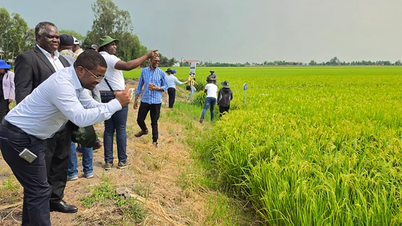
| The 2026 Rice Farmers' Festival will provide an opportunity for farmers to directly visit and evaluate new rice varieties, contributing to the selection of suitable varieties. |
Rice varieties play an important role.
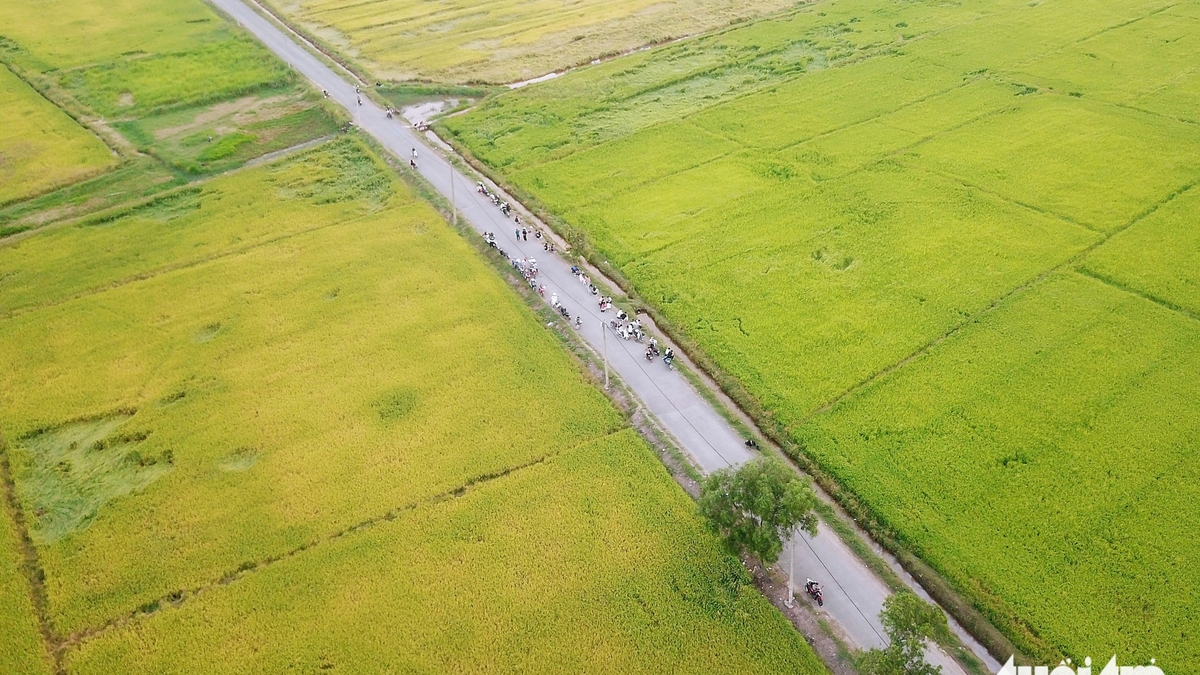
According to the Vietnam Rice Industry Association (VIETRISA), the total rice planting area nationwide reaches 7.12 million hectares per year, of which the Mekong Delta accounts for 3.875 million hectares per year. The total national rice production reaches 43.53 million tons, with the Mekong Delta alone accounting for 24.63 million tons, representing 56% of the national rice production. The average yield is 6.11 tons/ha nationwide and 6.36 tons/ha in the Mekong Delta. Notably, approximately 700,000 hectares of cultivated land in the Mekong Delta produce three rice crops per year.
Mr. Le Thanh Tung, Vice President and General Secretary of the Vietnam Rice Industry Association, stated that the Mekong Delta currently plays a particularly important role in Vietnam's rice industry, supplying 90% of the country's total rice exports. However, rice production in the region still faces many challenges, such as strengthening linkages in the supply chain, reducing production costs to increase value and profitability, adapting to climate change, promoting the application of science and technology and synchronized mechanization, and developing a circular agricultural model for rice.
According to Mr. Tung, in the production of high-quality, low-emission, green-growth rice, rice varieties play a decisive role in yield and quality, resistance to pests and diseases and adverse conditions, shaping rice brands, promoting sustainable production, and saving costs. However, the current situation in many cooperatives is that the varieties are scattered, with many types and grades, the percentage of certified seeds is not high, and the amount of seeds sown is still large, making it difficult to sign uniform purchase contracts. The rate of using certified seeds is not high, while the amount of seeds sown is still large, about 120-150 kg/ha, causing difficulties in signing uniform purchase contracts.
“Developing high-quality, low-emission rice production in the Mekong Delta is crucial in the transition to green and sustainable agriculture. Associations and related organizations play a bridging role in promoting value chain linkages, expanding raw material areas, and increasing added value for the rice industry, aiming for prosperity for farmers,” Mr. Le Thanh Tung emphasized.
Dr. Tran Ngoc Thach, Director of the Mekong Delta Rice Research Institute, stated: The Vietnamese rice industry is accelerating restructuring towards improving quality and added value. The Mekong Delta, the largest rice-producing region in the country, is facing many challenges such as climate change, saltwater intrusion, and rising production costs. Therefore, researching, selecting, and transferring new rice varieties with high yields, good quality, and adaptability to ecological conditions is considered a crucial solution.
Selecting suitable rice varieties
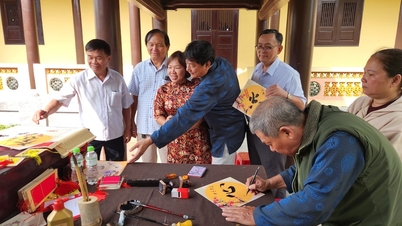
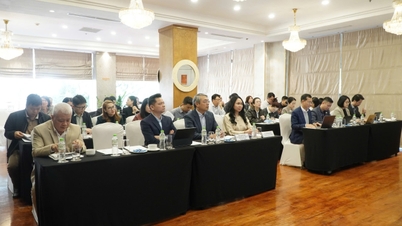
Recently, the Mekong Delta Rice Research Institute organized the 2026 Rice Farmer's Festival. The event attracted hundreds of farmers from provinces and cities in the Mekong Delta region to participate in evaluating rice varieties and rice quality.
At the festival, the Mekong Delta Rice Research Institute showcased 22 rice varieties. Of these, 11 varieties have been approved for circulation by the Ministry of Agriculture and Environment ; 6 varieties have undergone large-scale and small-scale trials and are in the process of completing the application for approval; and 5 varieties are currently undergoing large-scale and small-scale trials.
All rice varieties are registered for protection and have been granted plant variety protection certificates. According to the voting results, in terms of external appearance, the OM29 rice variety ranked first, while in terms of rice and cooked rice quality, the OM19 rice variety ranked first.
According to the Mekong Delta Rice Research Institute, the OM29 rice variety was bred from parent varieties OM2490 and OM9582. It has a growth period of 95-100 days, a height of 100-115cm, good tillering ability, a beautiful plant shape, large panicles, strong stems, 110-120 grains per panicle, and a yield of 6.5-9 tons/ha. The OM29 rice variety can be cultivated year-round in the Mekong Delta, producing soft, fairly tasty rice with a grain length of 5.71-5.87 mm. The OM19 rice variety also has a growth period of 95-100 days, a plant height of 100-115cm, good tillering ability, a beautiful plant shape, strong stems, and a yield of 6-8 tons/ha. The OM19 rice variety can be cultivated year-round in most ecological zones of the Mekong Delta.
Mr. Tran Ngoc Thach stated that the rice varieties developed and bred by the institute are all geared towards short growing seasons, good pest and disease resistance, low fertilizer consumption, adaptability to mechanization, and high yields. In the future, the Mekong Delta Rice Institute is ready to cooperate with relevant units to disseminate these rice varieties, thereby contributing to supplementing the national rice variety structure.
According to Mr. Le Thanh Tung, in the future, the selection of rice varieties needs to meet criteria such as export-quality rice, acceptance by businesses for guaranteed purchase, growth time suitable for the seasonal schedule, suitability to production conditions, and good resistance. Cooperatives should select 1-2 main varieties per season, suitable for business contracts, appropriate for the ecological sub-region, and uniform across at least 70-80% of the cultivated area. Increase the rate of using certified seeds, avoid using uncertified seeds, control origin and invoices, and maintain production logs. In particular, it is necessary to link farmers, cooperatives, businesses, and the market; build and develop a brand/trademark for low-emission green Vietnamese rice; promote certification of high-quality, low-emission, green-growth rice; and develop business models for rice production and services based on the 1 million hectare criterion, with digital agriculture supporting a transparent and traceable value chain.
Text and photos: TRÀ MY
Source: https://baovinhlong.com.vn/kinh-te/202603/dong-bang-song-cuu-long-phat-trien-giong-lua-moi-de-nang-chat-luong-gao-5ed41cc/


























































Comment (0)