


 |
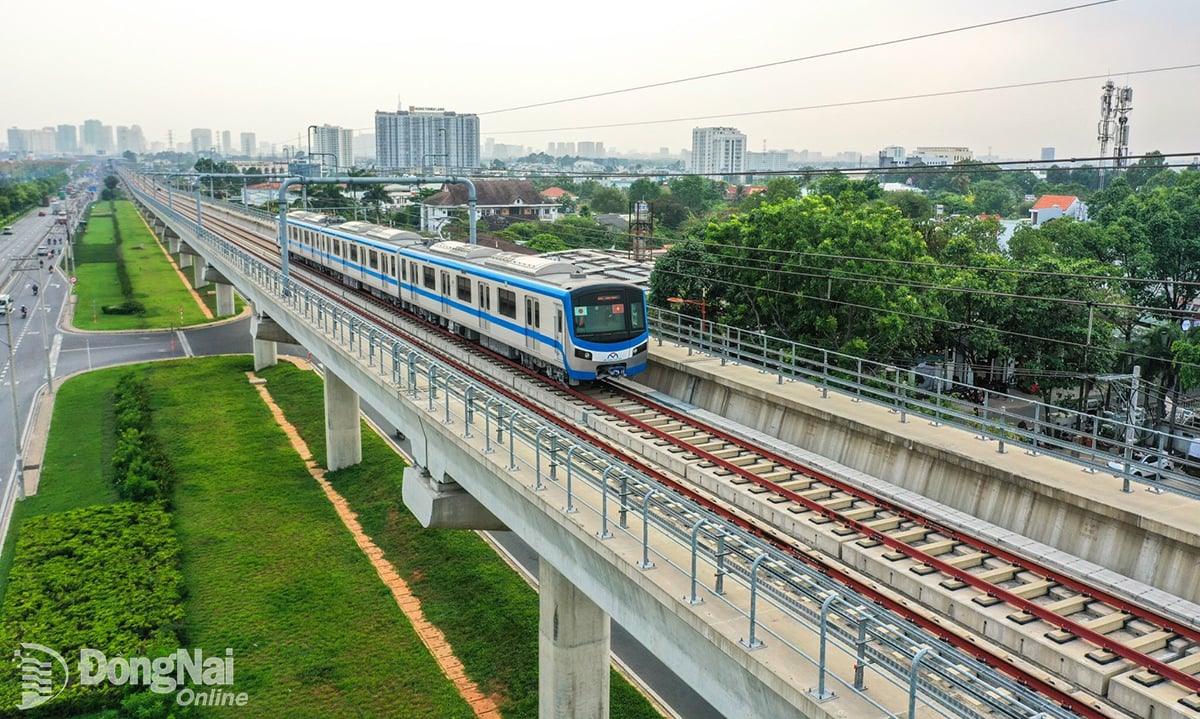
| Dong Nai province is studying options for implementing a metro line project connecting Metro Line 1 Ben Thanh and Suoi Tien. (Photo: Archival material) |
Alongside researching investment options for the project, the province is also focusing on planning for the development of a TOD (Transit-Oriented Development) urban model once this metro line is completed.
Creating a source of reinvestment capital
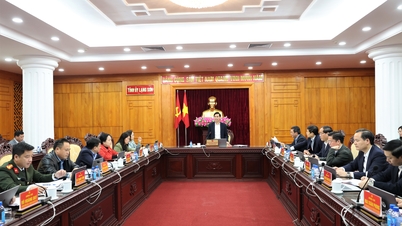
In early March, the Provincial People's Committee worked with relevant agencies and consulting units to hear a report on the proposed route for the metro line connecting Suoi Tien (Thu Duc City, Ho Chi Minh City) to Dong Nai.
According to the proposed plan, the total length of this metro line is nearly 21km, including 13 stations (including station S0) and a depot with an area of over 23 hectares. The starting point of the line connects from behind Suoi Tien Bus Station of Ho Chi Minh City Metro Line 1, and the end point terminates at the planned depot in Ho Nai 3 commune, Trang Bom district.
According to representatives from TEDI South, Ho Chi Minh City is expected to generate approximately $5 billion from developing the TOD (Transit-Oriented Development) model through metro lines in the city.
The section from station S0 to the depot in Ho Nai 3 commune is nearly 19km long. Regarding the route options, the consulting unit proposed elevated and underground options for the section within the province. According to the consulting unit, preliminary calculations show that the total investment for this project is estimated at approximately 30 trillion VND.
To expedite the project's progress, Vice Chairman of the Provincial People's Committee Ho Van Ha instructed the Department of Construction to propose the establishment of a working group to develop an investment plan for a metro line connecting with Metro Line 1. This plan should include proposals for specific mechanisms to request support from central government agencies to ensure the project is implemented as quickly, economically, and efficiently as possible. Furthermore, this project must be included in the list of top priority projects for early implementation.
Early planning is needed to increase the effectiveness of TOD (Transit-Oriented Development).
Along with studying investment options for a metro line connecting to Metro Line 1, the authorities are proposing options for developing a TOD (Transit-Oriented Development) urban model once the metro line is established in the province.
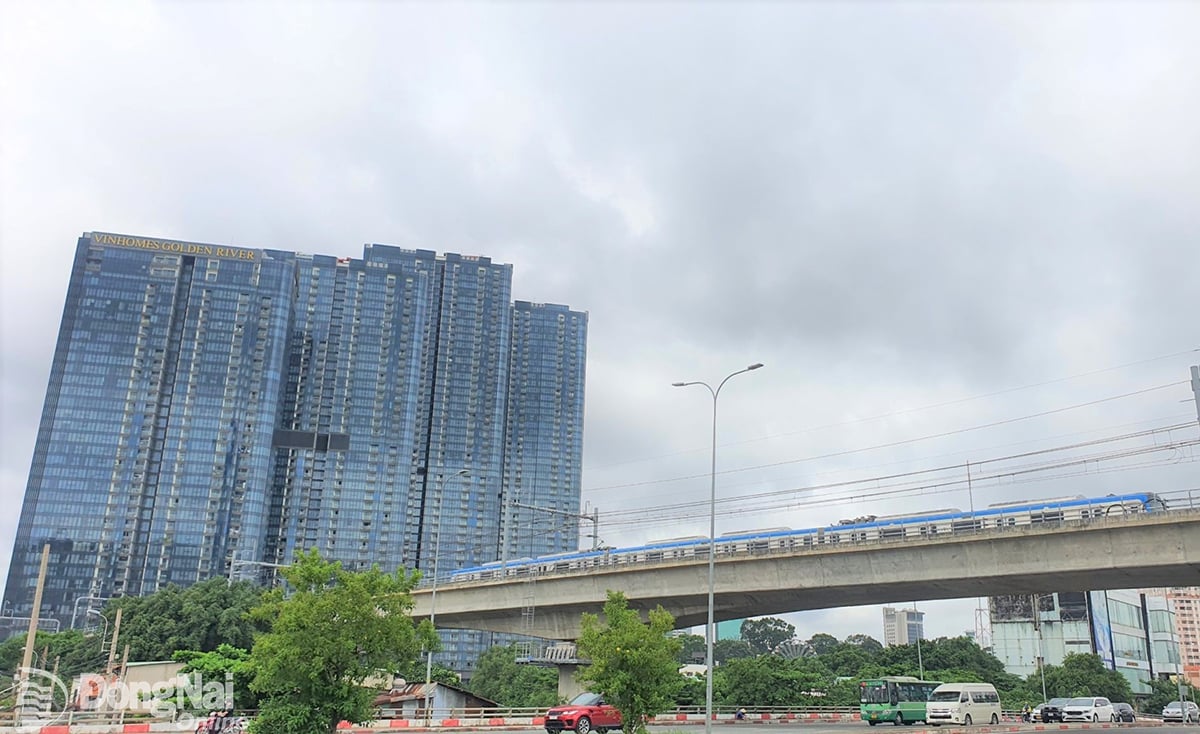 |
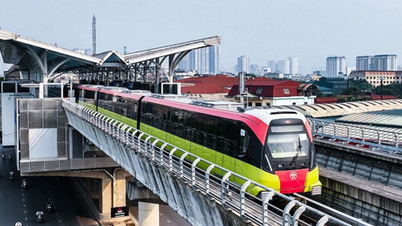
| The TOD (Transit-Oriented Development) urban model, integrated with metro systems, is being implemented in many countries. |
According to assessments, the advantages of developing urban railways using the TOD (Transit-Oriented Development) model include maximizing the added value from land to offset investment costs for urban railways. It also maximizes passenger traffic, making public transportation profitable. Furthermore, it enhances convenient, comfortable, and safe access for passengers from TOD-style urban spaces to urban railway stations and vice versa, contributing to improved environmental and social conditions in the locality.
Chairman of the Bien Hoa City People's Committee, Nguyen Phong An, believes that the development of TOD (Transit-Oriented Development) needs to be carefully considered to generate revenue for reinvestment in the metro system. "With the metro line connecting to Metro Line 1 when passing through the Vung Tau intersection area, there is a high population density along both sides of the line, while Trang Bom district still has vacant land suitable for TOD development according to the planning," Mr. Nguyen Phong An stated.
According to representatives from the Southern Transport Design and Consulting Joint Stock Company (TEDI South, the consulting unit), the TOD (Transit-Oriented Development) urban model linked to the metro system is being prioritized for development in Hanoi and Ho Chi Minh City. However, in reality, TOD will not generate revenue immediately but will only attract investment and generate revenue after the metro project is completed. "At that point, the areas surrounding the stations will attract investors to develop TOD, and only then will revenue be generated from TOD, not from the outset," shared the TEDI South representative.
Based on this reality, representatives from TEDI South argue that, in order to develop TOD effectively, early planning of areas designated for TOD development is essential. Increasing land use value and planning to retain land for TOD development are necessary to maximize the effectiveness of the TOD model.
Pham Tung
Source: https://baodongnai.com.vn/dong-nai-cuoi-tuan/202504/phat-trien-tod-khi-co-metro-b8c30a9/

![[Photo] Prime Minister Pham Minh Chinh working with the Vietnam Academy of Science and Technology](https://vphoto.vietnam.vn/thumb/1200x675/vietnam/resource/IMAGE/2026/02/23/1771832245861_image-2-6431-jpg.webp)






















































































Comment (0)