

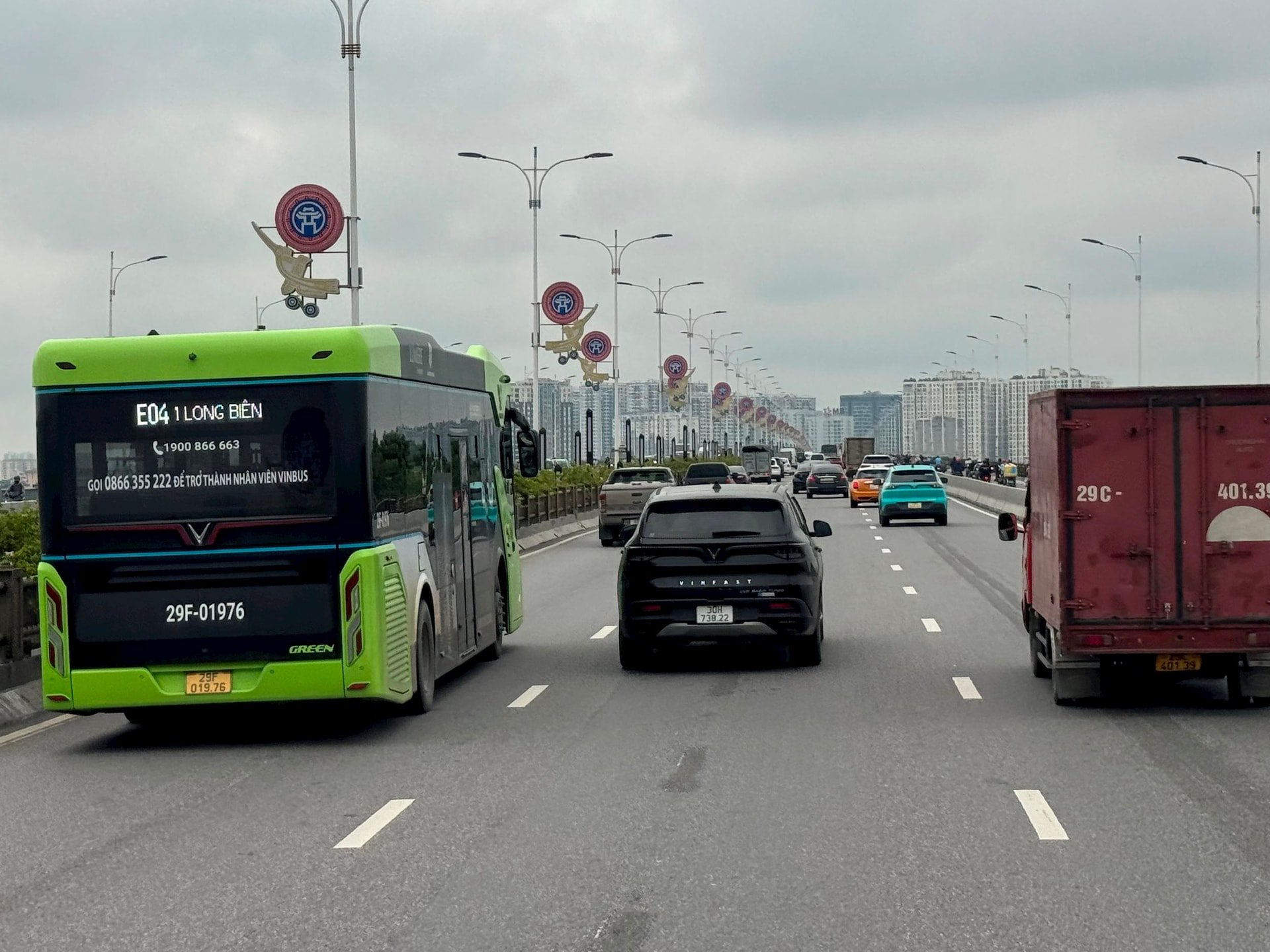
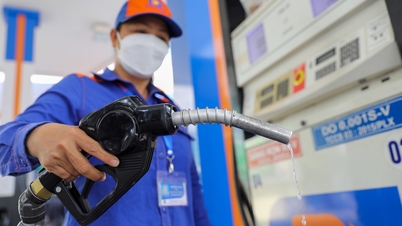
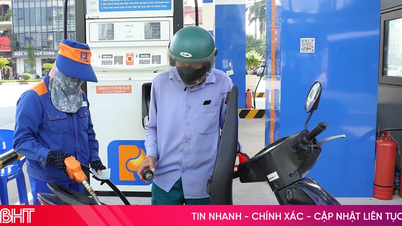
At the seminar "Developing Green Vehicles in Vietnam: Towards Net Zero" held on March 27th in Hanoi, some opinions suggested that converting and replacing these "emission stations" is not only in line with global trends, but also an urgent task if Vietnam wants to achieve the goal of net zero emissions by 2050 as committed by the Government.
In recent years, Vietnam has been making significant strides in promoting the "green" vehicle market, which is projected to grow strongly in the future, given its large population (the third largest in ASEAN). While some other countries are implementing this very strongly, Vietnam, despite clear progress, still has a relatively low adoption rate. This is due to several obstacles, including ingrained habits, limited charging station infrastructure, high vehicle costs, insufficient incentive policies, and a lack of consumer readiness.
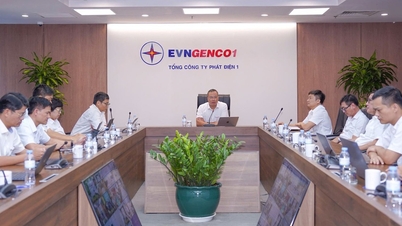
Speaking at the seminar, Mr. Luong Quang Huy, Head of the Greenhouse Gas Emission Management Department, Climate Change Agency ( Ministry of Agriculture and Environment ), emphasized that we are committed to achieving net zero emissions by 2050. This commitment, made in 2021, has been underway for nearly 3.5 years. “In 2021, we calculated scenarios to see if we could achieve this. Realistically speaking, even with our current development and additional investments of a few million USD, we would only be able to reach net zero emissions by 2085. However, with political determination, we set a target for 2050. According to calculations, over 400 billion USD needs to be invested in these areas.” Mr. Huy also stated that a series of policies, especially development policies, have been implemented to achieve net zero emissions. “Currently, we are still quite dependent on fossil fuels, somewhere around 30%; 17-18% on oil and gas; and 20-21% on wind and solar power… Now, we are encouraging manufacturers to produce electric vehicles and build charging stations for people to use. So, where will the electricity come from? Who will transmit electricity to the charging stations? This is an extremely pressing issue that is being considered and calculated,” Mr. Huy raised the issue.
Sharing the same view, Dr. Tran Huu Minh, Chief of the Office of the National Traffic Safety Committee, noted the issue of depleted fossil fuels. He said: "For Vietnam, the transition to electric energy is necessary because fossil fuels will gradually run out and will not exist in the future. We are seeing a trend of increasing use of private vehicles by the people, which is not wrong. Because when economic growth increases, people's incomes increase, and living standards rise, owning more assets such as vehicles reflects the prosperity and development of society. Therefore, we should green our vehicles as quickly as possible, minimizing the impact on the energy sector." This expert also emphasized that leadership from regulatory agencies plays a very important role in achieving our goals. Recently, we have improved legal regulations, making implementation much more effective.
According to this expert, the quality of air, CO2, and other harmful substances currently originate from various sources. However, overall, the air pollution situation in Hanoi presents many challenges. This is reflected in the data, collected using monitoring equipment that has been verified. Therefore, these figures are "unbelievable." “Pollution comes from many different sources, but it must be said that transportation contributes a relatively high percentage. Recent monitoring data shows that 50-60% of dust and emissions affecting humans originate from transportation. It can be said that transportation is a relatively large contributing factor,” Mr. Minh stated.
Meanwhile, Mr. Dao Cong Quyet - Head of the Communications Subcommittee - Vietnam Automobile Manufacturers Association (VAMA): We divide it into 3 phases: 2022-2030 market integration; 2030-2040 market development; and after 2040 for sustainable development... We propose policy support criteria for electrified vehicle lines such as BEV, HEV,... support for charging station infrastructure... Therefore, regarding support for customers and manufacturers, registration tax, we completely agree that a 100% rate for electric vehicles is very good. But VAMA proposes a 70% support for PHEVs and 50% for HEVs.

According to Dr. Tran Huu Minh, Chief of the Office of the National Traffic Safety Committee: For a long time, we have been concerned about the exposure of traffic participants in polluted environments. Broadly speaking, in the past, the world approached this from a physical perspective, meaning that if a person left home and returned home, they were considered safe.
However, if during that trip a person is exposed to a highly polluted environment with many toxic substances, that person may still reach their destination and return safely. But in that environment, the exposure could lead to significant health problems, such as lung issues, after 5-7 years. These are issues that, broadly speaking, relate to road safety in terms of health.
Source: https://daidoanket.vn/phat-trien-xe-xanh-van-con-thach-thuc-10302435.html



























































































Comment (0)