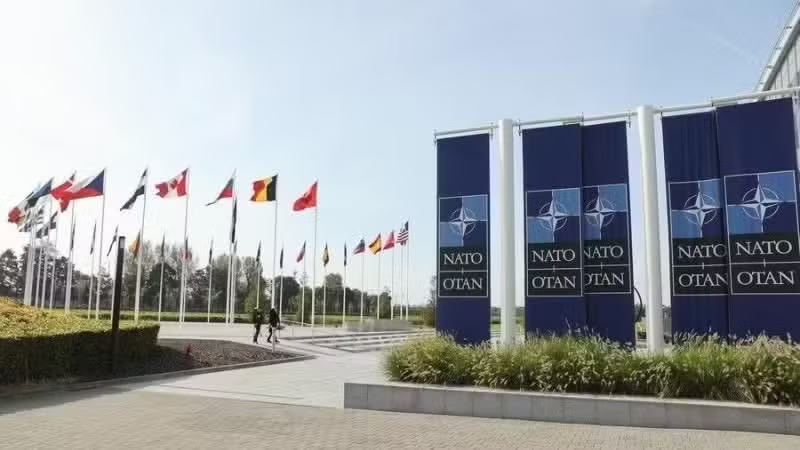
The North Atlantic Treaty Organization (NATO) is facing pressure to de-escalate tensions ahead of its summit scheduled for July 7-8 in Turkey. With the US increasing pressure on its European allies to shoulder more security responsibilities, increased defense spending is expected to be a key focus of the summit.
Defense spending is one of the issues causing rifts within the NATO military alliance. US President Donald Trump has repeatedly urged European allies to increase defense spending and share more of the security burden. The US leader wants allies to fulfill their commitment to significantly increase defense spending, aiming for a target of allocating 5% of their Gross Domestic Product (GDP) to defense-related expenditures. Warning that Washington may adjust its commitment to NATO if allies do not accelerate the strengthening of their defense capabilities, the Pentagon announced it will conduct a comprehensive review of the US military presence in Europe within the next six months. The review aims to ensure NATO is moving toward European countries assuming a leading role and primary responsibility for the continent's security and defense.
The rift within the transatlantic alliance is deepening. Beyond U.S. pressure on Europe to increase defense spending and enhance autonomy, relations between the U.S. and its allies have been strained since European governments refused to join Washington and Israel in the conflict with Iran . Following the Pentagon's partial withdrawal of forces from Europe, the U.S. Department of Defense informed allies that Washington would adjust the scale of its contributions to the NATO Force Model – a mechanism that brings together forces that can be mobilized when the alliance faces a crisis or conflict. Accordingly, the U.S. will review its contribution to NATO's operating costs, projected at around $790 million in 2026, based on the level of commitment from its allies. Countries that do not urgently increase their defense spending will face the possibility of a reduction in their U.S. contribution.



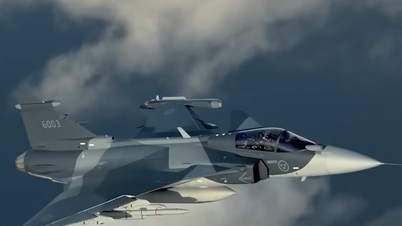
The US's tough stance has heightened concerns in Europe about Washington's long-term commitment to the continent's security. Washington decided to partially reduce its military equipment for NATO, including some F-16 and F-15 fighter jets, refueling aircraft, reconnaissance aircraft, bombers, drones, and some naval assets. NATO Secretary General Mark Rutte acknowledged that the US is adjusting its global military resource allocation, but insisted that this does not mean Washington will abandon its obligation to defend its allies.
To compensate for the U.S. gradually shrinking its role in some areas of the alliance's military capabilities, Washington expects its European and Canadian allies to rapidly increase their contributions in the near future, especially in the areas of manned and unmanned aerial vehicles (UAVs) and naval vessels. In fact, European countries and Canada have already increased their defense spending by more than $90 billion in 2025 compared to the previous year, equivalent to an increase of nearly 20%.
The upcoming summit in Türkiye, with the participation of 32 NATO member states, aims to strongly promote efforts to secure defense resources and implement the alliance's security priorities. This is considered the most important meeting in NATO history, as it addresses issues requiring clarification and adjustment within the military alliance, and provides an opportunity for member states to demonstrate their determination and readiness in defense matters.
NATO allies are expected to present concrete plans at the summit to achieve a defense spending target equivalent to 5% of GDP by 2035, with 3.5% allocated to core defense spending. European allies and Canada are currently on track to bring their defense spending closer to that of the United States. While some European countries may face domestic financial difficulties, leading to delays in increasing defense spending, several NATO members, such as Poland and the Baltic states, have set targets to raise spending to 5% of GDP in the next few years. Just before the NATO summit, the Czech government tasked its delegation to reaffirm its commitment to raising defense spending to 3.5% of GDP by 2035.
Despite disagreements with allies, the US maintains its position as a key member of NATO and argues that the alliance needs decisive changes. Meanwhile, under pressure from the US, European allies must demonstrate they are fulfilling their commitments to increase defense spending and share responsibility to enhance their capacity to respond to security challenges, for the strategic benefit of the transatlantic military alliance.



Source: https://nhandan.vn/phep-thu-cho-quan-he-dong-minh-post972612.html