

 |
A helicopter will transport astronauts from the inflatable raft to the USS John P. Murtha. Photo: NASA . |
The crew capsule of the Orion spacecraft, carrying four astronauts for the Artemis II mission, landed in the Pacific Ocean off the coast of San Diego at 8:07 PM on April 10th (Eastern Time), equivalent to the morning of April 11th in Vietnam. This marked the end of a journey lasting 9 days, 1 hour, and 31 minutes, covering a distance of over 1.1 million kilometers.
After nearly two hours, the rescue boats brought the astronauts out of the Artemis II spacecraft. Each of them will be airlifted by helicopter to the USS John P. Murtha.
The crew consisted of commander Reid Wiseman, pilot Victor Glover, mission specialist Christina Koch (all from NASA), and Jeremy Hansen from the Canadian Space Agency. This was the first crewed flight around the Moon since 1972.
The re-entry into the atmosphere occurred at 7:53 PM on April 10th (Eastern Time). The spacecraft reached a speed of nearly 40,000 km/h upon entering the atmosphere at an altitude of over 120 km. The external temperature reached 2,700 degrees Celsius. Communication was interrupted for 6 minutes due to the plasma layer surrounding the spacecraft. The parachute system deployed at an altitude of approximately 10,000 meters, reducing speed to a safe level before impact with the water.
"These are 13 minutes where everything has to go right," Jeff Radigan, flight commander of Artemis II, stated earlier.
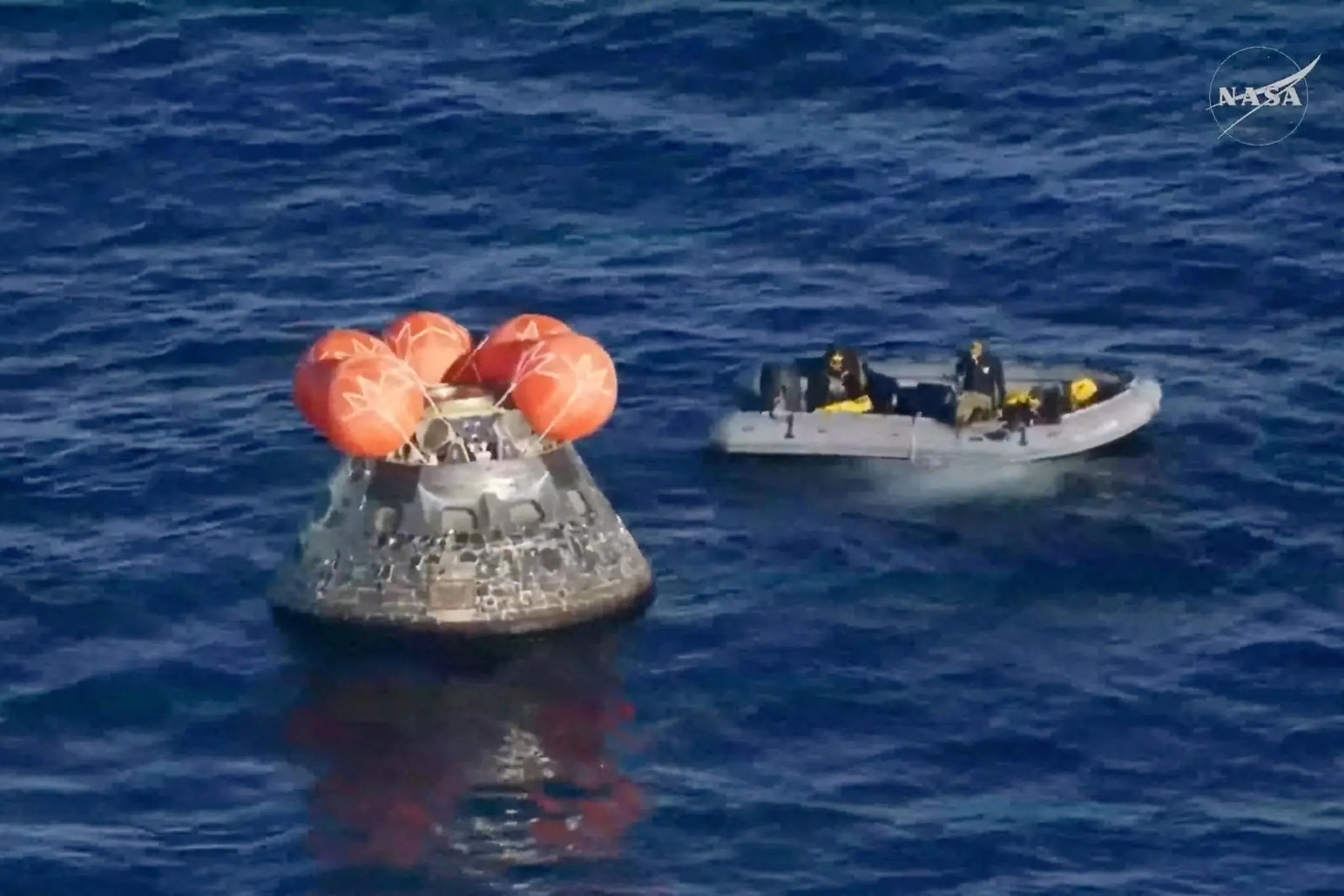 |
The rescue spacecraft approaches the Artemis II capsule to bring the astronauts out. Photo: NASA . |
The final hours of the Moon mission
On the afternoon of April 10th (US time), the Orion spacecraft entered the landing preparation phase. The crew rearranged the cabin, secured their belongings, and put on their orange spacesuits again. These suits are designed to protect the astronauts in the event of a sudden loss of pressure in the spacecraft.
At 2:43 p.m. (Eastern Time), the thrusters fired for eight seconds. This brief maneuver adjusted the trajectory, ensuring the spacecraft approached the atmosphere at the correct angle and position. Commander Reid Wiseman then reported that everything was on schedule.
A few hours later, Earth became increasingly visible through the spacecraft's window. Wiseman remarked that the Moon looked smaller than it had the day before. The ground control officer replied, "We probably need to turn back."
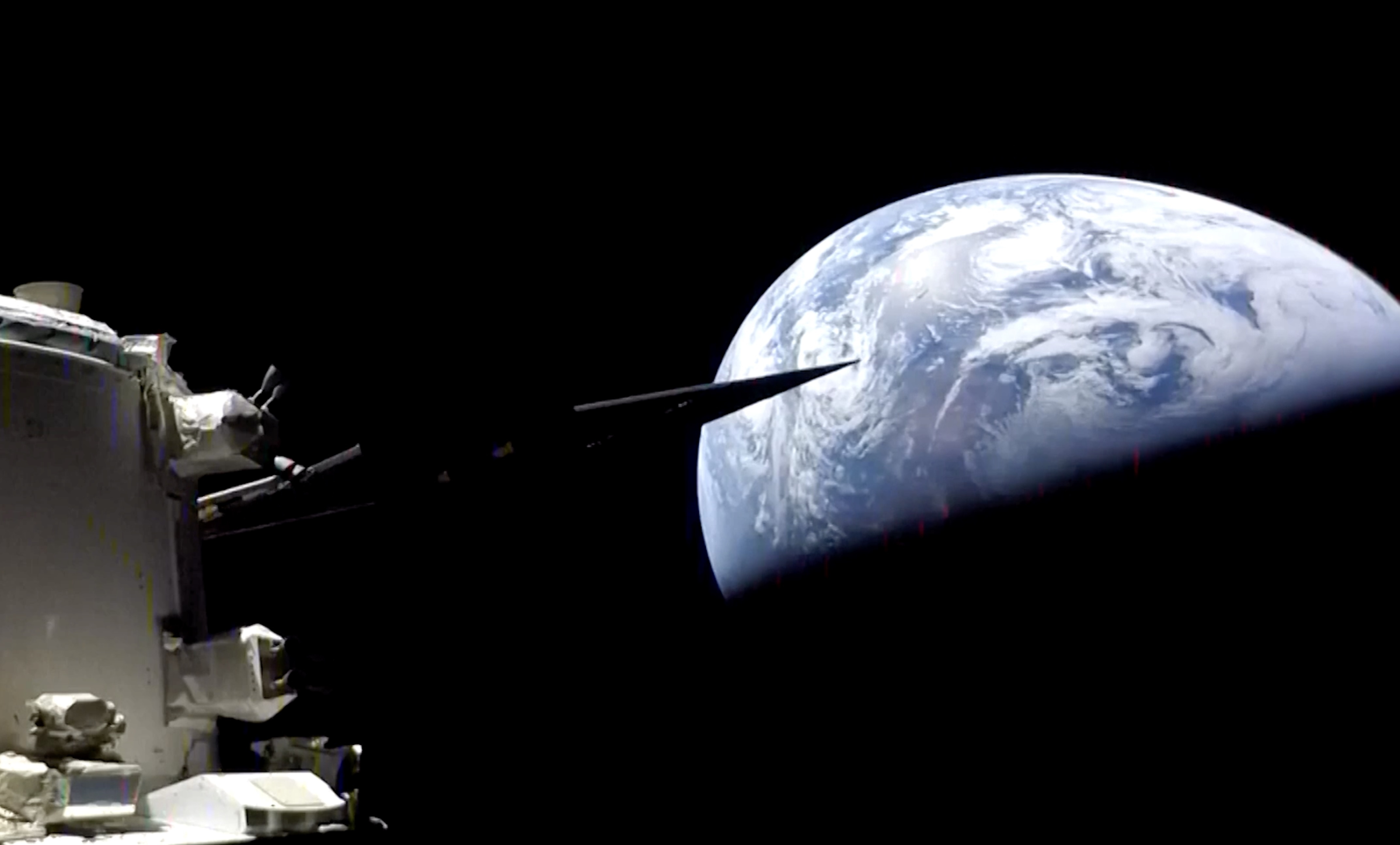 |
The Earth grew larger as the Artemis II spacecraft returned home. Photo: NASA. |
At exactly 7:33 PM, the crew capsule separated from the service capsule. The service capsule, built by the European Space Agency, provided power, fuel, and communication systems throughout the journey. This part was not needed for the final stage. It burned up and disintegrated safely in the Pacific Ocean.
Four minutes later, the booster engines on the crew capsule activated once more, adjusting the re-entry angle and steering the spacecraft toward the landing area off the coast of San Diego.
At 7:53 PM, the Orion spacecraft entered the upper atmosphere at an altitude of over 120 km. This is what NASA calls the "entry interface." Earth's gravity pulled the spacecraft to a speed of nearly 40,000 km/h. From there, the spacecraft had to decelerate to 0 km/h to land safely within 13 minutes. "These are 13 minutes where everything has to go right," Jeff Radigan, the flight commander of Artemis II, once emphasized.
Immediately afterward, the atmosphere compressed around the heat shield beneath the spacecraft. The outside temperature soared to 2,700-2,800 degrees Celsius, twice as hot as volcanic lava. The energy from the compression stripped electrons from the air molecules, creating a layer of plasma that enveloped the spacecraft. This plasma completely blocked communication signals. Six minutes of absolute silence began.
The heat shield, made from Avcoat material, absorbs heat, gradually burns, and peels off in layers according to the design. Inside the compartment, the temperature remains stable at around 24 degrees Celsius.
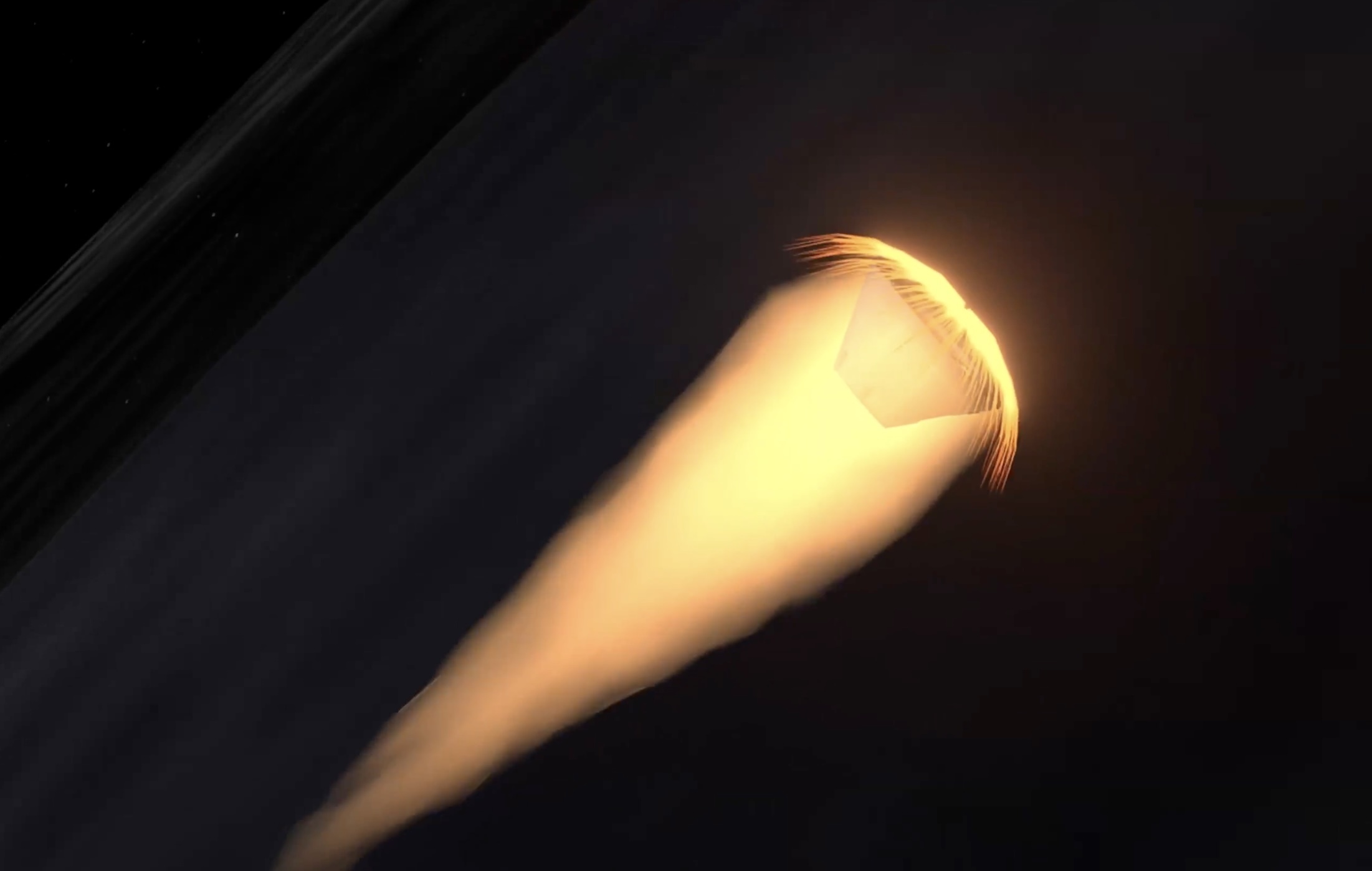 |
NASA illustration of Artemis II's passage through Earth's atmosphere, with surrounding temperatures reaching nearly 3,000 degrees Celsius. Photo: NASA. |
After six minutes, communication was restored. The spacecraft performed a light "skip," briefly rising before entering the final landing phase. This maneuver shortened the re-entry time compared to the Artemis I unmanned mission in 2022.
At an altitude of approximately 10,000 meters, the smaller parachutes deployed first to slow the spacecraft's speed. This was followed by two larger parachutes. At an altitude of 1,500 meters, the three main, large parachutes fully opened. The entire system of 11 parachutes reduced the spacecraft's speed from nearly 500 km/h to approximately 27 km/h in less than three minutes.
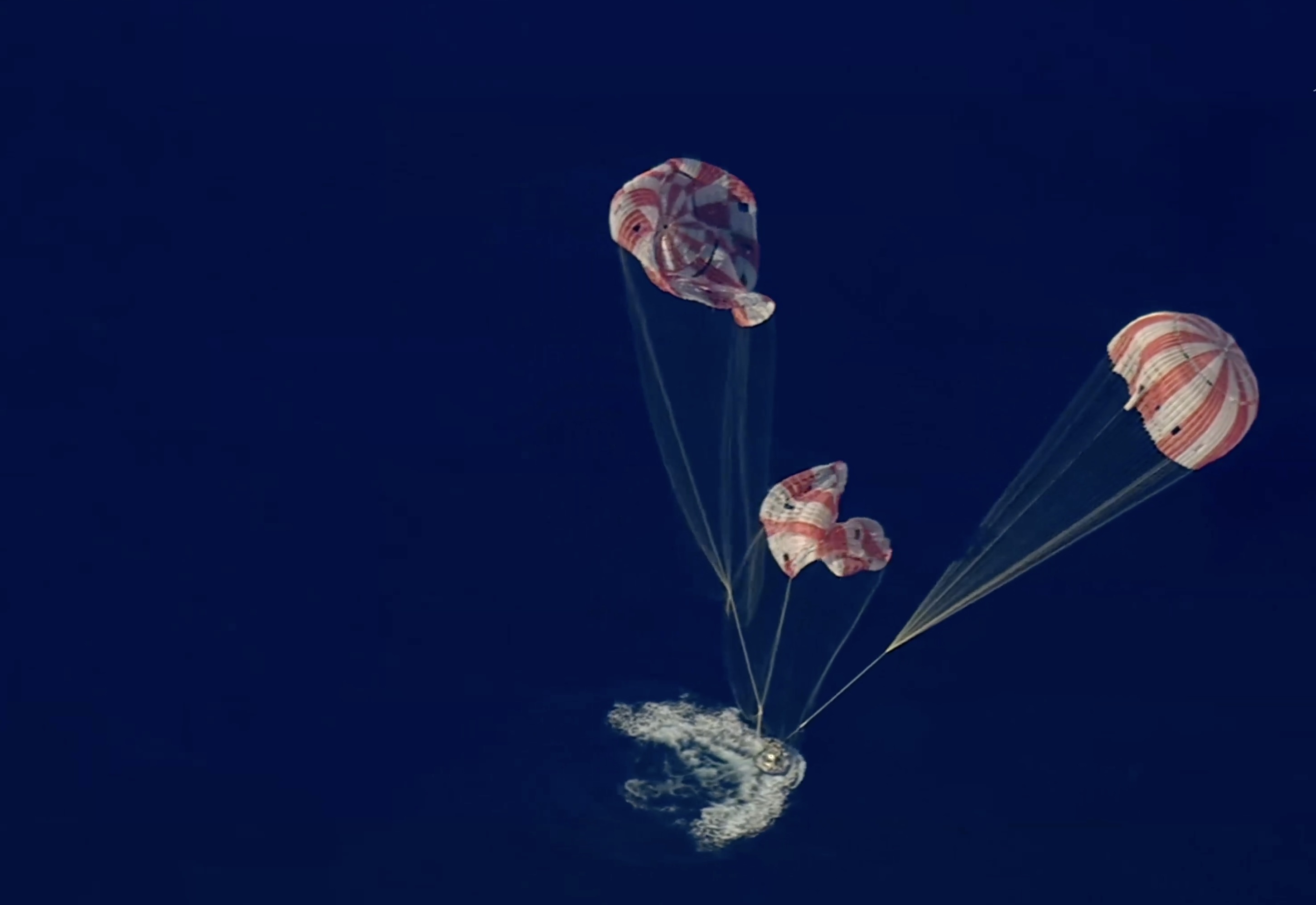 |
The moment the Artemis II spacecraft landed on the sea surface, with three parachutes still open and not yet falling into the water. Photo: NASA . |
As planned, at 8:07 p.m. (Eastern Time), the Orion touched down in the Pacific Ocean. It took the rescue team about an hour to extricate the crew. From there, they were transferred to the USS John P. Murtha and taken ashore.
What did the crew do?
Artemis II lifted off at 5:35 AM on April 2nd ( Hanoi time) from the Kennedy Space Center in Florida, carrying four astronauts into orbit. On the very first day, the crew encountered computer and communication malfunctions, as well as a broken restroom. Despite this, they were still able to test the Orion spacecraft's docking capabilities with future lunar landing modules.
On Monday, Orion's main engine fired, propelling the spacecraft out of Earth's orbit. This marked the first time humans had headed toward the Moon in nearly 54 years. The crew also tested an onboard exercise device, a type of flywheel-powered rowing machine.
Days 3 and 4 focused on safety and scientific preparation. The crew practiced CPR in space, tested emergency communication systems, and identified observation targets on the lunar surface.
On day 5, the Orion spacecraft entered the Moon's gravitational pull zone, the point where the Moon's gravitational pull is stronger than Earth's. The crew's orange spacesuits underwent extensive testing. These suits are equipped with a new life support system that allows astronauts to survive for up to six days in an emergency.
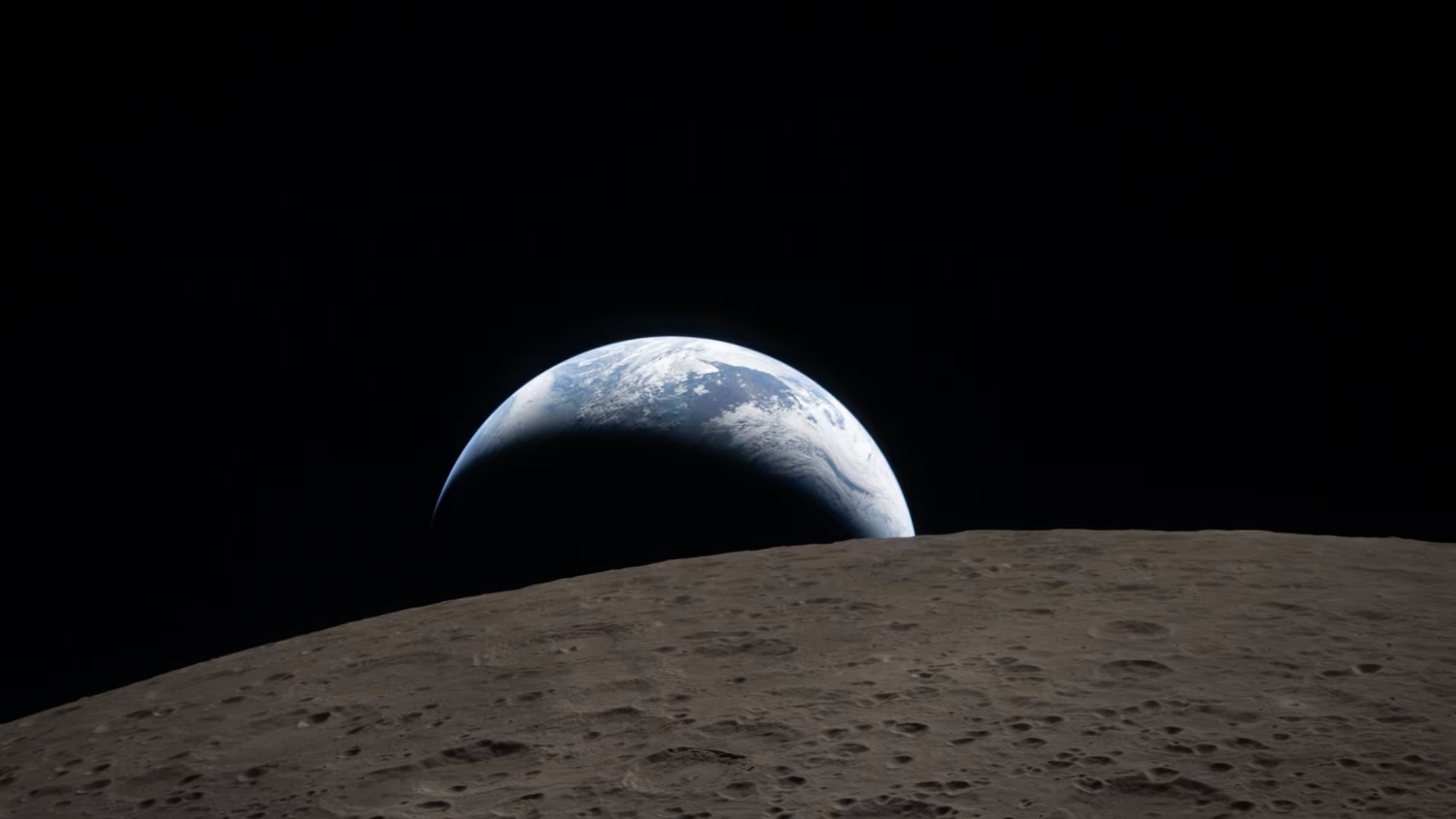 |
The "Earth setting" image was taken from the far side of the Moon as the Orion spacecraft approached the satellite. Photo: NASA . |
Day 6 was the highlight of the mission. The spacecraft circled behind the Moon, passing just 6,545 km from its surface. The crew made detailed observations of the terrain, photographing areas never before seen directly by the human eye. Communication with Earth was interrupted for about 40 minutes. After communication was restored, the crew observed a solar eclipse that lasted 53 minutes.
On the same day, they broke the record of Apollo 13 in 1970, reaching a point 406,771 km from Earth. US President Donald Trump also called to congratulate the crew shortly after they completed their orbit around the Moon and began their journey back.
On day 7, the spacecraft left the Moon's sphere of influence. The crew had a brief conversation with the astronauts on the International Space Station and spent most of their time resting.
On the 8th and 9th, the four astronauts practiced the re-entry procedure, checking the checklist of steps for preparing for landing.
On the 10th, the Orion spacecraft separated its crew capsule from the service capsule, re-entered the atmosphere, and landed in the Pacific Ocean. Its journey of 9 days, 1 hour, and 31 minutes, covering over 1.1 million kilometers, came to an end.
The mission also marked several other historical milestones. Victor Glover was the first person of color to orbit the Moon. Christina Koch was the first woman to make this journey. Jeremy Hansen was the first Canadian to fly to the Moon.
Source: https://znews.vn/phi-hanh-doan-artemis-ii-len-truc-thang-ve-bo-post1642669.html

































































































Comment (0)