


This marks My Tam's return to the big screen after "My Assistant" (2019). She collaborated with Mai Tai Phen as director, while she herself stepped back into the producer role after years of observing the market.
Similar to Rom , or most recently Mai , Tai uses the name of the main character as the title. The film tells the story of a young man who, after escaping from prison, falls back into a spiral of debt. Cornered, he is forced to make difficult choices, gradually sliding into a world of crime to make ends meet.
Actions to 'save' the old script
My Tam's film belongs to the action genre, a type of film that is receiving renewed attention from Vietnamese audiences, especially after the success of "Searching for the Dragon's Breath." However, while "Searching for the Dragon's Breath" had a comedic feel, My Tam's film leans more towards psychological themes.
Tài had a criminal past, having spent time in the underworld and been in and out of prison. After a few years, he reformed and took on various jobs to make a living. However, Tài also had to care for his elderly, ailing mother, Mrs. Phúc, who was addicted to gambling. Time and again, Mrs. Phúc squandered every penny her son earned on gambling, leading to debt.
Tài knew the truth, but secretly continued to earn money for his mother out of filial piety. However, Mrs. Phúc was relentless, devising numerous schemes to extort money, ultimately putting herself and her son in dire straits. A massive debt fell upon Tài, forcing him back to his old ways to save his mother. Yet, he unknowingly fell into a sinister plot.
Tài is based on the all-too-familiar archetype of the action genre, the "retired badas," a reformed outlaw forced back into his old ways under unavoidable circumstances. Therefore, in Tài's portrayal, action movie fans can easily spot elements reminiscent of John Wick, Taken , or The Equalizer.
A striking aspect of the film directed by Mai Tài Phến is its exploration of the boundaries of filial piety. Tài knows his mother is wrong and has deceived him for money, yet he repeatedly turns a blind eye. This is because, in the past, Mrs. Phúc was a devoted mother, protecting her son from the abuse of her cruel husband.
The screenwriter places the character in a moral dilemma: either accept the bitterness to fulfill their filial duty, or free themselves and be branded as unfilial.
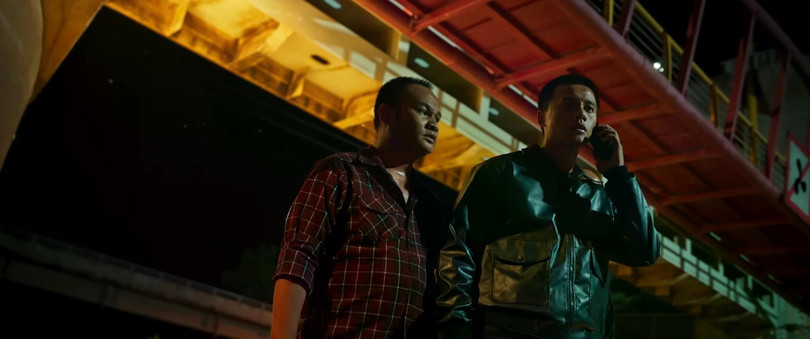
Tài becomes the central figure in all the events and incidents of the film, serving as a mirror for viewers to reflect upon and consider ethical questions. Then, through the character's journey of transformation and awakening, lessons about goodness and filial piety are naturally conveyed without the need for preachy dialogue.
In fact, Tài 's story isn't new and is quite predictable. Even the two plot twists at the end of the film don't come as a surprise, especially for viewers familiar with gangster and crime films. However, the film still manages to maintain interest thanks to its meticulously choreographed and well-executed action sequences.
It's not hard to see that Tài is influenced by the Hong Kong gangster films of the 1990s, from the riverside scenes and night streets to the dilapidated slums. The story blends melodrama, focusing not only on gang violence and revenge but also on love, brotherhood, and camaraderie.
Mai Tài Phến meticulously crafted these details within a familiar setting of the Mekong Delta. The An Giang river region can be considered the highlight of the film, with its many lush green natural landscapes and friendly, hospitable people.
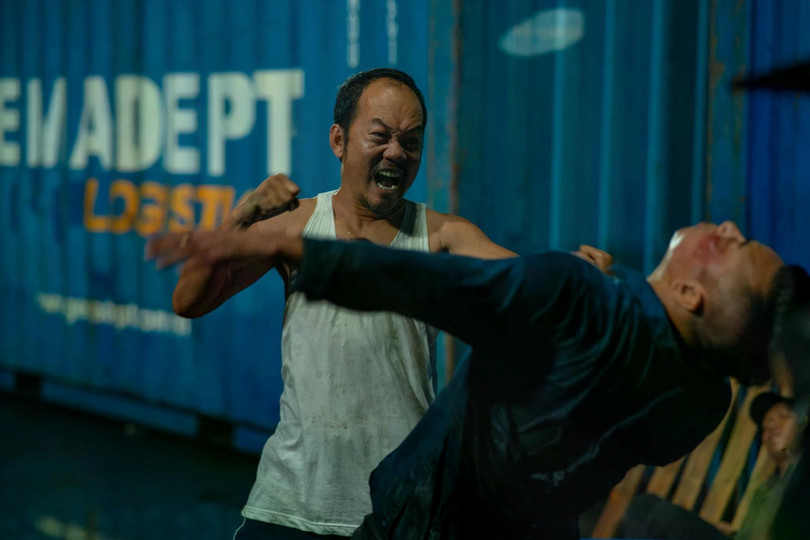
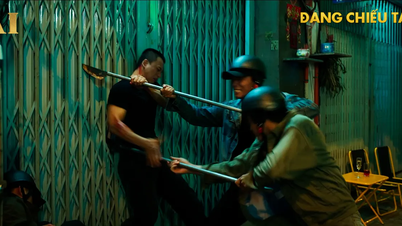
The action sequences are relatively diverse, ranging from intense chases on the river to fierce street fights and brawls in criminal hideouts. Mai Tài Phến is willing to throw himself into the action, performing many complex, high-intensity scenes, particularly those involving weapons. Although the material isn't particularly novel or unique, Tài 's action sequences are generally engaging enough to satisfy even the most undemanding viewers.
Unresolved gap
Like many works that use a character's name as the title, Tài is a "character study," a detailed portrait and in-depth "research" of that character, from their past story, choices, and psychological transformation when placed in dire circumstances.
At the heart of the story, Tài's journey of awakening is the main emotional thread, the element that keeps viewers curious. Unfortunately, the screenwriter failed to capitalize on this material. Tài isn't overly one-dimensional, but his psychological development is hampered by a lack of progress. After numerous events, including the discovery of the harsh truth about his feelings being exploited for personal gain, the screenwriter still hasn't found a way out for the protagonist from the suffocating moral trap placed upon him.
Tài's only reactions were anger and acceptance, bound by the boundaries of filial piety. Fortunately, the timely flashback resolved the audience's confusion about the character's decision. However, it also created an unresolved issue regarding how a mother who was once so noble could now, in her desperate pursuit of wealth, torment her child.
The emotional climax in the film isn't particularly impactful. Tài's helplessness, exhaustion, and weariness are bottled up into tears filled with resentment and a touch of bitterness. It's just enough to resonate with viewers after the injustices the character experiences, but it's not a powerful enough turning point to awaken him and free him from his moral trap. In other words, viewers feel sorry for Tài and empathize with his circumstances and his journey towards redemption, but the film's biggest dilemma remains unresolved.
Mai Tài Phến, with his rugged appearance, possesses the charm of a tough, world-weary man in his early 30s, yet also has a soft, endearing quality. Unfortunately, the limitations of the script prevented Tài Phến from truly shining in scenes with deeper psychological depth. The actor's frequently furrowed brows lacked a compelling narrative. The weariness of a man struggling to make a living but still yearning for goodness, the exhaustion of a son caught in a moral dilemma, and the unease and hesitation of someone once tainted but forced back into the same path with no other choice… Tài Phến failed to portray these emotions vividly enough.
A character like Tài, who is reserved and speaks little, needs more space to reveal his inner world. However, at the most crucial climax, instead of letting acting and his eyes speak, the flashback scene accompanied by evocative background music deprives the character of this opportunity to express himself.
Therefore, Tài only manages to gain some sympathy through his journey towards redemption. For the rest of the film, however, he is portrayed as a "fighting machine" with an absurdly excessive plot-amor-domination.
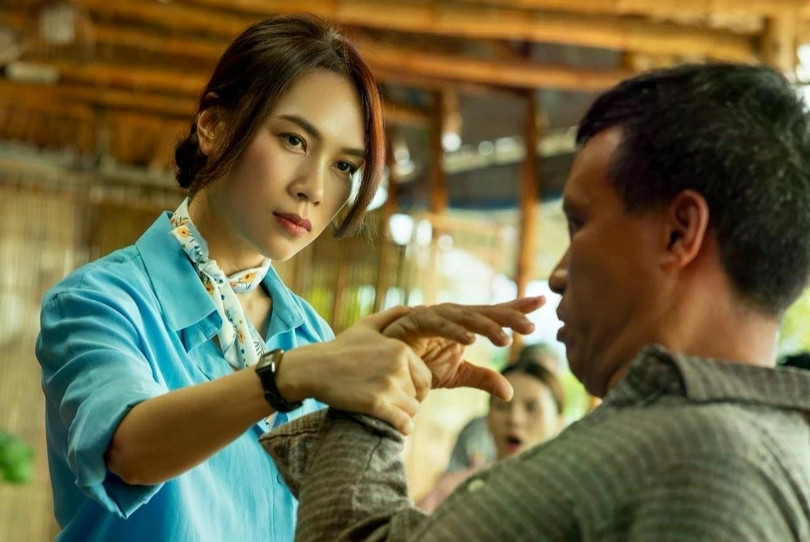
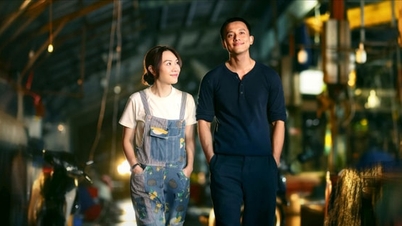
The romantic relationship between Tài and Lanh wasn't well-developed, feeling more like fan-service, with Mỹ Tâm's appearance in the film feeling forced and not cleverly orchestrated. Nevertheless, the "aura" of the national singer, with her unexpected appearances and rescues, easily pleased fans of the brown-haired nightingale. Mỹ Tâm had great chemistry with Tài Phến, with their flirtatious interactions that were a little cheesy but charming. It's just a pity the script wasn't tight enough to fully highlight the romantic relationship between the two characters.
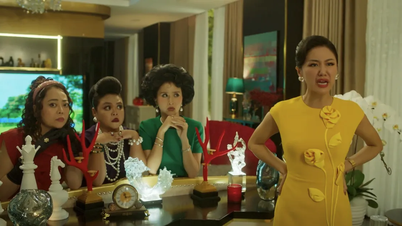
While the supporting cast, including Hanh Thuy, Hong Anh, Long Dep Trai, Tran Kim Hai, Sy Toan, etc., only delivered satisfactory performances, a commendable point is that Tai was placed at the center of the film, yet he didn't overshadow the supporting characters, as everyone had a well-placed role.
Source: https://baohatinh.vn/phim-tai-de-xem-nhung-cu-post306994.html
![[Image] Me So Bridge - an important connecting point on the Ring Road 4](https://vphoto.vietnam.vn/thumb/1200x675/vietnam/resource/IMAGE/2026/03/06/1772781627165_ndo_br_dji-0917-jpg.webp)


![[Photo] People in Ho Chi Minh City experience the green space at Ly Thai To Park No. 1.](https://vphoto.vietnam.vn/thumb/1200x675/vietnam/resource/IMAGE/2026/03/06/1772783731988_01-9003-png.webp)
![[Photo] Prime Minister Pham Minh Chinh meets with representatives of female leaders and managers of central agencies and presents the Kovalevskaia Award 2025.](https://vphoto.vietnam.vn/thumb/1200x675/vietnam/resource/IMAGE/2026/03/06/1772789429283_ndo_br_dsc-1149-jpg.webp)




























































Comment (0)