

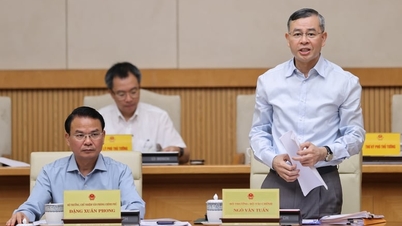
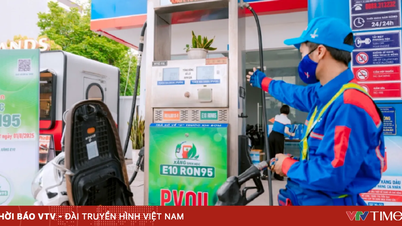
In Resolution 36 dated March 6th on urgent measures to respond to conflicts in the Middle East, the Government allowed for a more flexible mechanism for managing gasoline and diesel prices when world prices fluctuate sharply.
Accordingly, when the base price increases by 7% or more compared to the immediately preceding price announcement period, price adjustments will be implemented immediately after the date of this increase. Price adjustments and announcements are chaired by the Ministry of Industry and Trade in coordination with the Ministry of Finance .
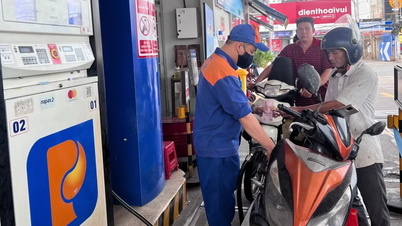
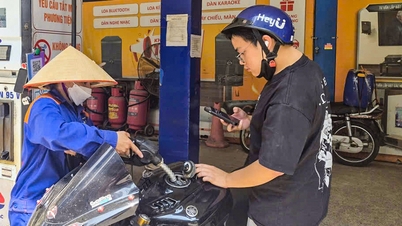
In cases where the base price increases by less than 7%, gasoline and diesel prices will continue to be managed according to the current regulations in Decree 80/2023. Under this mechanism, the Ministry of Industry and Trade and the Ministry of Finance jointly manage prices every 7 days (on Thursdays). Retail prices may increase, decrease, or remain unchanged if necessary, with the new prices taking effect from 3 PM on the day of the adjustment.
Based on the factors that make up the base price and the opinion of the Ministry of Finance submitted before 12 PM on the price adjustment day, the Ministry of Industry and Trade will announce the base price and retail price of petroleum products.

The resolution was issued by the government amidst significant volatility in the domestic oil market following the escalation of conflict in the Middle East last weekend. Currently, Qatar has halted liquefied natural gas production, Israel has temporarily closed its gas fields, while Saudi Arabia has shut down its largest refinery due to the fighting. Shipping through the Strait of Hormuz – the "choke point" of the world's oil flow – is almost paralyzed, with more than 10% of the global container ship fleet stranded there.
Amidst volatile global oil prices, more flexible domestic price adjustments are seen as helping to reduce delays in policy implementation. Currently, retail gasoline prices are adjusted every seven days, while world prices have been fluctuating daily, even hourly, in recent days.
According to the leader of a major import-export company, when domestic prices do not keep pace with international trends, importing businesses may incur losses, thereby reducing their incentive to import. This could cause private businesses to hesitate, or even stop importing, leading to a risk of supply shortages. At this point, the burden on the market will fall on state-owned import-export companies, creating significant pressure on the supply system.
In fact, in 2022, many retail gasoline stations had to temporarily close due to losses, putting pressure on the state-owned enterprise system and causing a localized imbalance in supply on the market.
In addition to the retail price regulation mechanism, the Government also agreed to apply the Petroleum Law, requiring oil owners to sell their crude oil holdings in the Vietnamese market with crude oil or condensate that have not been contracted for export, in accordance with the needs and technology of domestic refineries.
The government has authorized the Vietnam National Energy and Industry Corporation (PVN) and its member units, such as Binh Son Refinery and Petrochemical and Vietnam Oil Corporation (PVOil), to buy, sell, and import/export crude oil and raw materials for petroleum production.
At the same time, the Ministry of Industry and Trade is tasked with reviewing and proactively implementing measures to ensure supply, and promptly reporting to the Government on issues beyond its authority.
The government has assigned the Ministries of Finance, Justice, and Industry and Trade to draft a decree amending the Most Favored Nation (MFN) import tax rates for certain petroleum products using a simplified procedure, and submit it to the government by March 7th.
In cases where domestic refineries fail to meet contracted production levels or imports face difficulties, the Ministry of Industry and Trade will assess the supply-demand balance and direct key traders to utilize circulating petroleum reserves or release national reserves to compensate for market shortages.
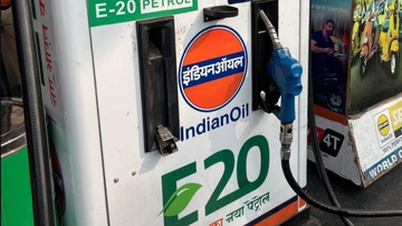
The government also requested ministries, departments, and localities to increase energy savings and ensure the supply of electricity and fuel in all situations. At the same time, all parties need to finalize standards and regulations for biofuels to promote the transition to environmentally friendly fuels.
Vietnam Electricity Group (EVN) and PVN prioritize maximizing the use of domestic gas for power generation and establishing a gas source swap mechanism. This aims to reduce dependence on imported LNG and mitigate the risk of fuel shortages for electricity production.
In addition, ministries, departments, and localities shall organize the production and use of energy efficiently, ensuring the supply of electricity and petroleum products in all situations, as required by the Government.
Source: https://baohatinh.vn/gia-xang-dau-co-the-duoc-dieu-chinh-som-hon-post307001.html

![[Photo] General Secretary and President To Lam presides over a meeting with the Central Organizing Committee.](https://vphoto.vietnam.vn/thumb/1200x675/vietnam/resource/IMAGE/2026/06/03/1780482764658_a1-bnd-4741-3342-jpg.webp)

![[Photo] First session of the 14th Congress of the Vietnam Trade Union](https://vphoto.vietnam.vn/thumb/1200x675/vietnam/resource/IMAGE/2026/06/03/1780465947883_ndo_br_img-3852-jpg.webp)
![[Photo] Secretary of the National Assembly Party Committee, Chairman of the National Assembly presides over the meeting of the Standing Committee and Executive Committee of the National Assembly Party Committee.](https://vphoto.vietnam.vn/thumb/1200x675/vietnam/resource/IMAGE/2026/06/03/1780480353201_ndo_br_bnd-2585-jpg.webp)



















































![[Video] Sunset at Lap An Lagoon – Where the sun sets over the fishing nets](https://vphoto.vietnam.vn/thumb/1200x675/vietnam/resource/IMAGE/2026/05/31/1780192137701_beach-landscape-sea-water-nature-grass-745871-pxhere-com.jpeg)





























Comment (0)