


 |
| Investors watched the stock tickers as Wall Street was shaken by concerns over Middle East conflict and rising inflationary pressures. |
US stocks closed in the red as investors reacted to escalating tensions in the Middle East, rising energy prices, and concerns about renewed inflation. Risk sentiment weakened significantly, pushing all major Wall Street indexes lower.
At the close of trading, the Dow Jones Industrial Average fell 403.51 points (0.83%) to 48,501.27. The S&P 500 lost 64.99 points (0.94%) to 6,816.63, while the Nasdaq Composite dropped 232.17 points (1.02%) to 22,516.69. Notably, the Russell 2000 plunged 1.8% to 2,608.36, reflecting widespread selling pressure across small-cap stocks.
Volatility during the session was particularly sharp. At the start of trading, the S&P 500 briefly lost as much as 2.5%, while the Dow Jones plummeted more than 1,200 points as the market reacted violently to news of US and Israeli airstrikes on targets in Iran and retaliatory actions from Tehran. However, technical buying and some reassuring statements from the US administration helped the indices significantly narrow their losses towards the end of the session.
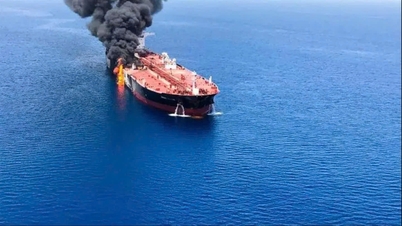
The central concern for investors is the risk of a prolonged and escalating conflict, especially as the attacks entered their fourth day and showed signs of affecting energy infrastructure in the region. Tehran even threatened to attack ships passing through the Strait of Hormuz, a shipping route for about one-fifth of global oil consumption. Several Middle Eastern oil and gas producers have also temporarily suspended operations, raising the risk of supply disruptions.
Brent and WTI crude oil prices surged today, driving up global transportation costs and natural gas prices. Higher energy prices not only increase pressure on production and transportation costs but also fuel fears of renewed inflation, amid the Federal Reserve's continued cautious stance on interest rates.
US Treasury yields rose for the second consecutive session, reflecting expectations that the Fed may maintain its tight monetary policy for longer. This is detrimental to growth stocks, especially technology stocks, which are sensitive to interest rates.
The Cboe Volatility Index (VIX), often referred to as the “fear index,” closed at its highest level since November, indicating a sharp increase in demand for risk hedging. Declining stocks outnumbered advancing stocks by a ratio of 4.1/1 on the NYSE and nearly 2.8/1 on the Nasdaq.
However, some experts believe the market reaction has not yet reached a panic level. Jed Ellerbroek, portfolio manager at Argent Capital, noted that the market's reaction "so far has been relatively weak," implying that investor risk appetite has not completely collapsed. Notably, the S&P 500 software and services index rose 1.6%, indicating that money is still selectively focusing on opportunities in some previously sold-off stock groups.
Conversely, Blackstone's stock fell 3.8% after its BCRED investment fund saw a surge in buyback requests, raising concerns about liquidity pressures in the private investment sector.
Chuck Carlson, CEO of Horizon Investment Services, noted that the market is beginning to believe the conflict could last longer than initially expected and potentially have a substantial impact on energy infrastructure. Meanwhile, Oliver Pursche, Vice President of Wealthspire Advisors, said investors are “grappling with the volatility and the flood of news,” but advised remaining calm and observing further rather than overreacting.
Globally, European and Asian markets declined across the board. Rising energy prices put pressure on industrial and consumer stocks, while money flowed toward safe-haven assets like the US dollar and U.S. bonds.
A notable technical signal is that the S&P 500 closed below its 100-day moving average for the first time since November 20th, a factor that could increase cautious sentiment in the short term.
The close of trading on March 3rd served as a clear reminder that global financial markets remain highly sensitive to geopolitical shocks and inflation risks. If conflicts in the Middle East continue to escalate and oil prices remain high, volatility on Wall Street is likely to persist, forcing investors to exercise greater caution in their asset allocation strategies in the coming period.
Source: https://thoibaonganhang.vn/pho-wall-do-lua-vi-xung-dot-trung-dong-and-ap-luc-lam-phat-178361.html




































































































Comment (0)