


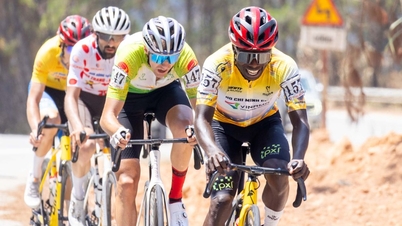
Athletics is one of the sports that demonstrates the hardships faced by women - Photo: DANG KHOA
The suffering of women, men cannot understand.
The first issue is physiological health. Unlike men, women in professional sports must train and compete while their bodies are influenced by menstrual cycles, hormonal changes, and endocrine-related health risks.
Research by Dr. Jane Thornton (Western University, Canada), a sports medicine expert, shows that cyclical fluctuations in estrogen and progesterone levels can affect muscle strength, ligament flexibility, recovery ability, and injury risk.
A survey by the National Collegiate Athletic Association (NCAA) indicates that over 40% of female athletes have had to modify their training plans due to the effects of menstruation.
Additionally, functional hypothalamic amenorrhea (FHA) is quite common in sports that require women to train intensely and maintain strict weight control.
According to the Clinical Journal of Sport Medicine , the prevalence of FHA in women in professional sports can range from 5% to 25%, and even up to 69% in some sports such as long-distance running or martial arts.
This condition not only disrupts competition but also increases the risk of osteoporosis, injuries, and long-term health problems.
Always facing the risk of depression.
The second, equally troubling issue, is mental health. International statistics indicate that women in sports are at a higher risk of anxiety, depression, and eating disorders than men.
A meta-analysis published in Frontiers in Sports and Active Living in 2025 found that female athletes reported significantly more symptoms of anxiety and depression, especially in stressful competitive environments.
A 2018 survey by the International Association of Sports Psychology found that 26% of elite female athletes experienced symptoms of depression, compared to 10% of men.

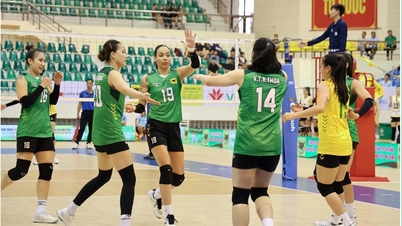
Fans are usually only aware of the cheerful images of female athletes - Photo: TVA
The reasons stem not only from the pressure to achieve results, but also from societal prejudices about body image, gender roles, family responsibilities, and the future after retirement.
Sports psychologist Carla Edwards (Canada) commented: "Many female athletes have to balance demanding training schedules, studies or work, while also facing the pressure of marriage and having children, something few male athletes have to think about at the peak of their careers."
Body image concerns are also a major factor, as many sports place a high emphasis on aesthetics, forcing women to maintain very low body fat percentages, leading to eating disorders. Some studies show that in sports that prioritize physical fitness, the rate of eating disorders among female athletes can reach up to 70%.
The risk of injury is even higher.
Finally, there's the issue of injuries. Sports medicine studies have shown that female athletes are at a higher risk of certain types of injuries than men, particularly anterior cruciate ligament (ACL) injuries.
A report in the British Journal of Sports Medicine indicates that women have a 2-4 times higher risk of ACL rupture than men, partly due to their wider pelvic structure, different knee joint angles, and the influence of estrogen on ligament strength.

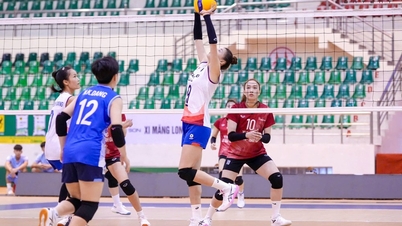
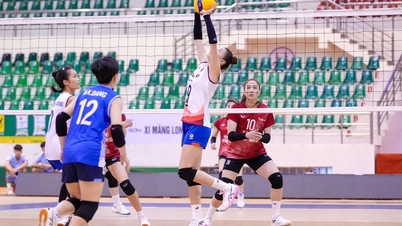
Injury rates are generally higher among women than men - Photo: BAO NGOC
In addition, volleyball, basketball, and women's soccer record high rates of ankle sprains, patellar tendinitis, and shoulder injuries, due to the nature of the movements involving continuous jumping, bouncing, and twisting.
Dr. Grethe Myklebust (Norway), who has conducted extensive research on women's sports injuries, emphasized: "Injury prevention for women requires specialized strength and balance training programs, because their risk of injury is different from that of men."
When injuries occur, the psychological impact is also more severe. A 2022 study in the British Journal of Sports Medicine found that nearly 50% of female athletes who had to take extended breaks from competition due to injury experienced some degree of depression.
The numbers, evidence, and stories from sports science show that women endure far more layers of pressure—both physical and mental—than fans typically imagine.
Understanding these biological and psychological differences, as well as the risks of injury, not only fosters empathy within the community but also enables sports administrators, coaches, and medical staff to provide timely support.
That's also why in many sports, training academies and youth training centers always need female coaches, because only women can understand, support, and help young girls overcome difficulties.
Source: https://tuoitre.vn/phu-nu-choi-the-thao-phai-doi-mat-dieu-gi-20250814220214994.htm



![[Image] National Assembly discusses the implementation of the socio-economic development plan.](https://vphoto.vietnam.vn/thumb/1200x675/vietnam/resource/IMAGE/2026/04/20/1776696707422_ndo_br_img-20260420-185419-jpg.webp)

![[Photo] General Secretary and President To Lam meets with National Assembly delegates from ethnic minorities.](https://vphoto.vietnam.vn/thumb/1200x675/vietnam/resource/IMAGE/2026/04/20/1776696701056_a1-bnd-8331-3342-jpg.webp)





























































































Comment (0)