

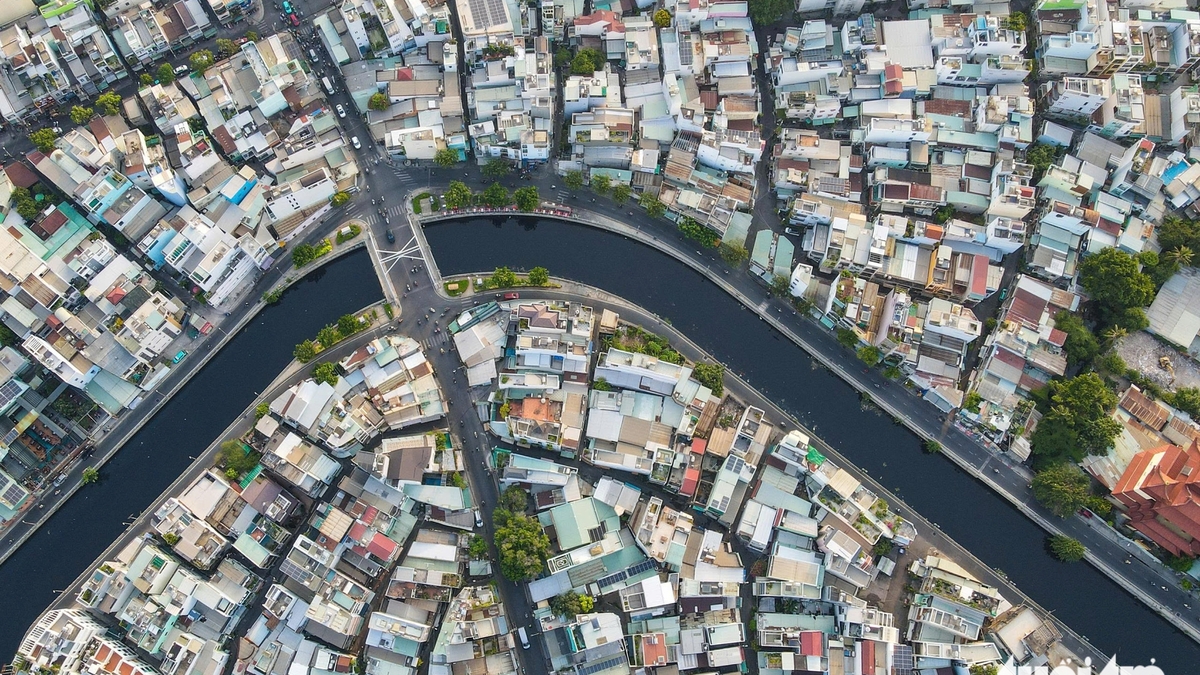
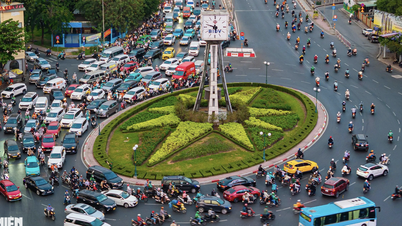
When compared to Singapore from above, Ho Chi Minh City also shares many similarities, such as high-rise buildings and bustling streets filled with traffic.
Singapore is a small island with an extremely high population density and nearly 100% urbanization rate, yet its landscape remains lush and green. Ho Chi Minh City, without its undeveloped outskirts, would likely be nothing but cramped architectural structures. Currently, the city has 369 parks covering approximately 500 hectares (public parks and parks within residential areas). The area of parkland per permanent population is very low, averaging only 0.55 m²/person.
Why was it that in the inner city districts, our ancestors were able to create many parks with beautiful rows of ancient trees, while today in Cu Chi, Nha Be, or Thu Duc City, we cannot do the same? This must be viewed from the perspective of the mindset and determination of policy makers. The plan is good, but to transform it into genuine green spaces, it requires the unwavering determination and iron discipline of the city government.
From 1995 onwards, construction projects sprang up, new roads opened, which meant many trees were cut down. Although new construction often involves demolition as a trade-off, it is clear that in many cases, the developers went beyond what was necessary.
Sadly, most large parks have had their green spaces reduced to make way for leased land, shops, and cafes. Countless real estate projects have created residential areas devoid of greenery because developers "neglected" it during construction for commercial purposes.
It is necessary to review existing roads lacking green spaces. Sidewalks outside the pedestrian area could have trenches dug for planting trees and ornamental flowers, both to enhance the landscape and to improve natural water drainage. Conditions should be created and residents encouraged to plant trees in their own yards. Managers and experts working in green space management should be invited to the locality to share their knowledge and guide residents on what types of trees to plant and how to care for them.
When undertaking a new construction or real estate project, developers are required to prioritize green spaces. In residential building permits, meeting green space requirements is considered a mandatory condition...
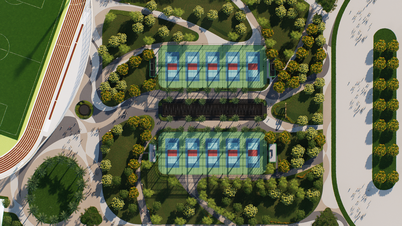
In vacant land areas, priority should be given to developing green spaces, especially in areas with high building density. The strip of land along both banks of the Saigon River is ideal for developing green spaces, providing shade, purifying the air, and serving the community.
It may be late, but we shouldn't delay further in increasing the city's green spaces.
Source



















































![[Photo] Hue: Admire the 2.4 trillion VND sea bridge, the longest in Central Vietnam.](https://vphoto.vietnam.vn/thumb/402x226/vietnam/resource/IMAGE/2026/05/24/1779614018347_anh-man-hinh-2026-05-24-luc-16-13-29.png)































Comment (0)