

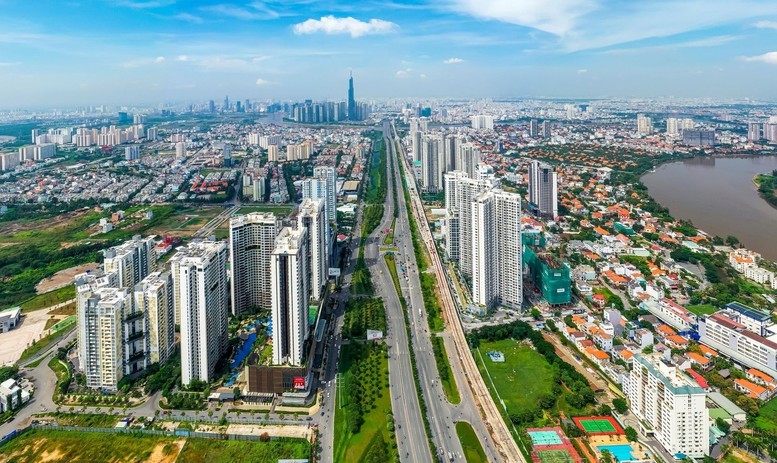
Existing urban areas are those that have been recognized or classified as urban areas by competent authorities in accordance with the provisions of Resolution No. 111/2025/UBTVQH15.
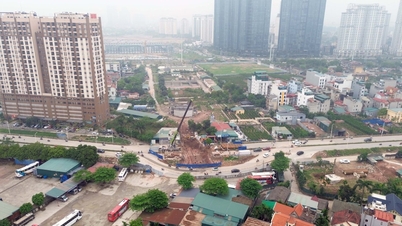
An urban expansion area is an existing urban area and adjacent expansion areas whose boundaries are defined according to the urban master plan approved by the competent authority.
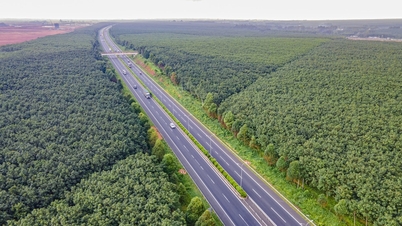
Green urban development involves planning and investing in urban construction to ensure the inclusion of green growth, green infrastructure, green spaces, and green buildings, in accordance with regulations and tailored to each region, area, and city in each specific period.
Principles of urban development
The decree stipulates that urban development must ensure the following principles:
1. In accordance with provincial and city planning, urban and rural planning at each planning level, and consistent with urban development programs and plans for each period and the specific conditions of each locality, region, and area.
2. Urban development, including urban renovation, upgrading, expansion, and new urban development, must ensure national defense and security and meet the requirements and criteria of green growth, adaptation to climate change, disaster prevention, and sustainable development as stipulated in this Decree and relevant laws; urban development planning must be linked to the protection of water resources, ensuring the maintenance of minimum flow rates and not exceeding the groundwater extraction threshold as prescribed by the law on water resources.
3. Implement efficient land exploitation and utilization; apply science , technology, innovation, and international cooperation to urban management and development investment; synchronously connect technical infrastructure, social infrastructure, and digital infrastructure systems to ensure modern and civilized urban development; urban assessment and classification shall be carried out in accordance with the provisions of Resolution No. 111/2025/UBTVQH15 and this Decree.
4. Urban development must meet the requirements of preserving and conserving the distinctive urban values of history, tradition, heritage, and valuable architectural works; maintaining and developing green spaces, water bodies, natural landscapes, protecting the environment, flood drainage corridors, protecting dikes and embankments, and complying with relevant laws; creating a good living environment for urban residents, ensuring a harmonious balance of interests between the community, the State, and investors.
5. Based on the specific conditions of the locality, the People's Committee of the province shall decide whether to include the content of the urban development plan within the urban development program or to develop a separate plan; if included within the urban development program, it must meet the contents and requirements stipulated in Article 7 of this Decree; if a separate plan is developed, it shall comply with the provisions of Articles 7 and 8 of this Decree.
6. Provinces, centrally-administered cities, and socio- economic regions shall determine the urbanization rate in accordance with the law on statistical indicators belonging to the national statistical indicator system and the provisions of Resolution No. 111/2025/UBTVQH15.
3 groups of criteria for green growth urban development
A green urban growth model must meet the following three groups of criteria:
1. The group of criteria for green infrastructure in urban areas includes: the proportion of public passenger transport; the proportion of buses using green energy; the proportion of private vehicles with reduced emissions; dedicated bicycle lanes; the proportion of urban roads using energy-saving equipment and technologies or using renewable energy for lighting; the proportion of the population supplied with clean water through a centralized water supply system; and the average area of public green space per capita.
2. The group of environmental criteria in urban areas includes: Air quality index; percentage of household solid waste collected, transported, and treated according to technical standards and regulations; percentage of domestic wastewater collected and treated according to technical standards and regulations; percentage of days in the year when the concentration of ultrafine dust and fine dust in the air exceeds the permissible environmental technical standards.
3. The group of criteria for energy and emission reduction in urban areas includes: the proportion of renewable energy used in total urban energy consumption; the proportion of households using self-generated and self-consumed rooftop solar power; and the number of green buildings.
Incentives for implementing green urban development that adapts to climate change.
The decree stipulates financial incentives and land allocation... to implement green urban development that adapts to climate change.
Financial incentives for implementing green urban development that adapts to climate change:
Urban construction investment projects, depending on their purpose and nature, if they meet the green growth criteria as stipulated in this Decree, will be eligible for state credit guarantees to borrow investment capital for project implementation as prescribed; and will be eligible for preferential loans from the environmental protection fund and other funds related to green growth and adaptation to climate change according to the fund's regulations and legal provisions.
Project investors are entitled to tax refunds, tax deductions, or tax exemptions and reductions when investing in green infrastructure, green buildings, energy-saving projects, wastewater treatment, and waste management projects as stipulated by law.
Incentives regarding land allocation and capacity building training in green urban development management and climate change adaptation:
Provincial People's Committees prioritize allocating land already cleared according to planning to invest in green infrastructure projects and public works using clean energy in accordance with the law.
Provincial and commune-level People's Committees are responsible for allocating local budgets to support the training and professional development of urban management officials in the field of green urban development and climate change adaptation within their respective areas.
Other incentives as stipulated by law and local regulations.
Procedures for recognizing urban classification
Decree No. 35/2026/ND-CP stipulates the cases for preparing proposals for recognizing urban classifications, including: Recognition of Type I urban areas, and recognition of Type II and Type III urban areas.
Procedures for requesting recognition as a Type I urban area.
The provincial People's Committee assigns specialized agencies under the province to organize the preparation of a plan for recognizing a city as a Type I urban area; if a consulting firm is hired, the bidding process must comply with the legal regulations on bidding.
The agency or consulting unit assigned to prepare the urban classification recognition plan (the plan-making unit) shall conduct surveys and prepare the plan in accordance with the provisions of point c, clause 1, Article 19 of this Decree. If the plan-making unit is not the Department of Construction, a document accompanying the plan explanation must be submitted to the Department of Construction for verification.
Within a maximum of 5 working days from the date of receiving the project proposal along with the document from the project drafting unit, the Department of Construction is responsible for reviewing, checking, and preliminarily evaluating the project proposal's explanation, and sending it for comments to the Provincial Police Department, the Provincial Military Command, and other specialized departments and agencies of the province. The document sent for comments must clearly state the content for which comments are needed according to the functions and duties of the agencies being consulted; in cases where the Department of Construction drafts the project proposal, the Department of Construction is responsible for sending it for comments to the agencies specified in this section.
Within a maximum of 5 working days from the date of receiving the request for comments from the Department of Construction, the agencies consulted are responsible for sending their comments to the Department of Construction for verification.
Within a maximum of 10 working days from the date of receiving the comments, the Department of Construction shall review the project proposal or finalize it if it directly prepared the proposal. If a consulting firm prepared the proposal, the Department of Construction shall send a notification of the review results to the consulting firm for finalization. This notification must clearly specify the deadline for finalizing the proposal and submit it to the Department of Construction for consideration before reporting to the Provincial People's Committee.
The dossier submitted by the Department of Construction to the Provincial People's Committee includes: a submission letter and verification report, a project proposal explanation, and a summary table of explanations and responses to comments and suggestions.
After receiving the submission from the Department of Construction, the Provincial People's Committee reviews and submits the project proposal to the Provincial People's Council for approval. The submission to the Provincial People's Council includes: the submission letter from the Provincial People's Committee and the project proposal explanation. The submission time and the time for the Provincial People's Council to approve the project proposal are carried out according to the regulations of the People's Council's operational rules.
Within a maximum of 10 working days from the date of the Provincial People's Council's resolution approving the project, the Provincial People's Committee shall send one set of documents to the Ministry of Construction for appraisal and recognition as a Type I urban area.
Within a maximum of 5 working days from the date of receiving the dossier, the Ministry of Construction shall issue a decision to establish an inter-ministerial appraisal council to organize the appraisal of the project.
The Appraisal Council shall have a maximum of 30 working days to conduct the appraisal and report to the Ministry of Construction, counting from the date of issuance of the decision establishing the Appraisal Council.
After the assessment, including any necessary documentation completion (if required), the Standing Committee of the Assessment Council will submit a report along with the dossier to the Ministry of Construction.
Within a maximum of 5 working days from the date of receiving the application, the Minister of Construction shall review and issue a decision recognizing the city as a Type I urban area.
Within a maximum of 15 working days from the date of receiving the decision recognizing the city as a Type I urban area from the Ministry of Construction, the provincial People's Committee shall organize the announcement of the decision recognizing the urban area.
Procedures for requesting recognition of a Type II or Type III urban area.
The provincial People's Committee assigns specialized agencies under the province to organize the preparation of proposals for recognizing urban areas with boundaries encompassing more than one commune-level administrative unit, or assigns the commune-level People's Committee to organize the preparation of proposals for recognizing urban areas in cases where the recognized urban area has boundaries within that one commune-level administrative unit; if a consulting unit is hired to prepare the proposal, the bidding process shall be carried out in accordance with the law on bidding.
The unit responsible for preparing the project proposal will conduct the survey, develop the proposal, and submit the report in accordance with regulations.
If the unit preparing the project proposal is not the Department of Construction, then after completing the draft project proposal, the unit preparing the proposal shall send it to the Department of Construction for comments. Within a maximum of 7 working days from the date of receiving the request, the Department of Construction shall be responsible for sending its comments. Within a maximum of 7 working days from the date of receiving the comments from the Department of Construction, the unit preparing the project proposal must finalize the draft project proposal.
Within a maximum of 5 working days from the date of receiving the completed project proposal, the Department of Construction is responsible for reviewing the dossier; if the dossier meets the requirements, it will send one set of documents to the Provincial People's Committee for appraisal.
Within a maximum of 5 working days from the date of receiving the project dossier, the Provincial People's Committee shall issue a decision to establish an inter-agency appraisal council to organize the appraisal of the project and assign a specialized agency under the Provincial People's Committee to serve as the permanent secretariat of the council.
In cases where the project dossier needs to be completed according to the Appraisal Council's report, the project-developing unit must complete the dossier as required within a maximum of 10 working days from the date of receiving the appraisal report and resubmit it to the provincial People's Committee for consideration and submission to the provincial People's Council.
If the project does not meet the criteria for urban classification, the Appraisal Council will send a notification to the Department of Construction and the project developer, clearly stating the reasons.
Within a maximum of 10 working days from the date of receiving the dossier from the inter-agency appraisal council, the provincial People's Committee shall review and submit the project proposal to the provincial People's Council for approval. The time frame for the provincial People's Council to approve the project proposal shall comply with the regulations on the operation of the People's Council.
Within a maximum of 5 working days from the date of the Provincial People's Council's resolution approving the plan, the Chairman of the Provincial People's Committee shall issue a decision recognizing the urban classification as prescribed.
Within a maximum of 10 working days from the date of issuance of the decision recognizing the urban classification, the provincial People's Committee shall organize the announcement of the decision in the area where the urban classification has been recognized.
Source: https://baolaocai.vn/quy-dinh-moi-ve-phan-loai-do-thi-post892121.html
![[Photo] Prime Minister Pham Minh Chinh receives the Chinese Ambassador to Vietnam](https://vphoto.vietnam.vn/thumb/1200x675/vietnam/resource/IMAGE/2026/04/05/1775397481797_ndo_br_dsc-5512-jpg.webp)



















































Comment (0)