

 |
| Over the past few years, many experts and scientists have conducted research aimed at unraveling the mystery of extraterrestrial existence. Among these, the U.S. Department of Defense established the All-Domain Anomaly Resolution Office (AARO) in 2022 to coordinate federal efforts regarding unidentified anomalies (UAPs), following numerous reports of UFO encounters. (Image: Conversation.) |
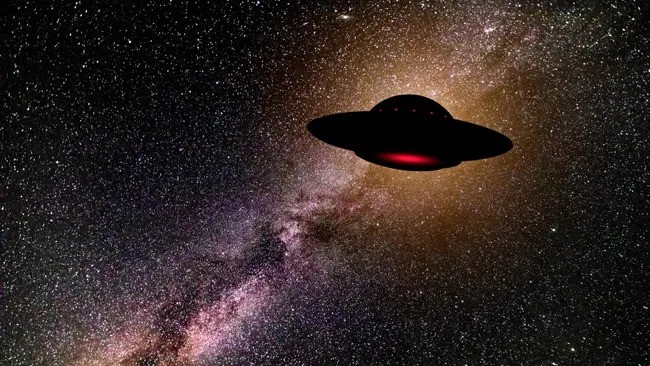 |
| Although the Area-wide Anomaly Resolution Office (AARO) publishes annual reports, publicly available scientific data on UAPs remains very limited. Photo: Getty Images / Anton Petrus. |
 |
| In response to this situation, a research team from the Harvard-Smithsonian Center for Astrophysics (CfA) and the Galileo Project recently proposed deploying the Dalek panoramic infrared camera – an application of artificial intelligence (AI) – to search for traces of extraterrestrial life . Photo: MARK GARLICK/SCIENCE PHOTO LIBRARY via Getty Images. |
 |
| According to the plan, the goal of the Dalek panoramic infrared camera is to leverage advancements in AI to "scout" the sky for signs of extraterrestrial technology. Photo: NASA/SOFIA/Lynette Cook. |
 |
| The project, led by Laura Domine, a postdoctoral researcher at Harvard University and a member of the Galileo Project, collaborates with scientists from various organizations such as CfA, the Whitin Observatory, the UAP Research Science Alliance, and Atlas Lens. Their proposal was presented at the Lunar and Planetary Science Conference 2025 (LPSC) held last March in Texas, USA. Photo: Shutterstock. |
 |
| Dalek, a panoramic infrared camera named after a villain in the television series Doctor Who, functions as a multimodal, multispectral ground-based observatory, combining infrared, optical, radio, and acoustic data collection. Photo: Shutterstock. |
 |
| The Dalek panoramic infrared camera was built following recommendations from NASA in an independent 2023 study, which emphasized the need for high-speed sensor systems capable of adjusting to milliseconds. This device integrates multiple sensors to comprehensively detect UAP events, from shape, color, and motion to sound. Photo: Apostoli Rossella / Getty Images. |
 |
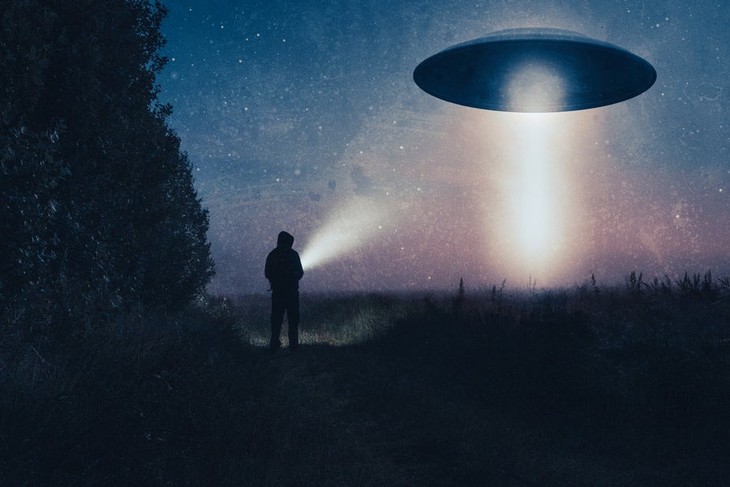
| The Galileo project operates open-air observatories at Harvard, Pennsylvania, and Nevada that can record approximately 100,000 objects per month, and over 1 million objects have been recorded to date, creating the largest database ever collected systematically. (Image: cosmin4000, homeworks255, fergregory, den-belitsky/iStockphoto; composite by L. Steenblik Hwang.) |
 |
| Data from Dalek cameras is processed by artificial intelligence software incorporating the YOLO (You Only Look Once) model for object detection and the SORT (Simple Online and Realtime Tracking) algorithm for trajectory reconstruction. From this, familiar objects such as airplanes, drones, satellites, birds, and hot air balloons are classified, helping to identify anomalies that don't fall into known categories. Photo: David Wall/Getty Images. |
 |
| The research team says that objects of ambiguous origin, which have yet to be classified, will be examined more closely to identify potential signs of extraterrestrial technological civilizations. Photo: scitechdaily. |
Readers are invited to watch the video : The truth behind the evidence of aliens "landing" on Earth in 1947.
Source: https://khoahocdoisong.vn/ra-soat-vu-tru-bang-ai-tim-kiem-nguoi-ngoai-hanh-tinh-post268233.html


















![[Photo] Prime Minister Pham Minh Chinh presides over the conference announcing the establishment of the International Finance Centre in Vietnam.](/_next/image?url=https%3A%2F%2Fvphoto.vietnam.vn%2Fthumb%2F1200x675%2Fvietnam%2Fresource%2FIMAGE%2F2025%2F12%2F21%2F1766309817714_ndo_br_dsc-3400-jpg.webp&w=3840&q=75)







































































Comment (0)