


A legal awareness and dialogue session between the commune police force and students of Muong Lat High School.
In many border communes, it's common for students to drop out of school after Tet (Lunar New Year) to get married. One might think this was a thing of the past. Yet today, in this remote border region, the story of "child marriage" at a young age still lingers. Teachers at Muong Lat High School say that after each Tet holiday, a few faces are missing from some classrooms. These stories often begin with messages from friends in the village: "She's gone to live with her husband's family" or "She got married and won't be going to school anymore"...
This year, Mr. Le Trung Anh's class also had two students who didn't return to school after the Lunar New Year. As the homeroom teacher and the Deputy Secretary of the school's Youth Union, he went to their villages to find out the reasons and persuade them to return. According to him, such cases often involve Hmong students, mainly from the communes of Pu Nhi, Nhi Son, Trung Ly, or Muong Ly. In many villages, the students simply meet, "like each other," and then live together as husband and wife. "In the past, many students would drop out of school after getting married. It was difficult for teachers to change their minds even when they went to the villages to persuade them," Mr. Trung Anh recounted.
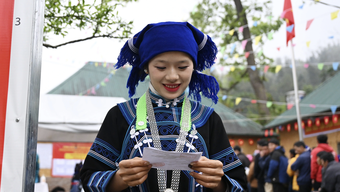
In recent years, the number of students marrying early has decreased significantly, but it hasn't completely stopped. What brings some relief to the teachers is that some students return to school after getting married. They are determined to finish high school to get a degree, so they can later work in a company or go abroad for work. However, this mainly happens with male students. For many female students, once they get married, their studies usually have to stop. Through Mr. Trung Anh's connection, I heard the story of Vu Thi N. in Pu Nhi commune. N. met her boyfriend, now her husband, at the market fair and spring festival, and they developed feelings for each other. "In my village, if two people like each other, the girl will tacitly agree to let the boy 'take her home'," N. said.
When N. was "taken" to be his wife, she was still in the middle of 11th grade. Things happened faster than she expected. After moving in with her husband, the young girl's life changed immediately. Mornings spent going to school were replaced by tending the fire, cooking meals, and then following her husband to the fields. The road to school thus became increasingly long.
But not everyone leaves school after getting married. In another corner of the classroom, Vang AC from Muong Ly commune returned to school after getting married. C. recounted that there were times when he considered dropping out to work as a laborer, because many people in his village did the same. This would allow him to send money home and ease the burden on his family. When the teachers learned of his intention, they visited his home to persuade him to finish high school before working. Having a degree would make it easier to find a job later. Finally, C. decided to return to school.
Working in an area once considered a "low-lying" region for child marriage, teachers at Muong Lat High School can almost always quickly identify students at risk of dropping out of school to get married. Upon hearing the news, the teachers find ways to reach the villages, going directly to the homes to persuade them to stay. Sometimes it's a late afternoon after teaching, sometimes a hurried trip on the weekend. The roads to the villages are often just dirt paths winding along the mountainside, muddy in the rainy season and covered in thick fog in winter. But for the teachers, these trips have become familiar.
Nguyen Nam Son, the principal of Muong Lat High School, said: "To reduce the number of students dropping out of school after Tet (Lunar New Year) due to marriage, the school has proactively coordinated with local authorities and relevant agencies; teachers regularly monitor each student's circumstances, maintain contact with families and village leaders to promptly encourage them to drop out when there are signs of them leaving school. The school also regularly organizes sessions to educate students about gender, reproductive health, and the consequences of child marriage to improve their knowledge and change their perceptions."
Text and photos: Dinh Giang
Source: https://baothanhhoa.vn/ra-tet-thay-lai-tim-tro-281356.htm
![[Photo] The General Secretary works with the Executive Committee of the Hai Phong City Party Committee.](https://vphoto.vietnam.vn/thumb/1200x675/vietnam/resource/IMAGE/2026/03/16/1773629925474_vna-potal-tong-bi-thu-lam-viec-voi-ban-chap-hanh-dang-bo-thanh-pho-hai-phong-8644445-332-jpg.webp)
































































































Comment (0)