

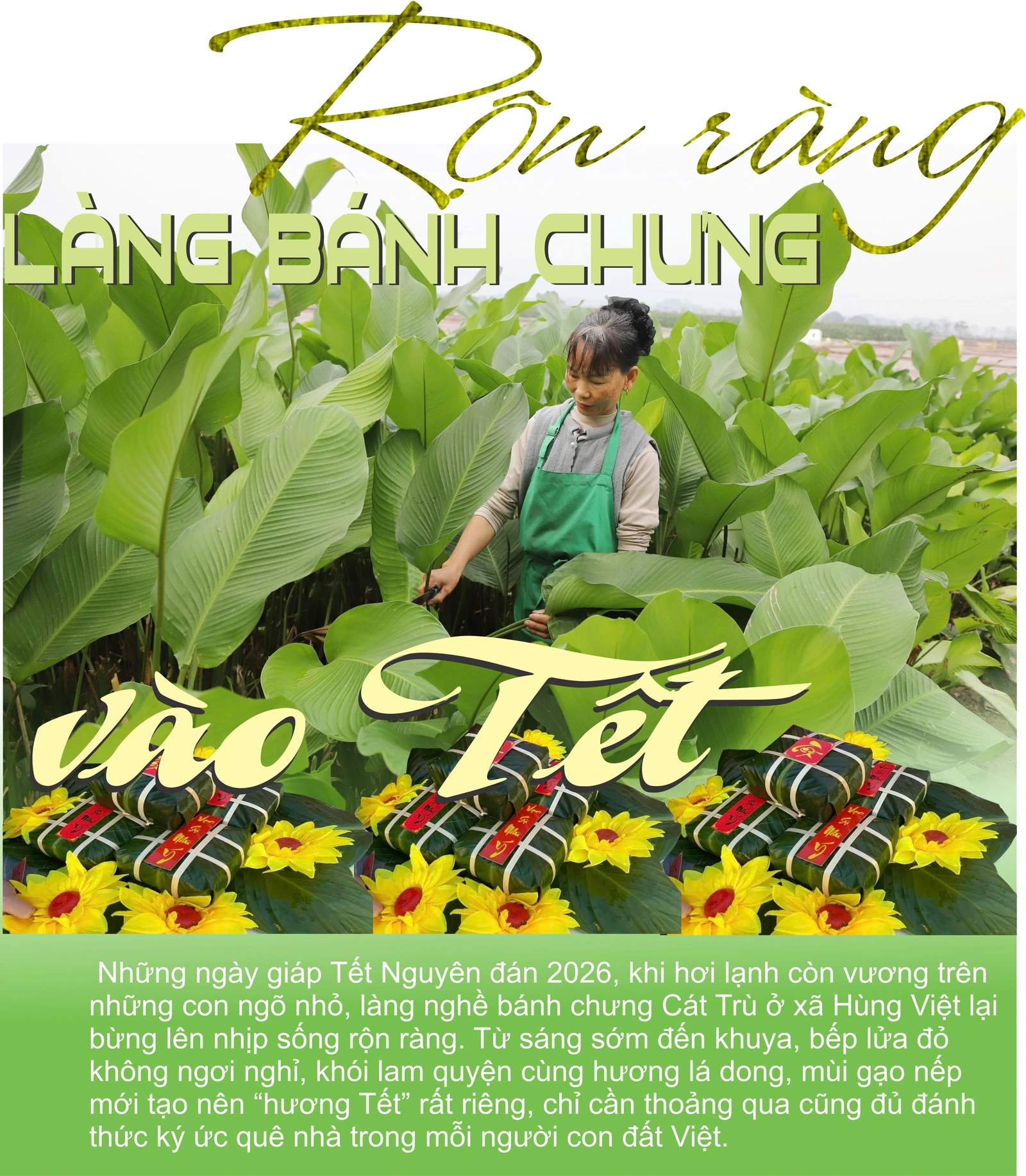
The craft of making banh chung (Vietnamese rice cakes) in Cat Tru has a long history.
As Tet approaches, the traditional craft villages seem to don a new coat. Outside, bundles of lush green banana leaves are brought in; in the courtyards, baskets of pristine white rice and golden yellow beans are neatly arranged; inside, the lively laughter and chatter of the elderly, children, and young people fill the air as they wrap the rice cakes. The atmosphere is one of bustling yet warm activity, because everyone understands that each perfectly square rice cake is not just a product for the market, but also the essence and soul of the traditional Tet holiday.

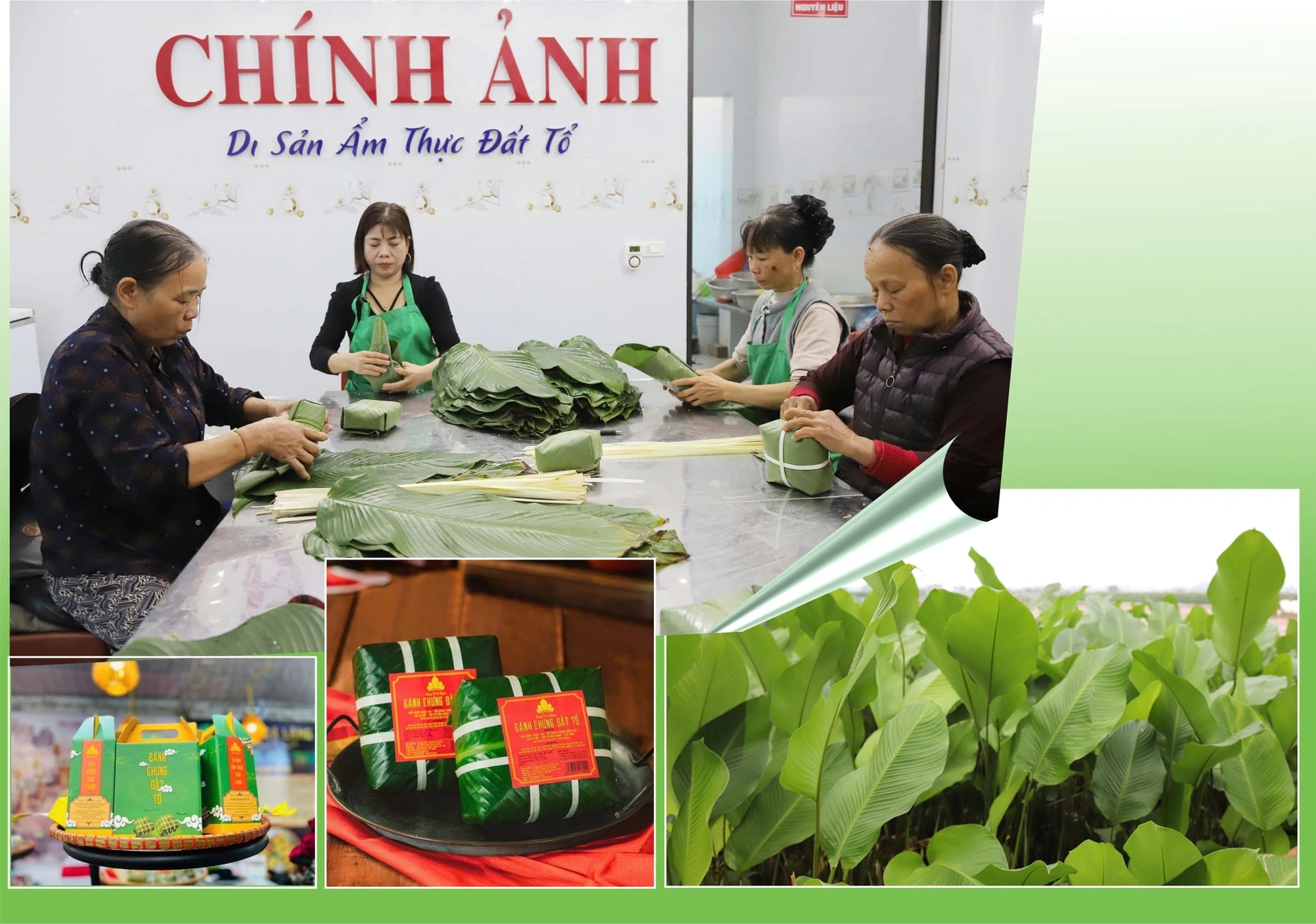
A bustling atmosphere at banh chung (traditional Vietnamese rice cake) making facilities in the days leading up to Tet (Lunar New Year).
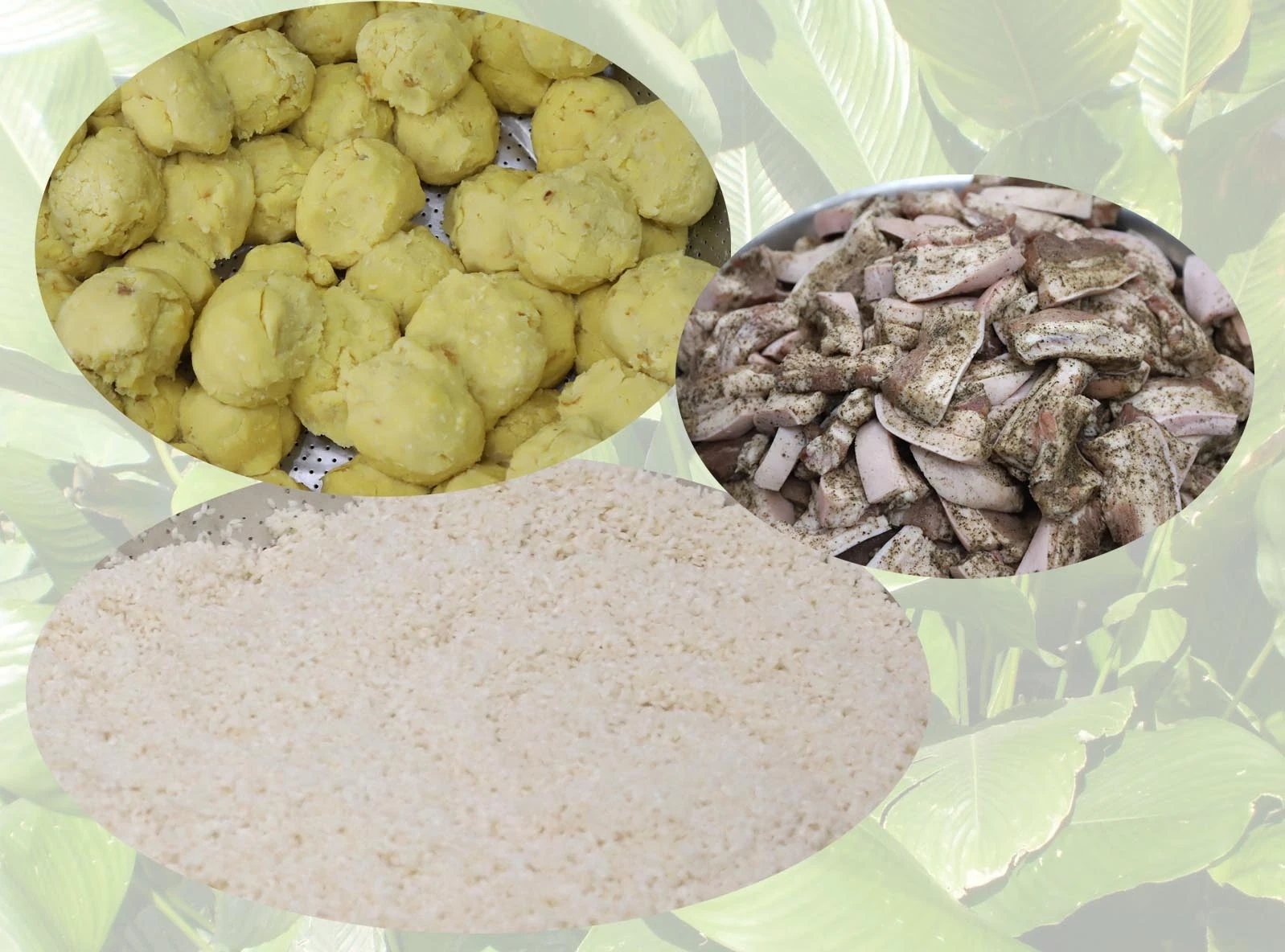
The ingredients for making banh chung (Vietnamese sticky rice cake) are carefully selected to ensure the cake is fragrant and delicious.
According to the elders in the village, the craft of making banh chung (traditional Vietnamese rice cakes) in Cat Tru has a long history. Despite the many changes brought about by modern life, this traditional craft revives strongly every Tet (Lunar New Year). The entire village is like a miniature factory, supplying thousands of banh chung to the market every day, serving people both within and outside the province.
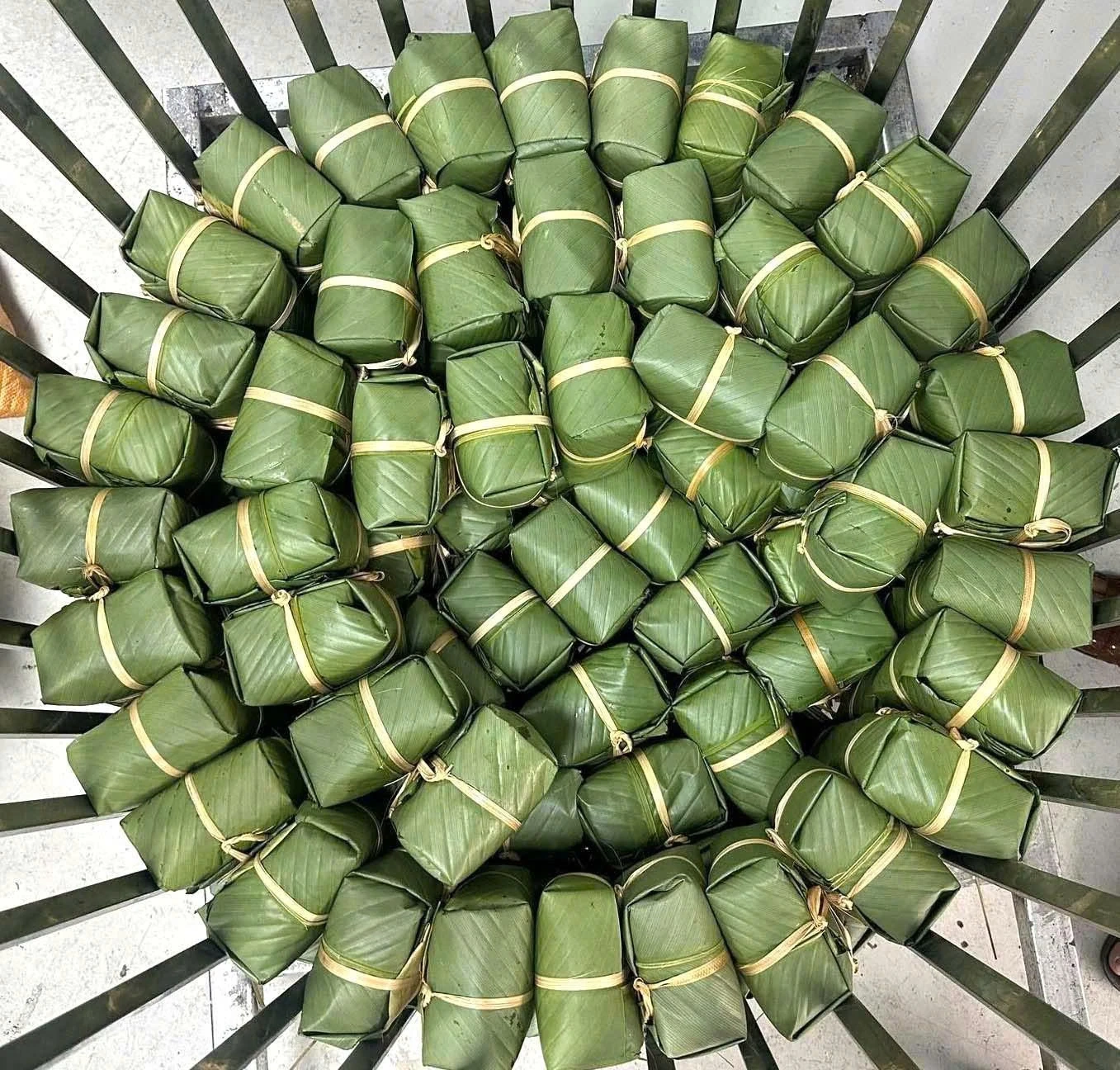
These square-shaped cakes showcase the skill of the people of Cat Tru, Hung Viet commune.
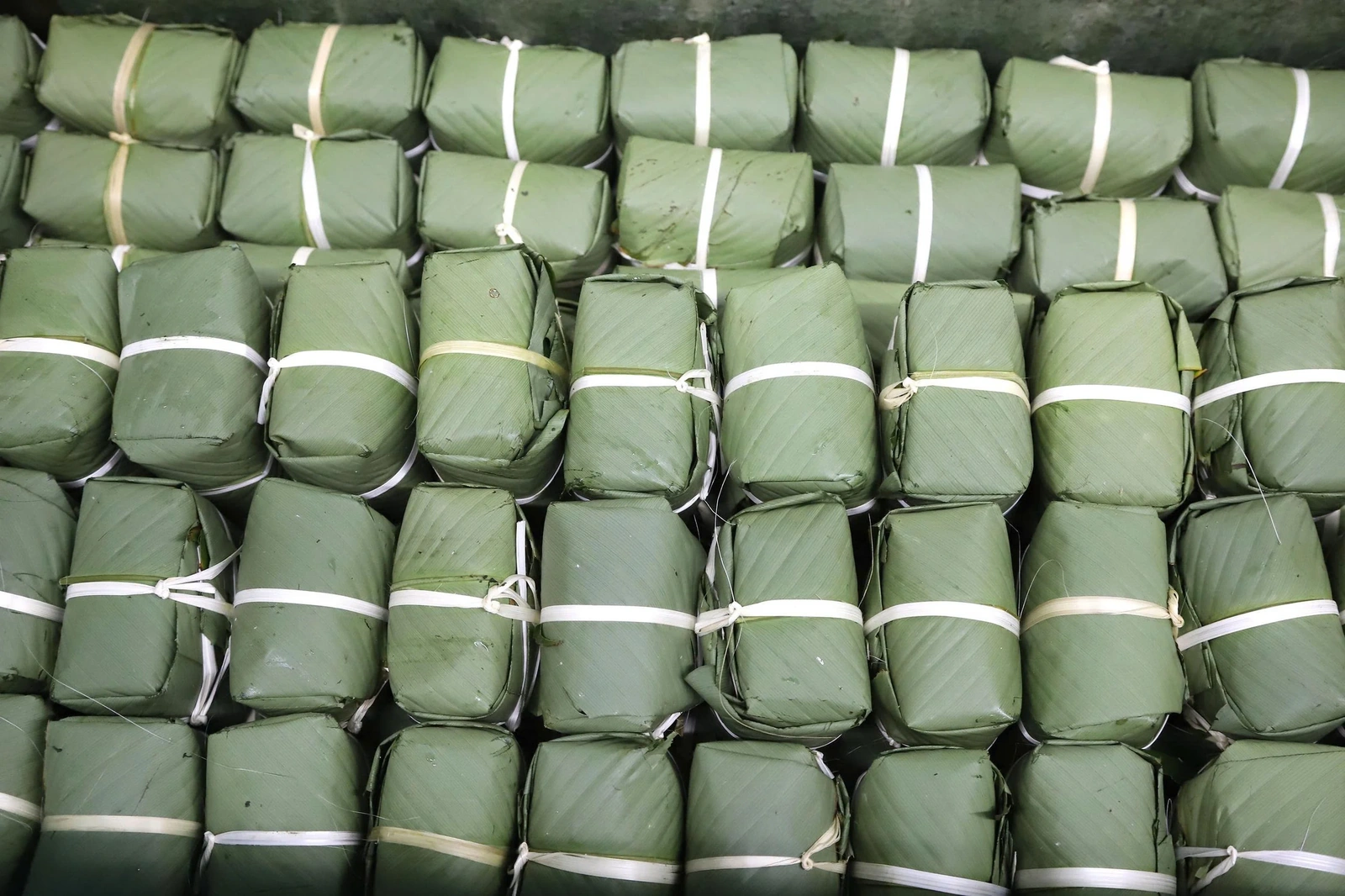
In recent years, along with market development, many production facilities in Hung Viet commune have built their own brands, creating a reputation for local banh chung (Vietnamese sticky rice cake). Notable examples include Chinh Anh banh chung facility in Phu Cat area and Dat To Agricultural and Commercial Cooperative in Thuong Cat area. Each place has its own approach and direction, but they all share the same goal: to preserve the traditional flavor while improving product quality to meet the increasingly high demands of consumers.
In the days leading up to Tet (Lunar New Year), at the Chinh Anh rice cake production facility, the wood-fired stoves and electric rice cookers operate at full capacity. Each day, the facility wraps approximately 700 rice cakes, both square and rectangular; during peak periods before Tet, this can reach 4,000-5,000 cakes per day, mainly traditional square rice cakes. The cakes are either ordered by customers or transported by truck to ensure timely supply to shops and supermarkets.
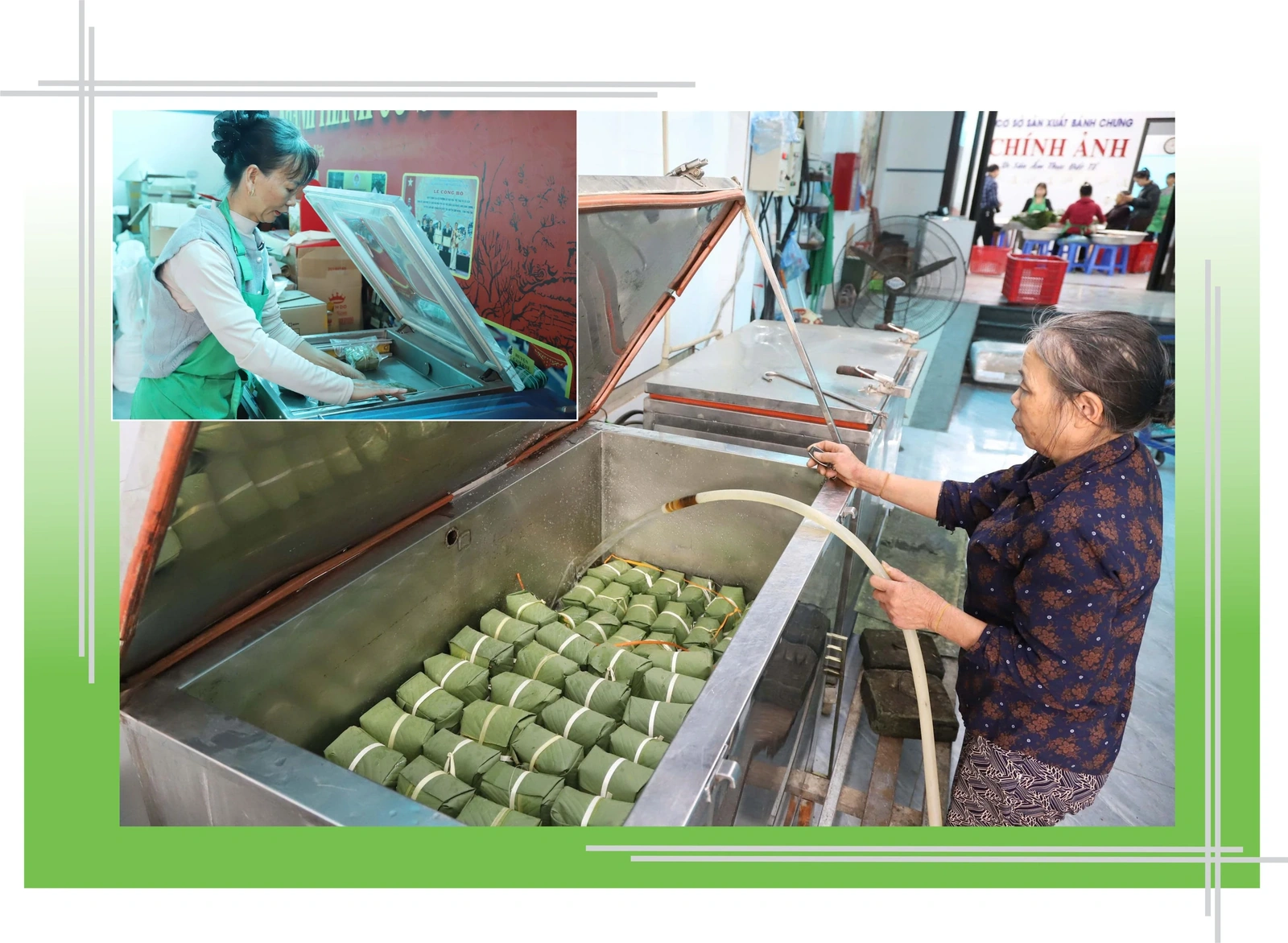
Along with traditional wood-fired ovens for cooking the cakes, Chinh Anh production facility has invested in an electric system for cooking the cakes and processing the mung beans. Once cooled, the cakes are vacuum-sealed for longer preservation during long-distance transportation.
According to Ms. Nguyen Thi Anh, the owner of the establishment, the ingredients for making banh chung (Vietnamese sticky rice cake) in Cat Tru are not much different from those in other rural areas, still consisting of sticky rice, mung beans, pork, and dong leaves. However, the difference lies in the selection of ingredients and the processing techniques. "We choose glutinous rice, with even, sticky, and fragrant grains. The mung beans are small, soaked, thoroughly washed, and cooked until tender so that the filling is flavorful without being dry. We use fresh pork belly or shoulder, marinated just right so that when cooked, the filling is rich but not greasy."
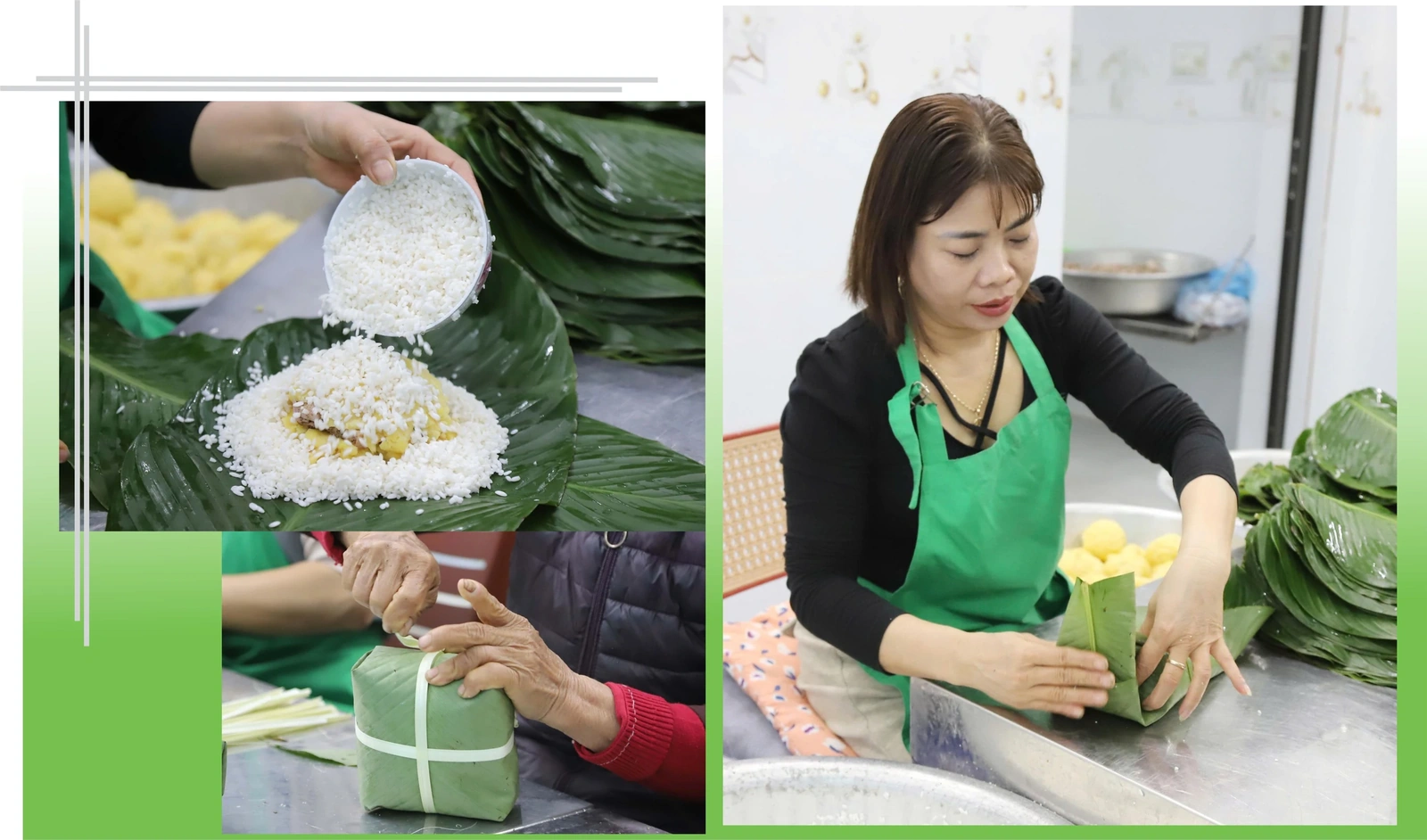
Wrapping the rice cakes requires skill and experience. The cakes must be tightly wrapped, with evenly distributed glutinous rice so that when cooked, the rice becomes firm and the cakes are perfectly square. The banana leaves must also be carefully selected, neither too young nor too old, so that when boiled, the cakes retain their vibrant green color and do not turn yellow. Even without using molds, Cat Tru rice cakes are still praised by many diners for their neatness, attractive appearance, and rich flavor.

Ms. Nguyen Thi Anh (far right) has participated in the banh chung wrapping competition at Hung Temple for many years.
Besides serving the Tet (Lunar New Year) market, Cat Tru sticky rice cakes have been chosen as offerings for many important occasions, especially the Hung Kings' Commemoration Day. For those who make them, it is not only a source of pride but also a responsibility to maintain the highest standards for each cake. Ms. Anh is also a member of the Folk Culture Troupe of the former Cam Khe district, having won first prize in the sticky rice cake wrapping and cooking competition at the Hung Kings' Commemoration Day - Hung Temple Festival for many years, and was chosen to make sticky rice cakes to offer to the Hung Kings.
While the Chinh Anh sticky rice cake production facility preserves traditional methods, the Dat To Agricultural and Commercial Cooperative has opened up a new direction, combining heritage preservation with product innovation. With its "Dat To Sticky Rice Cake" brand, which has achieved OCOP 4-star certification, the cooperative has brought Cat Tru sticky rice cakes closer to consumers across the country.
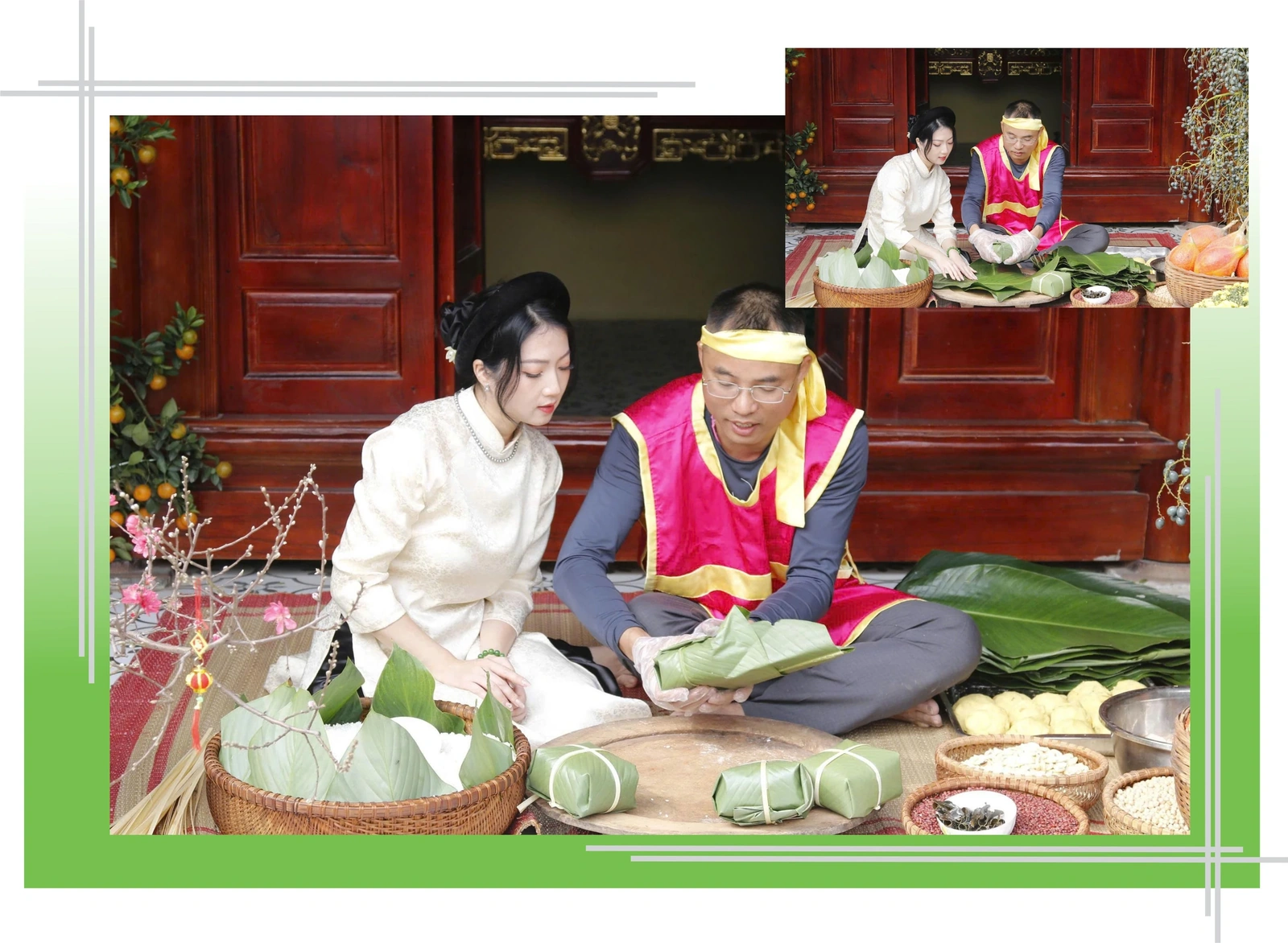
The director of the Dat To Agricultural and Commercial Cooperative shares how to wrap banh chung (traditional Vietnamese rice cakes) for Tet (Lunar New Year).
Pham Xuan Hieu, Director of Dat To Agricultural and Commercial Cooperative, said: "Besides the traditional banh chung (Vietnamese sticky rice cake), the cooperative also develops a vegetarian banh chung product that is both nutritious and retains the traditional features, but the recipe has been adjusted to better suit the healthy eating needs of modern consumers. The filling is a combination of red beans, chickpeas, lentils, seaweed, cashews, and natural spices. The sticky rice is soaked in water from boiled sweet potato leaves to create a gentle green color, and also makes the cake easier to eat without causing heartburn."
This innovation does not diminish the identity; on the contrary, it contributes to expanding the "life" of the traditional banh chung (Vietnamese rice cake) in the new context. Banh chung from the ancestral land is now found not only in Phu Tho, Hanoi , and Ho Chi Minh City, but also accompanies many Vietnamese people abroad, becoming a Tet gift that conveys nostalgia for their homeland.
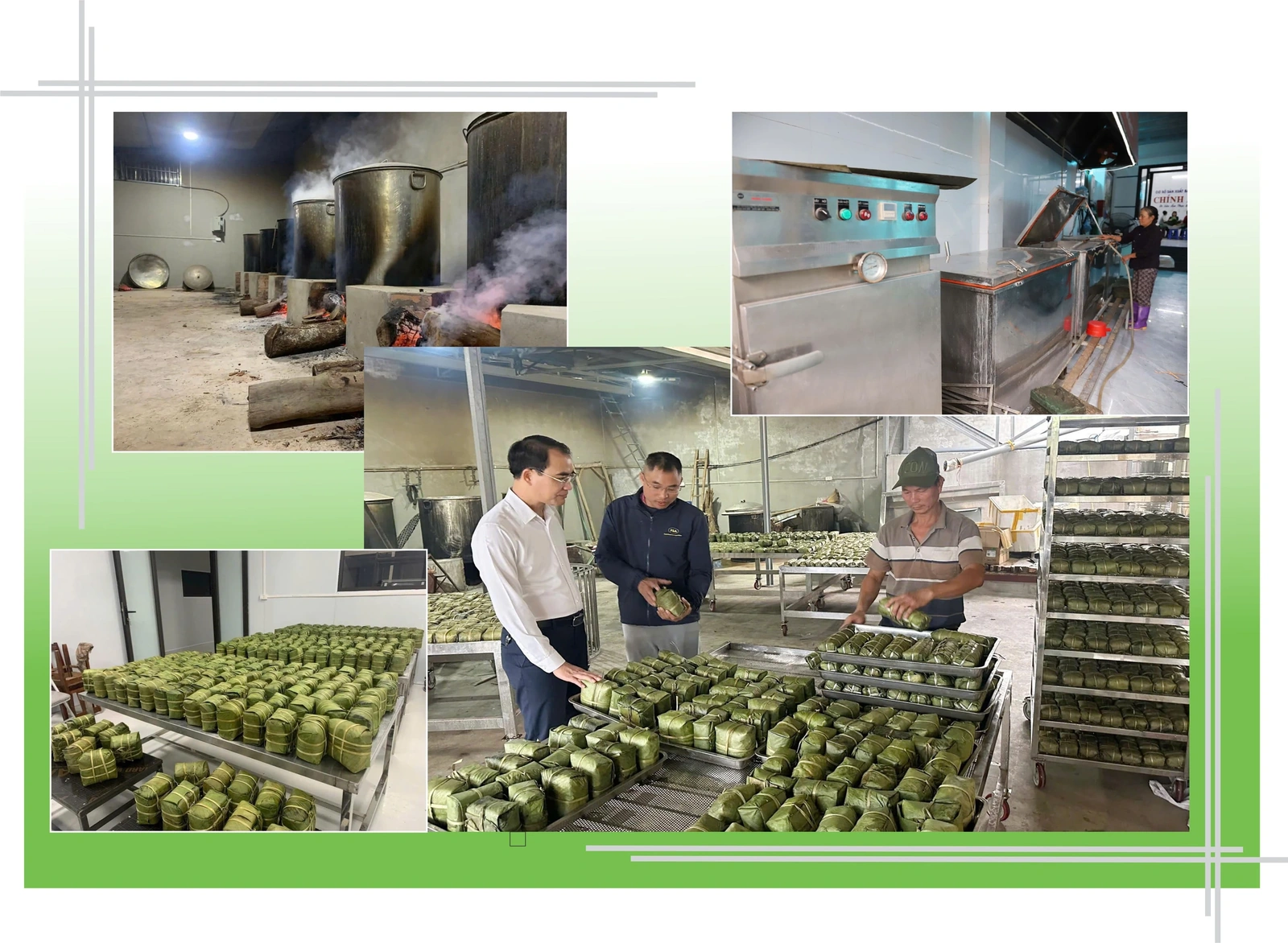
The rice cakes from the Dat To Agricultural and Commercial Cooperative are cooked over a wood-fired stove for 10-12 hours. After being removed from the oven, the cakes are pressed into square shapes using molds.

Notably, the cooperative also built a space for experiencing the making of banh chung (traditional Vietnamese rice cakes), where workshops on wrapping cakes are held, and interactions with artisans from the craft village take place. Here, tourists and students can personally arrange leaves, wash rice, wrap cakes, light a wood-fired stove, and wait for the results after hours of boiling the cakes. These experiences are a vivid and visual way to teach cultural values.
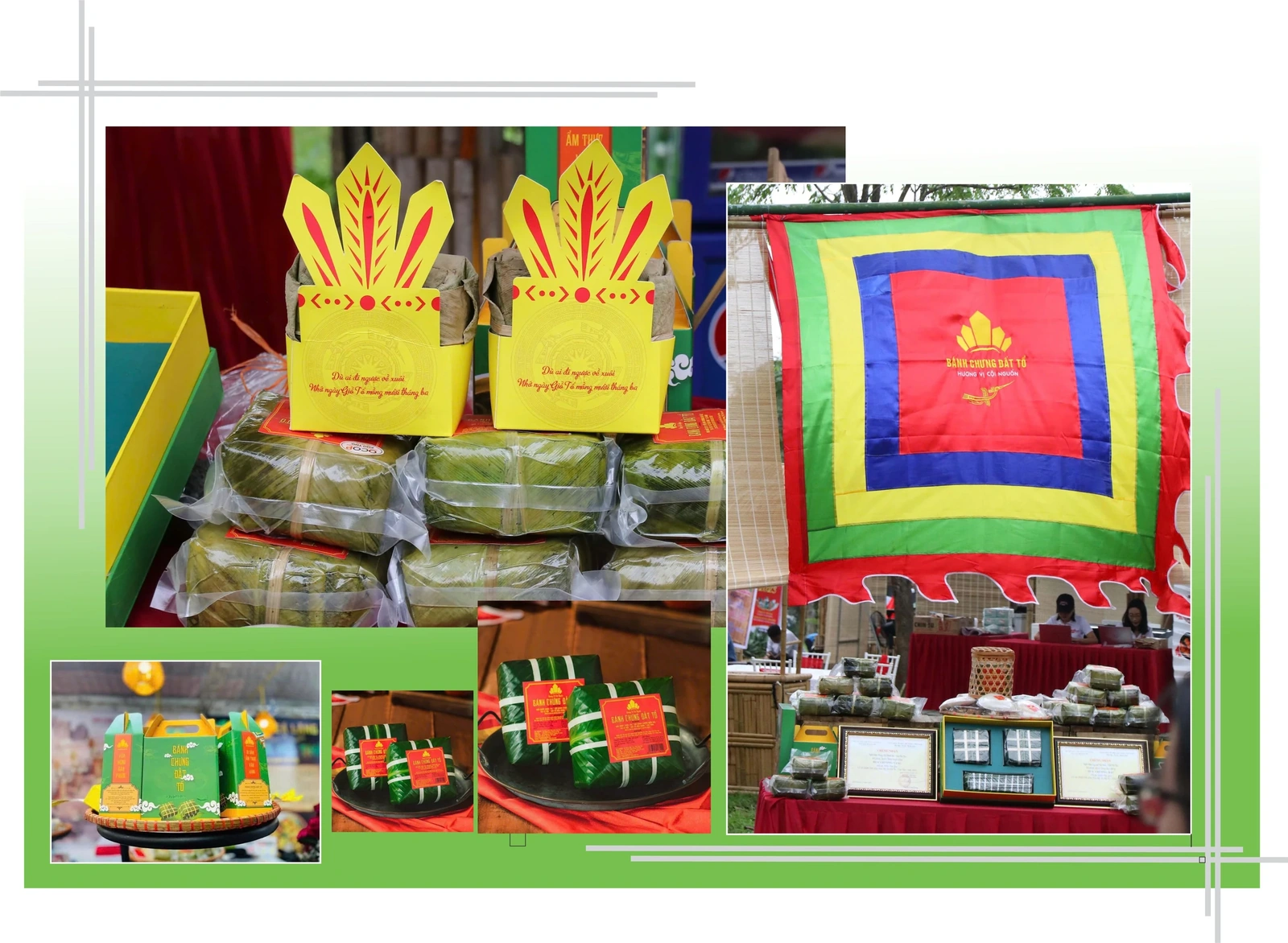
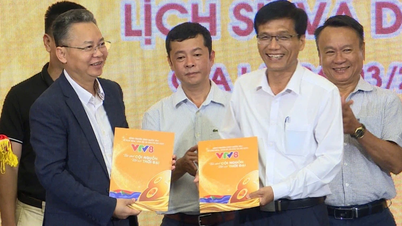
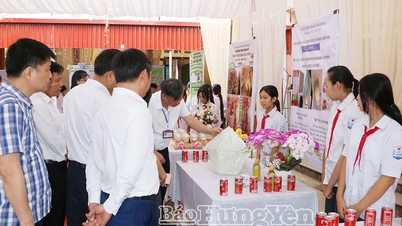
The product was introduced and promoted at Hung Temple.
The Cát Trù sticky rice cake, still hot after being removed from the boiling water, is perfectly square, its vibrant green banana leaves embracing the sticky white rice and fragrant golden filling inside. When unwrapped, the aroma of fresh sticky rice blends with the scent of beans and meat, evoking a feeling of togetherness. Perhaps it is the meticulousness in each step that has given the sticky rice cake-making craft here its enduring vitality.
The traditional Tet rice cakes (banh chung) are not just a simple dish; they are also a memory, a connection between the past and the present, between ancient values and the rhythm of modern life. From the hands of village artisans, the perfectly square banh chung are completed, carrying the flavor of Tet from the countryside to all corners of the world. And it is from these traditional villages that the spirit of Vietnamese Tet is preserved and nurtured through each spring.
Content: Phuong Thanh - Presentation: Dinh Tu
Source: https://baophutho.vn/ron-rang-lang-banh-chung-vao-tet-247183.htm




















































Comment (0)