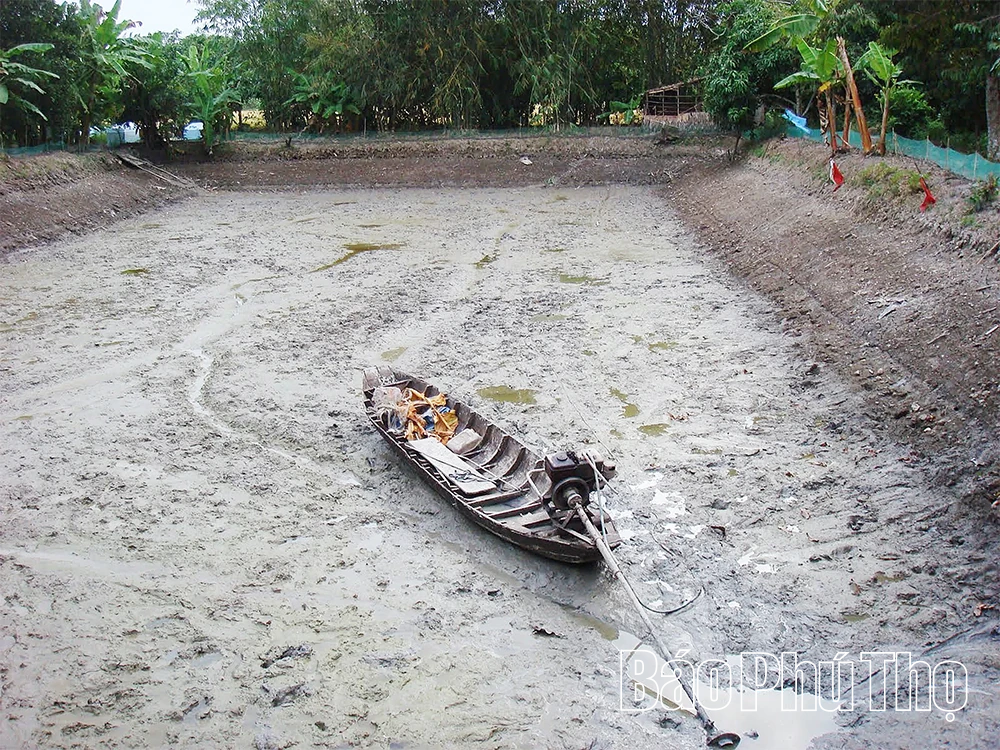
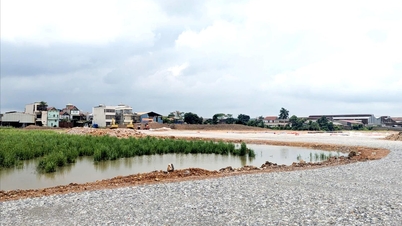
The family of Mr. Tran Trung Kien in Vinh Chan commune always thoroughly drains and dries the pond to disinfect it before the new season, ensuring a healthy fish harvest.
After harvesting and selling the fish before and during Tet (Lunar New Year), Mr. Tran Trung Kien's family in Vinh Chan commune dries out the ponds and spreads lime powder to disinfect and kill pathogens before filling them with water for the new fish farming season. With a total water surface area of over 10 hectares, Mr. Kien's family divides the ponds into many different areas for intensive farming, staggered planting, so they have shrimp and fish to sell year-round.
Mr. Kien stated that in aquaculture, disease prevention plays a particularly important role because diseases in fish and shrimp are more difficult to detect than in land-based livestock, especially diseases caused by parasites originating from polluted water sources.
According to Mr. Kien, over the past three years, his family has converted more than 1 hectare of land to VietGAP-certified aquaculture, producing products that are highly valued by the market and have stable prices. In the future, the family plans to expand the area under this model to approximately 5 hectares. Currently, many large-scale aquaculture households in the commune are also gradually switching to intensive farming according to VietGAP standards, yielding positive economic results.
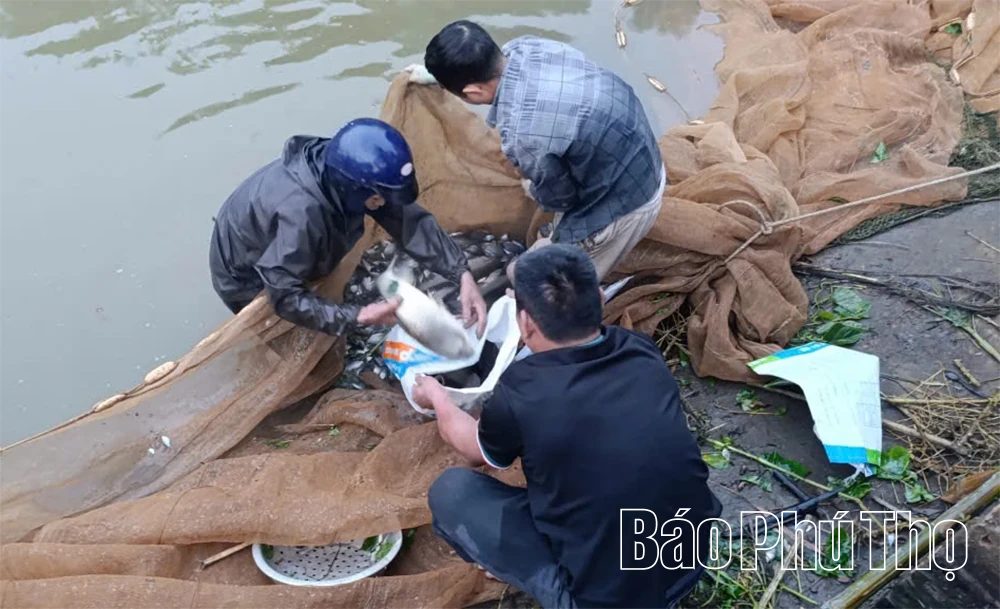
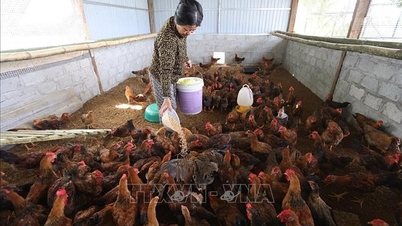
Aquaculture farmers in Lam Thao commune are harvesting their last batches of fish before cleaning their ponds for the new season.
According to statistics from the Department of Agriculture and Environment, the province currently has nearly 19,900 hectares of aquaculture area; intensive cage fish farming on rivers and lakes has reached 6,649 cages; the total production in 2025 is expected to reach approximately 84,000 tons. In the structure of farmed species, specialty and native species with high economic value such as catfish, snakehead fish, giant catfish, freshwater prawns, and snails account for about 60%.
In addition, the province has implemented cold-water fish farming in several suitable locations such as Yen Lap, Ha Hoa, and Thanh Son. Emphasis has been placed on the production and supply of fingerlings, with over 4 breeding facilities, 1 enterprise, 2 traditional craft villages, 18 trading establishments, and 15 breeding areas, covering a total area of approximately 345 hectares, supplying 4.9-5 billion fingerlings annually.
However, in recent times, aquaculture farmers have faced many difficulties due to rising input costs, while selling prices are dependent on traders and lack stability. Brand building and consumption linkages remain limited. In addition, the shortage of specialized personnel at the local level also affects training and technology transfer.

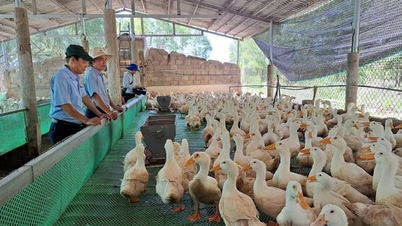
The intensive aquaculture model of "river in a pond" in Tam Nong commune helps to effectively control diseases and ensure the healthy development of the fish population.
According to Ms. Phan Thi Luyen, Deputy Head of the Provincial Department of Livestock, Veterinary and Fisheries, the unit has strengthened monitoring and guidance on farming processes, encouraging the application of new technologies such as the "river in a pond" model and intensive farming of key species to improve production efficiency.
The Department of Agriculture and Environment also requested localities to review low-lying rice paddies with low productivity and switch to integrated fish-rice farming or specialized fish farming models within the planning framework, and to raise aquatic products in a safe manner to control diseases and achieve high economic efficiency. At the same time, it advised farmers to purchase fry from reputable hatcheries that meet quality standards, avoiding buying fry from unreliable sources on the market to prevent potential economic losses.
For the aquaculture industry to develop stably and sustainably, and to truly bring economic efficiency, in addition to encouraging farmers to gradually switch to biosafety farming and VietGAP standards, relevant agencies also need to support farmers in strengthening market forecasting and linking with provinces and cities nationwide in product consumption; coordinating with localities to strengthen trade promotion activities, building linkages between businesses and farmers, cooperatives to sign product consumption contracts with supermarkets and convenience stores...
Quan Lam
Source: https://baophutho.vn/de-vu-nuoi-thuy-san-moi-boi-thu-250448.htm










































































Comment (0)