


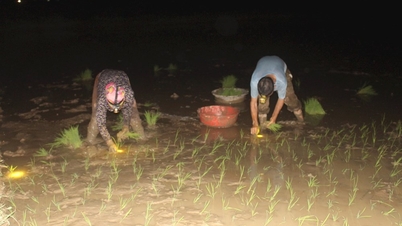
The rice planting ceremony in Tra Que vegetable village is a traditional folk festival associated with traditional crafts and agriculture , expressing gratitude to heaven and earth, the patron saint of the craft, and praying for a bountiful harvest of vegetables.

Beyond its spiritual significance, the festival is also an opportunity for the community and tourists to immerse themselves in the atmosphere of the traditional craft village, experiencing the genuine and diligent lifestyle of this region famous for its centuries-old vegetable production.

Within the framework of the festival, spiritual rituals were prepared and performed by the village elders in accordance with the ancient customs of the village.
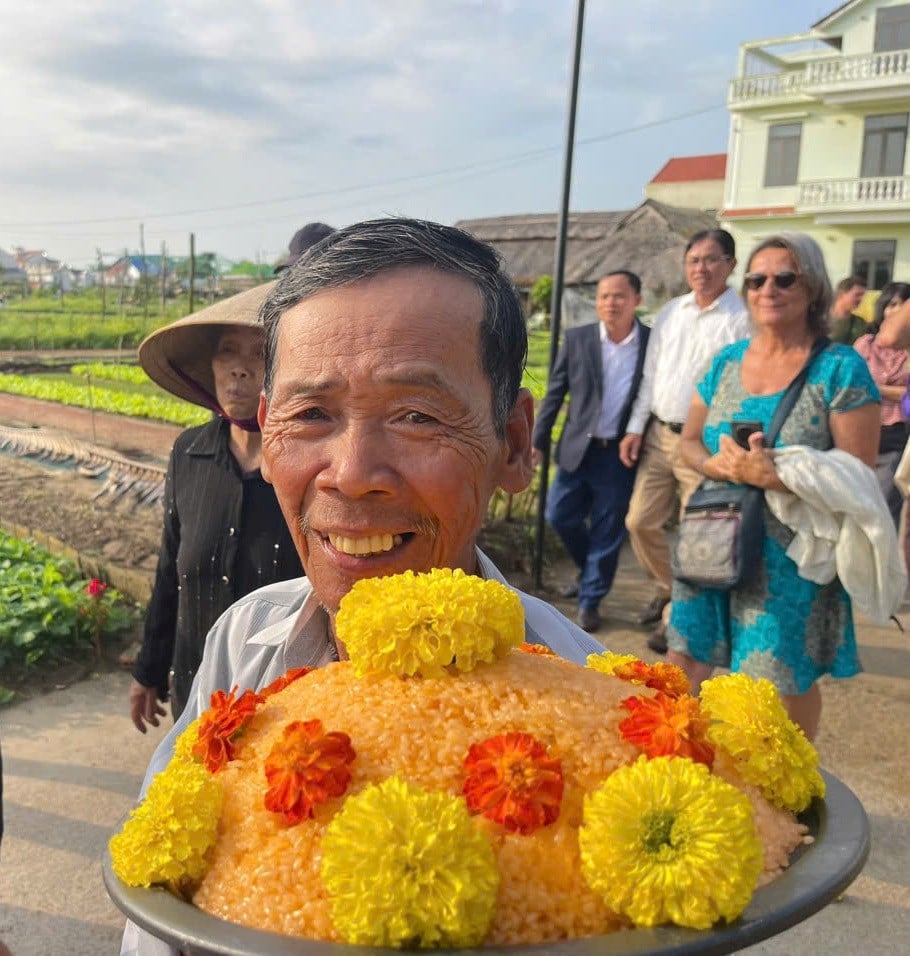
From erecting the ceremonial pole on the 24th day of the 12th lunar month, welcoming the deity to the altar and offering sacrifices on the 6th day of the 1st lunar month, organizing the offering and worship of the God of Agriculture on the 7th day of the 1st lunar month, to writing the ceremonial text, selecting the chief worshipper, the ceremonial procession, the person reading the text, the person chanting the prayers..., everything is meticulously and solemnly prepared.


The festival portion of the Cau Bong ceremony attracts a large number of villagers, people from neighboring areas in Hoi An, and tourists participating in many lively competitions such as shrimp wrapping contests - a signature dish of Tra Que village, vegetable farming competitions, and soil tilling and planting competitions… In addition, there are traditional Hoi An folk games such as Bài Chòi (a traditional Vietnamese game), tug-of-war, and unique culinary activities.


Mr. Mai Van Ha, a resident of Tra Que village, said that the festival is a unique cultural feature, preserved and maintained by many generations to preserve its traditional values intact. Especially since Tra Que vegetable village was honored as the Best Tourist Village of 2024, it has attracted even more domestic and international tourists to visit and experience it.

Beyond simply enriching the cultural and spiritual values of the homeland, the Cau Bong festival is also an opportunity for the vegetable village to promote and affirm to tourists the cultural and historical values of the craft village, and the attractiveness of Tra Que vegetable village. This contributes to introducing and upgrading suburban community tourism products to attract more tourists and alleviate pressure on the Old Quarter area.

With its advantageous geographical location, not far from Hoi An ancient town, surrounded by the De Voong River and Tra Que Lagoon, fertile land, mild climate, and long-standing history and culture, along with its honest and simple people, Tra Que craft village is currently being effectively preserved and promoted, making it an unmissable attraction for tourists visiting Hoi An.

To grow vegetables, farmers follow a production process that includes selecting and preserving seeds, planting, caring for the plants, harvesting, and selling the produce. 
In Tra Que, visitors can learn about the process by which farmers practice production, accumulate experience, and gradually adjust and improve their farming methods to ensure that vegetables are of high quality, safe for consumers, and to shorten production time.
Tourists also enjoy experiencing tours exploring Tra Que vegetable village, trying their hand at farming, participating in cooking classes to prepare and enjoy dishes made from vegetables, and relaxing with the natural herbal aromas of the vegetable village…


Vegetable village, craft village
Source: https://baovanhoa.vn/van-hoa/ron-rang-le-hoi-cau-bong-tra-que-206193.html

![[Photo] Admire the coral "masterpiece" amidst the million-year-old heritage of Dak Lak province.](https://vphoto.vietnam.vn/thumb/1200x675/vietnam/resource/IMAGE/2026/05/31/1780221235105_anh-man-hinh-2026-05-31-luc-16-53-27.png)
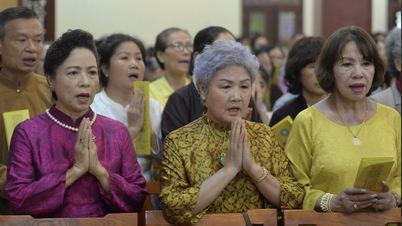
![[Photo] Solemn bathing ceremony and Buddha procession in Hue](https://vphoto.vietnam.vn/thumb/1200x675/vietnam/resource/IMAGE/2026/05/31/1780228263543_1-jpg.webp)













![[Video] Sunset at Lap An Lagoon – Where the sun sets over the fishing nets](https://vphoto.vietnam.vn/thumb/340x192/vietnam/resource/IMAGE/2026/05/31/1780192137701_beach-landscape-sea-water-nature-grass-745871-pxhere-com.jpeg)



























![[Photo] Admire the coral "masterpiece" amidst the million-year-old heritage of Dak Lak province.](https://vphoto.vietnam.vn/thumb/402x226/vietnam/resource/IMAGE/2026/05/31/1780221235105_anh-man-hinh-2026-05-31-luc-16-53-27.png)






























Comment (0)