

While in many other localities, the festival season usually takes place in the days after the Lunar New Year, with the saying "January is the month for feasting and revelry...", in Khanh Hoa province, the festival season is concentrated in the third lunar month, with a series of events associated with the worship of the Mother Goddess Thien Ya Na, including: the Am Chua Festival (from March 1st to 3rd); the Lady's Day festival at Suoi Do (on March 8th, 18th, and 28th); and the Ponagar Tower Festival (from March 20th to 23rd). In addition, there is the commemoration of the Battle of Bach Dang Giang, linked to the contributions of General Tran Quoc Tuan (March 8th); the incense offering ceremony to remember the Hung Kings on Hung Vuong Ancestor's Day (March 10th); and the spring festival at mausoleums and communal houses in many communes and wards… All of these create a festive atmosphere that is both solemn and sacred, yet vibrant and lively.
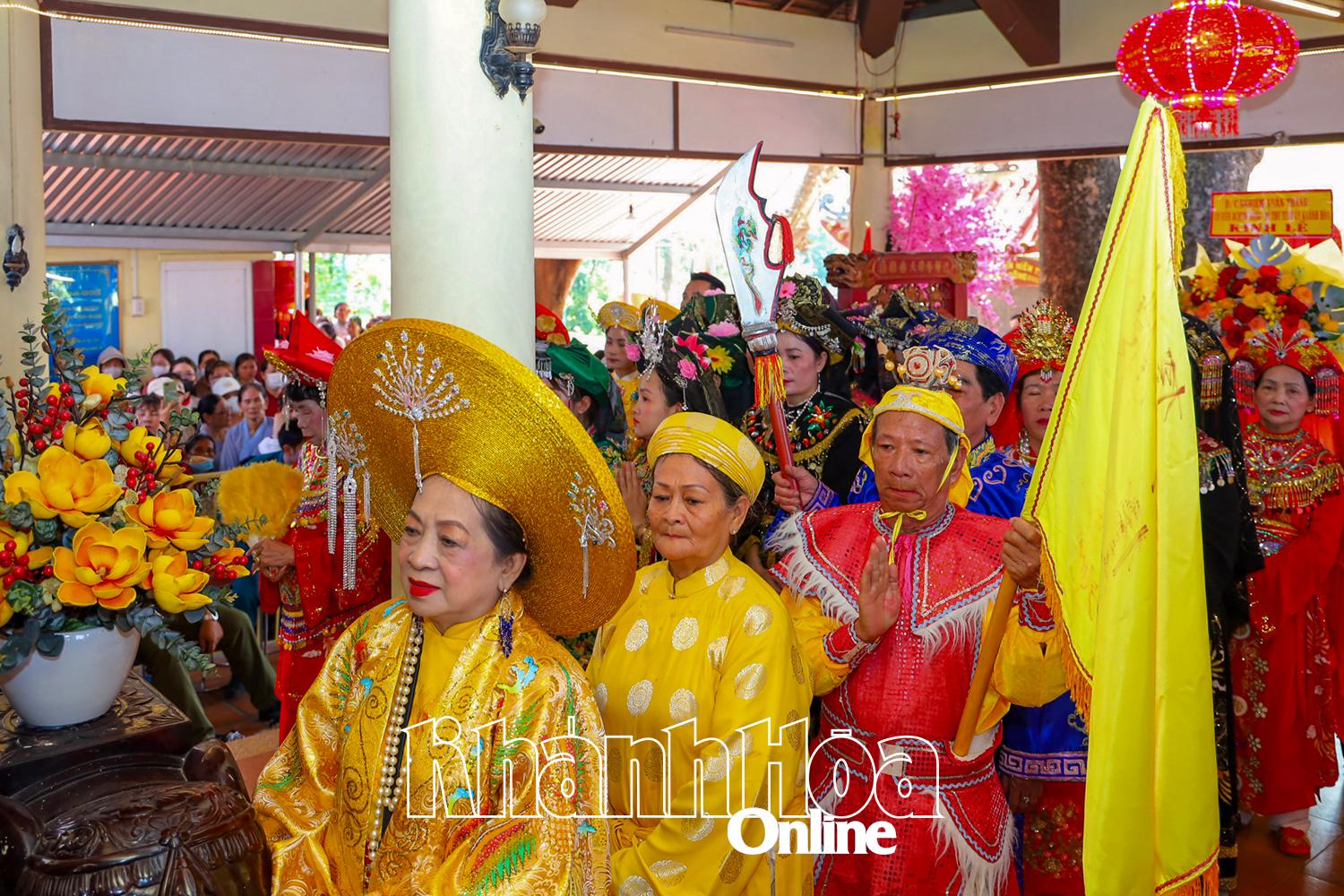 |
| People participating in the Am Chua festival in 2025. |
Folklore has long held the saying, "Am Chua manifests humanity, Thap Ba manifests holiness," while Suoi Do is considered the place where Mother Thien YA Na travels and bestows blessings upon the world. In early March, crowds flock to the Am Chua National Monument on Dai An Mountain (Dien Dien commune, Dien Khanh district) to participate in the festival. Each person brings offerings to Mother Thien YA Na, including simple fruits, agricultural products, and heartfelt prayers for good fortune for themselves, their families, and their communities. When the Am Chua festival ends, many followers of the Mother Goddess worship return to the Thien YA Na shrine in the Suoi Do area on Hoang Nguu mountain (Dien Toan commune, Dien Khanh district), where writer Quach Tan wrote in his book "Land of Agarwood": "Legend says that this is where Thien YA Na came to sit and enjoy the cool breeze or rest during her travels. Whenever she came, there would be three thunderclaps that echoed across the sky, followed by a stream of blue light, wide and long like a silk ribbon, descending from the direction of Chua mountain in Dai Dien or from Hon Ba in Cam Lam."
And the biggest and most anticipated festival is the Ponagar Tower Festival at the Ponagar Tower National Special Monument (Vinh Phuoc Ward, Nha Trang City). The Ponagar Tower Festival takes place with traditional rituals such as: the water procession; the changing of the Mother Goddess's robes; the floating lantern ceremony; the prayer for national peace and prosperity; the offering of food to the spirits; the prayer for peace of the Cham people; and traditional sacrificial ceremonies… This festival also clearly demonstrates the cultural exchange and transformation of the Vietnamese and Cham people in the Khanh Hoa region. Locals and tourists attending the Ponagar Tower Festival also demonstrate the spirit of unity and solidarity among the brotherly ethnic communities. “It has become a tradition that every year in the third lunar month, members of our religious group make a pilgrimage to attend the festivals honoring the Mother Goddess Thien YA Na in Khanh Hoa province. Although the journey is long, being able to be with the Mother, offering gifts, dances, and songs to her, makes each person in the group feel very happy,” said Mr. Nguyen Van Phuc (from Hue City). Mr. Kieu Hoang Mieu (Cham ethnic minority from Phuoc Nam commune, Thuan Nam district, Ninh Thuan province) said: “Going to worship the Mother Goddess Po Inu Nagar is a regular activity for my family. This year, my family has attended all the festivals from Am Chua to Suoi Do and will soon be attending the Ponagar Tower festival.”

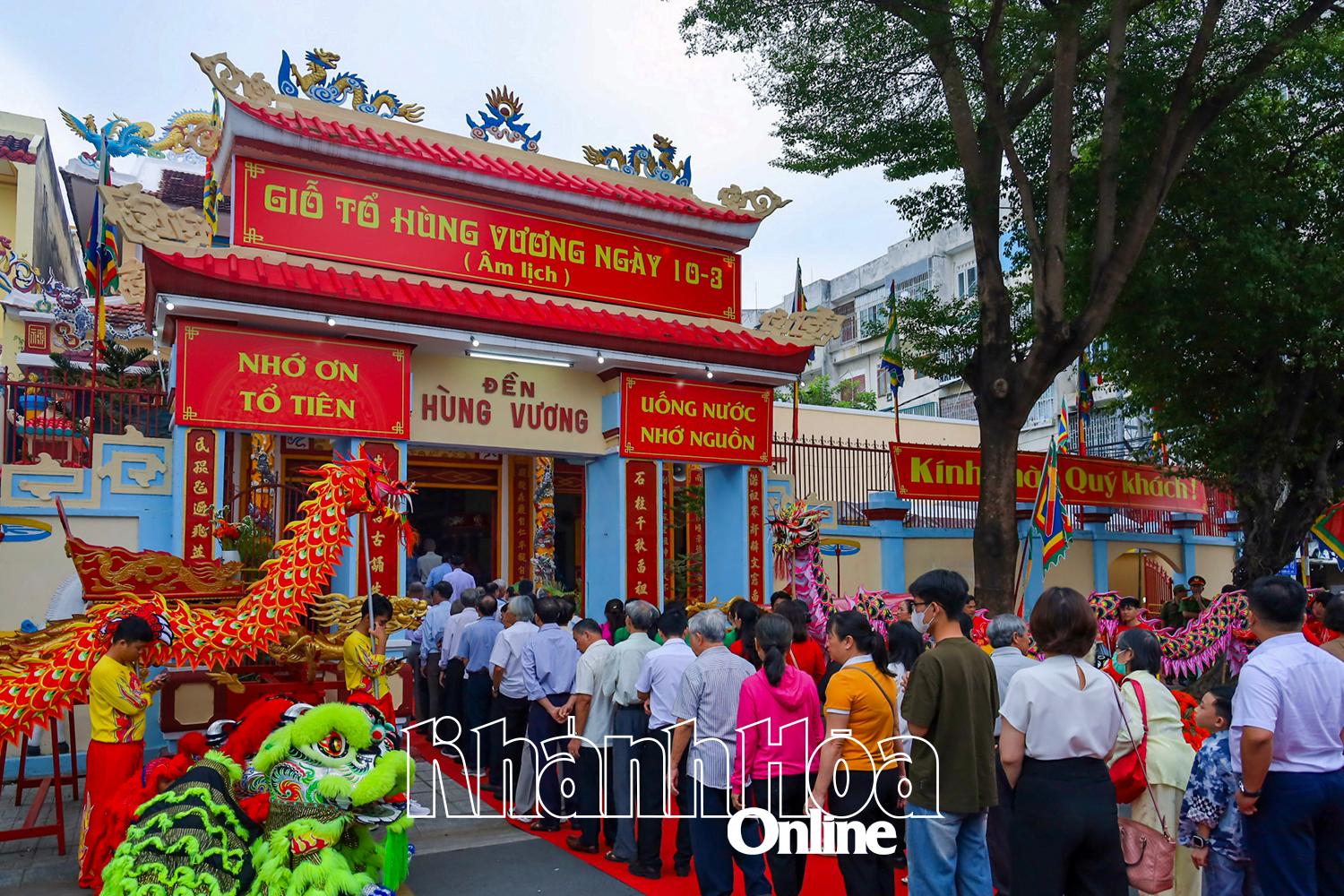 |
| People attend the Hung Kings Commemoration Ceremony in 2025 at Hung Kings Temple in Nha Trang City. |
The commemoration of the Battle of Bach Dang Giang and the incense offering ceremony for the Hung Kings' Ancestral Anniversary demonstrate the national tradition of "Drinking water, remember the source," and "Eating fruit, remember the tree planter." Remarkably, even during the years when the country was still divided by war, in Nha Trang - Khanh Hoa, the people still joined hands and contributed resources to build two historical and cultural sites: the Tran Hung Dao Temple and the Hung Kings Temple. The Tran Hung Dao Temple (124 Nguyen Trai Street, Nha Trang) was built in 1962, at the initiative of the North Vietnam Friendship Association. At that time, it was the only temple in the Central region dedicated to the Great King Tran Quoc Tuan (Tran Hung Dao). The Hung Vuong Temple (173 Ngo Gia Tu Street, Nha Trang) was started in 1971 and completed in 1973. Although these structures are not large in scale, they affirm the affection of the people of the far South who always look towards their national roots and remember the contributions of the revered figures to the country. “Having had the opportunity to participate in the festival activities at the Tran Hung Dao Temple and the Hung Vuong Temple in Nha Trang City, I was truly surprised and impressed by the unwavering loyalty of previous generations to the historical and cultural traditions of the nation. As President Ho Chi Minh once affirmed: Vietnam is one country, the Vietnamese people are one nation,” said Ms. Dinh Thi Giao (Hre ethnic minority, from Quang Ngai province).
According to Mr. Le Van Hoa, Deputy Director of the Department of Culture, Sports and Tourism, the Mother Goddess worship of the Vietnamese people in Khanh Hoa has, for generations, been intertwined and culturally enhanced with the Mother Goddess worship of Po Inư Nagar of the Cham people, creating a unique beauty at the Am Chua, Suoi Do, and Thap Ba Ponagar relics. The third lunar month is considered the season of Mother Goddess festivals in the land of agarwood, with a continuous journey of heritage related to Mother Goddess worship taking place at all three aforementioned relics. This forms the basis for building a dossier on the intangible cultural heritage of the practice of Mother Goddess worship of Thien YA Na to be submitted to UNESCO for consideration and inscription as a representative intangible cultural heritage of humanity. Meanwhile, the festivals at the Tran Hung Dao Temple and the Hung Vuong Temple are occasions for everyone to remember their ancestors and national heroes. All these festivals showcase the unique and diverse cultural identity of the land and people of Khanh Hoa, contributing to the preservation and promotion of traditional cultural values, while also promoting the image of Khanh Hoa to friends both domestically and internationally.
GIANG DINH

Source: https://baokhanhhoa.vn/van-hoa/202504/ron-rangmua-le-hoi-thang-ba-f1e2b9f/






















![[Video] Sunset at Lap An Lagoon – Where the sun sets over the fishing nets](https://vphoto.vietnam.vn/thumb/1200x675/vietnam/resource/IMAGE/2026/05/31/1780192137701_beach-landscape-sea-water-nature-grass-745871-pxhere-com.jpeg)
















Comment (0)