During each traditional Lunar New Year celebration, the Cao Lan people cut and paste shapes onto red paper, then paste them onto household items. These elaborate and beautiful shapes and patterns are not merely decorations but also hold significant cultural and spiritual value, symbolizing aspirations for a prosperous and peaceful new year. This is a beautiful custom, reflecting the unique identity of the Cao Lan people for generations.
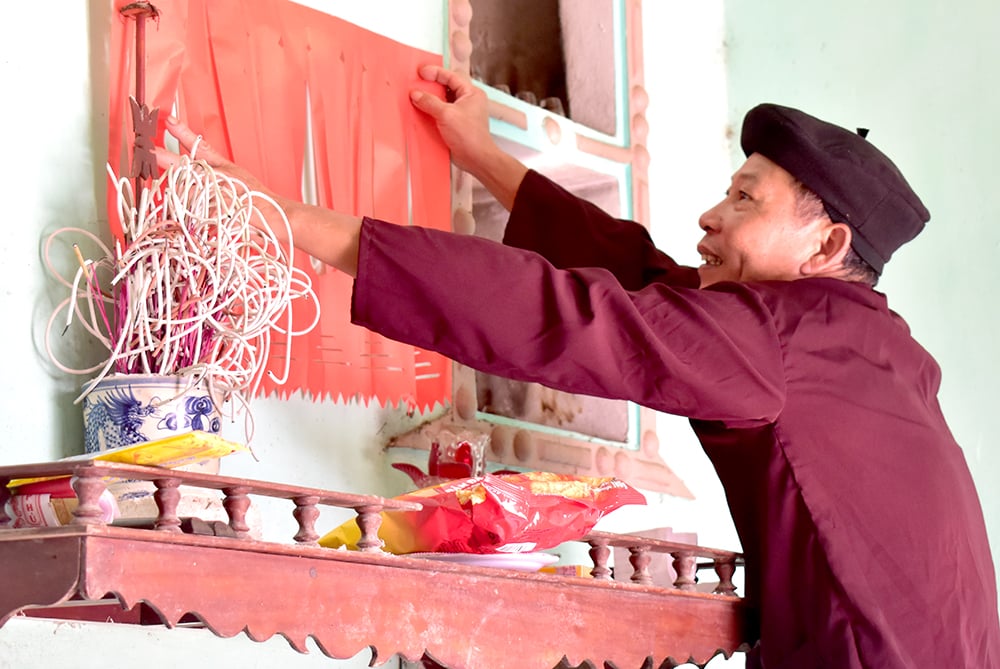
Mr. Au Duc Hoi pasted red paper onto his family's ancestral altar, hoping for a peaceful, prosperous, and lucky new year.
Following the road leading to Ngoc Tan village (Zone 13), Ngoc Quan commune, Doan Hung district, where over 98% of the residents are Cao Lan ethnic people, amidst the gentle smoke from cooking fires and the cool weather of early spring, we could see the characteristic stilt houses of the Cao Lan people gradually appearing from afar, full of warmth and familiarity. Accompanied by the commune's cultural officer, we visited the family of Mr. Au Duc Hoi – a respected figure in Ngoc Tan village. At this time, the women in his family were busy preparing traditional cakes to offer to their ancestors and to entertain guests, while the men were quickly cleaning, tidying, and reinforcing the house to prepare for Tet (Lunar New Year). Everyone was bustling because the Cao Lan people believe that Tet must be abundant; the more cakes and fruits on the offering tray, the more prosperity and well-being it represents.
The Cao Lan people's Tet (Lunar New Year) celebration lasts from the 25th day of the 12th lunar month to the 15th day of the 1st lunar month. From the 25th day of the 12th lunar month onwards, the Cao Lan people become busy preparing for Tet. First, they make traditional Tet cakes, among which banh chung (sticky rice cake) is indispensable for every family, not only for eating during Tet but also as gifts to give to relatives on both sides of the family. Along with banh chung, other traditional cakes such as banh chim gau (sticky rice cake), banh gai (sticky rice cake mixed with mung beans and molasses), banh ngu sac (five-colored cake), che lam (sweet rice cake)... are also essential items on the Cao Lan people's Tet offering tray.
While the women skillfully prepare traditional cakes and hum the sweet, enchanting Sinh Ca melodies, the men in the family are busily preparing for the ritual of pasting red paper (called Chi Dit in the Cao Lan language) onto household items so that they can "rest during Tet".
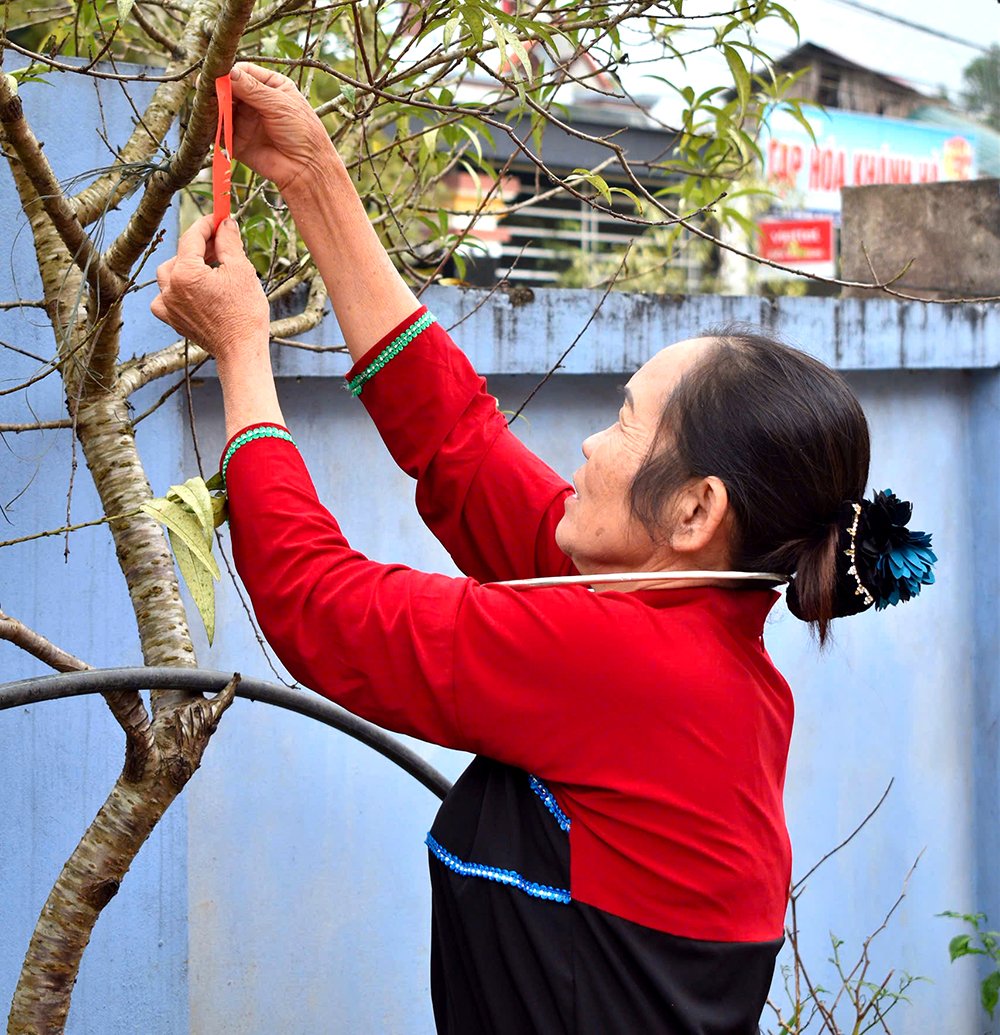



Red paper is pasted onto trees with the hope of warding off pests and evil spirits.
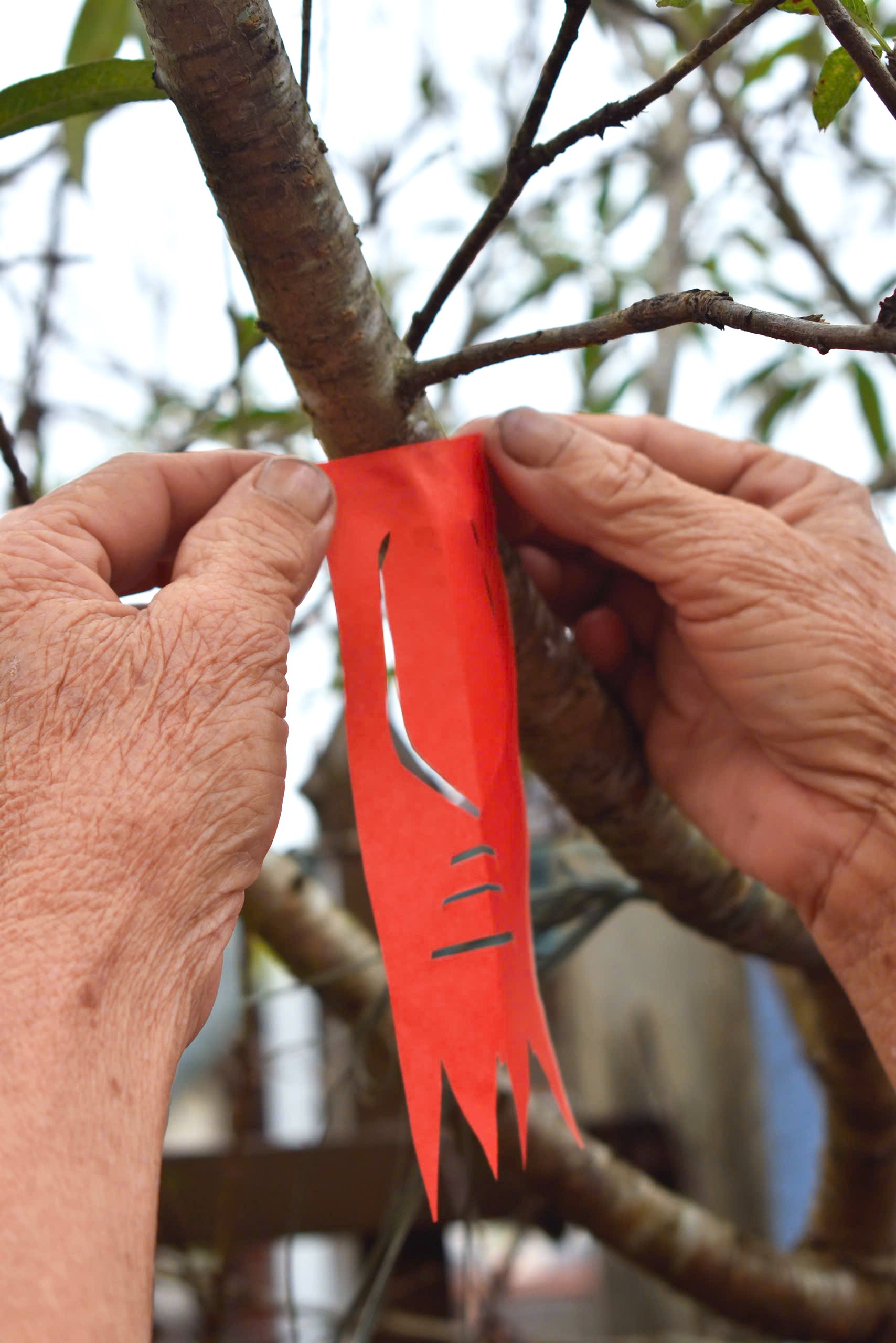
The red paper sheets were cut and pasted with intricate and beautiful shapes and patterns.
While searching for and arranging red paper, scissors, and glue, Mr. Hoi told us about the unique New Year's customs that only the Cao Lan people have. He confided: "Each ethnic group has its own unique New Year's customs, creating a vibrant and colorful cultural tapestry, and the Cao Lan people contribute a bright red color to that New Year's scene. From a young age, I was taught how to cut and paste paper and pray during the Chi Dit ceremony. This sacred traditional ritual is a bridge between humans and spirits, and is still widely practiced in the Cao Lan community in Ngoc Quan today. Each piece of paper symbolizes a wish for a prosperous new year, a bountiful harvest, and also carries spiritual significance, helping to ward off evil spirits and bring joy and good fortune. Therefore, in the last days of the year and into the new year, the villages of the Cao Lan people are adorned with vibrant red colors."
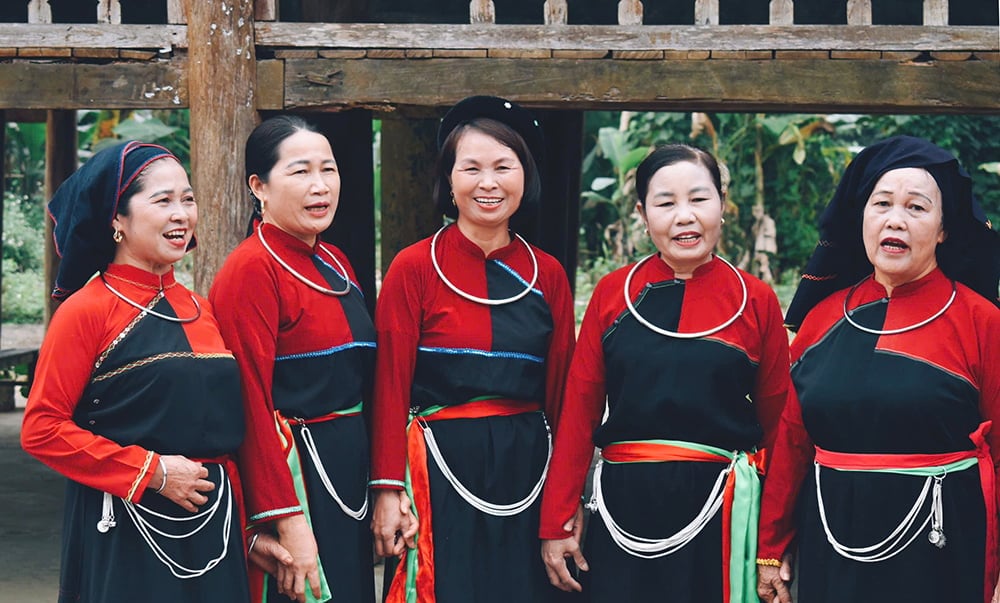
After completing the Chi Dit ceremony, the Cao Lan people sing Sinh ca and Veo ca together to celebrate the Spring Festival and welcome the New Year.
Red paper is usually cut into rectangular shapes with traditional patterns. The red paper used for ancestral altars is typically 30x50cm, while the red paper used for other objects is about 5x10cm. Red paper is pasted everywhere in the house. Pasting red paper on the ancestral altar signifies a prayer for the ancestors to bless the family with health, peace, and good fortune. Pasting it on household items like hoes, shovels, and knives means these objects will rest and welcome the new year after a year of hard work. For trees in the garden, pasting red paper is believed to ensure they thrive, bear abundant fruit, and are free from pests in the new year.


On the 28th and 29th of the twelfth lunar month, when household items and garden trees are adorned with red paper, and the fragrant aroma of rice cakes wafts from the corners of the house, it is time for the Cao Lan people to begin Tet (Lunar New Year). From this moment, they set aside the worries and burdens of the past year, singing Sinh songs, Veo songs, dancing the dove dance, catching shrimp... to welcome the new spring with joy, happiness, and excitement.
The Chi Dit ceremony of the Cao Lan people is not only a beautiful cultural tradition but also carries profound spiritual significance, reflecting the people's beliefs and aspirations for a bright future. Preserving and promoting the value of this custom helps to maintain ethnic identity and contributes to enriching the diverse culture of the country.
Thanh An
Source: https://baophutho.vn/sac-do-don-mua-xuan-226939.htm