

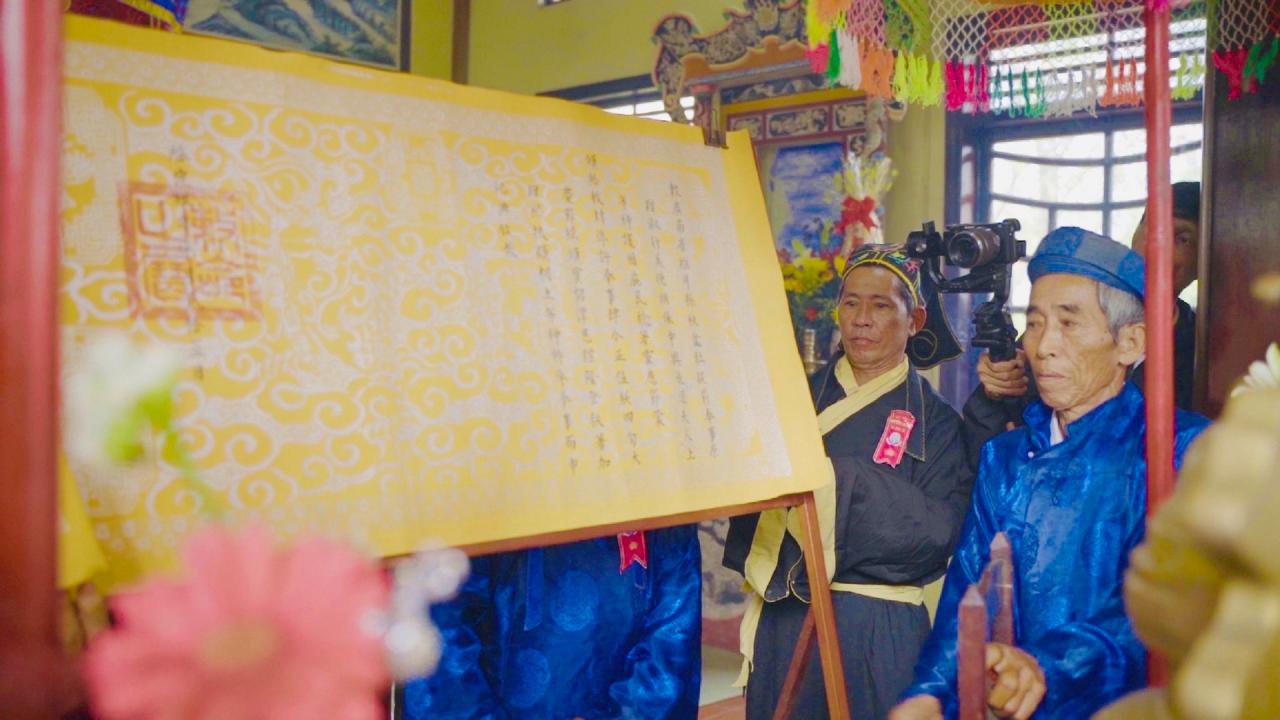
A special documentary heritage
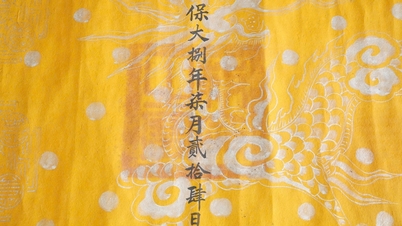
Imperial decrees are a special part of documentary heritage, bestowed by the Emperor – the head of the feudal court – upon deities and meritorious individuals.
In Duy Xuyen, most royal decrees are worshipped and preserved in communal houses, mausoleums, and temples; royal decrees for meritorious individuals are preserved and kept in ancestral temples or in individual families.
"Quang Nam Village Chronicle" and "Quang Nam Province Miscellaneous Compilation" are considered valuable reference sources for understanding the land and people of Quang Nam, especially for recording royal decrees in the villages of Duy Xuyen.
These are two volumes of documents compiled by the French School of Far Eastern Studies and the Indochina Folklore Society in the first half of the 20th century, recording information about villages in Duy Xuyen in particular and Quang Nam in general. Copies of these two volumes are currently stored at the Hoi An Cultural Heritage Conservation Management Center.
Of the 700 royal decrees in Duy Xuyen district, 660 were for deities and 40 for individuals. My Xuyen Dong village had the most decrees, while Quang Dai village had the fewest. According to records, Tra Nhieu Dong village, having only established its name in the 3rd year of Dong Khanh (1888), has not yet reported the number of royal decrees issued to it.
Notably, villages, clans, and families in Duy Xuyen district are currently preserving and safeguarding a significant collection of royal decrees. A prime example is My Xuyen Dong village, which holds 32 royal decrees (26 of which are clearly legible, and 6 that are damaged and no longer intact). This demonstrates the invaluable preservation and safeguarding of this documentary heritage by previous generations.
Recreate the journey through the land.
In terms of dating, the royal decrees conferring divine status in the villages of Duy Xuyen all date back to the Nguyen Dynasty - the last monarchical dynasty of Vietnam. The earliest of these decrees dates from the 5th year of Minh Mang's reign (1824) to the 9th year of Khai Dinh's reign (1924).
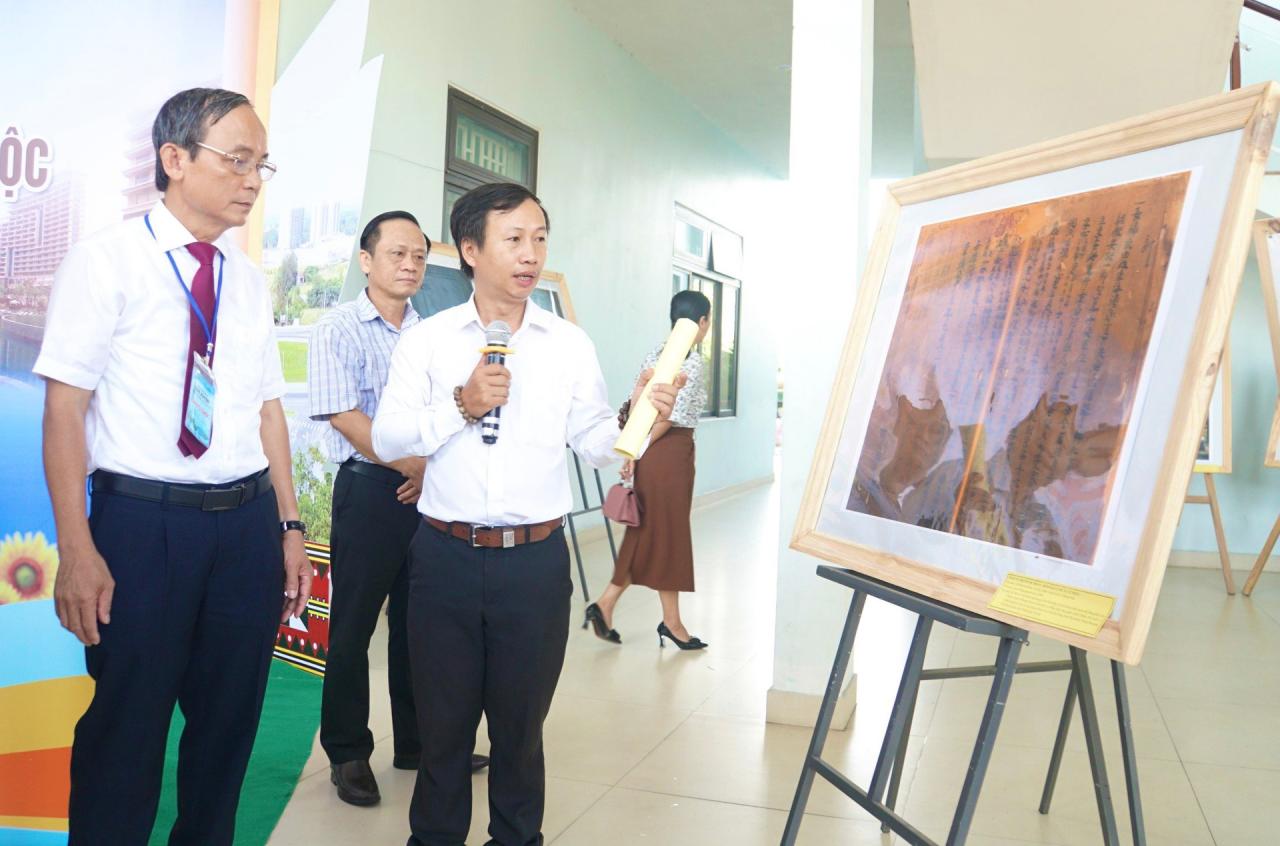
Regarding the imperial decrees conferring titles on individuals, the earliest dated decree is from the 3rd year of Gia Long (1802) and the latest dated decree is from the 7th year of Bao Dai (1932).
Regarding the subjects, while the divine titles bestowed upon those worshipped in villages included figures such as Bạch Mã Thái Giám, Thành Hoàng, Đại Càn Quốc gia Nam Hải tứ vị thánh nương, Nam Hải Cự tộc Ngọc Lân, Thiên YA Na, etc., the titles bestowed upon individuals mostly depicted officials from the civil and military branches of the Nguyễn dynasty.
Royal decrees in Duy Xuyen are a special type of document with value in many aspects. They are precious, original documents containing accurate and authentic information about the organization of the Nguyen dynasty's government.
Royal decrees conferring divine status are valuable for identifying religious practices in village communities, the deeds of individuals who contributed to the locality and the country, and the traditions of learning, scholarship, officialdom, and occupations of villages and clans.
Furthermore, these royal decrees are valuable resources for studying the techniques of papermaking and decorative art on traditional paper, as well as the writing style and calligraphy used during the Nguyen dynasty.
The royal decrees preserved in My Xuyen Dong village will be helpful for Duy Xuyen district in planning to build a scientific database from this source, contributing to reconstructing the journey of the land starting from the story of these royal decrees.
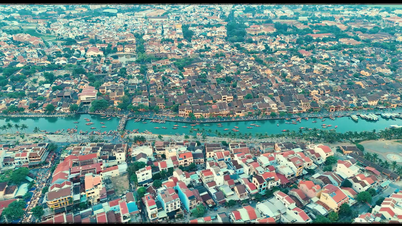
Duy Xuyen is a land rich in Han-Nom heritage related to families and villages.
In Duy Xuyen, we visited 19 locations that still preserve Sino-Vietnamese documents in the communes of Duy Vinh, Duy Trung, Duy Son, Duy Trinh, and the town of Nam Phuoc, with 410 items of various types of documents. The Doan clan (Duy Trinh) holds the largest number, with 91 items. These 410 items are classified into 15 types of documents, with nearly half being imperial decrees, edicts, proclamations, certificates, family genealogies, and official records. These documents are of great importance in establishing sovereignty and marking the stages of development and glory of the clans.
The value of the Han-Nom heritage provides us with a fairly comprehensive view of the development of the Duy Xuyen region from the time the Vietnamese migrated there in the late 15th century to the present day. Currently, this material is scattered and increasingly degraded. Appropriate measures are needed to restore and preserve this valuable resource; local authorities need to support a legal framework and a longer-term strategy to document the Han-Nom heritage in villages and communes in order to sustainably preserve and utilize this heritage in the future.
(Research student Le Tho Quoc - Hue Branch of the Vietnam National Institute of Culture and Arts)
Source: https://baoquangnam.vn/sac-phong-o-duy-xuyen-3139387.html






























































































Comment (0)