

 |
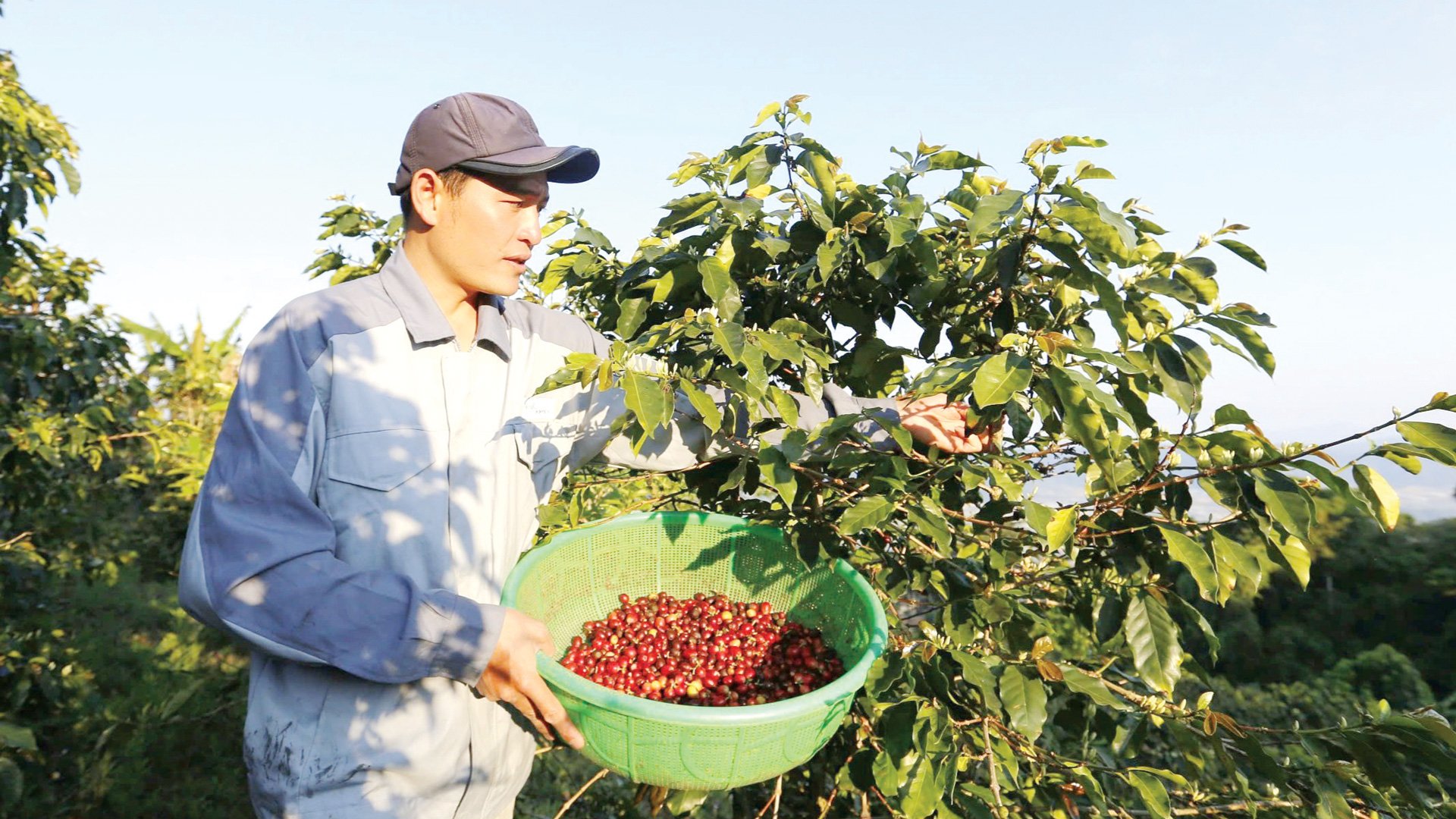
| People harvest coffee in the growing region using a process of selecting ripe cherries. |
• RISKS FROM CHEAP MATERIALS
In 2024, Vietnam's coffee industry achieved an export volume of 1.32 million tons, generating revenue of US$5.48 billion. This is an impressive figure, demonstrating the industry's leading role in the structure of agricultural exports. However, behind these figures lies the reality: the production process still heavily relies on cheap, uncontrolled inputs, especially pesticides and chemical fertilizers. The improper use of pesticides and the overuse of chemical fertilizers have had and continue to have long-term consequences for the land, water resources, and agricultural ecosystem. More seriously, this directly impacts the quality of coffee beans – a crucial factor in a market that is increasingly stringent about food safety and origin.
Mr. To Viet Chau, Deputy Director of the International Cooperation Department, Ministry of Agriculture and Environment, stated: The misuse of banned pesticides is causing serious consequences. More worryingly, the improper collection and disposal of pesticide packaging and bottles poses a threat not only to the environment but also to public health. In the context of major markets such as the EU, the US, and Japan tightening quality standards and traceability requirements, these risks could cause Vietnamese coffee to lose its competitive advantage.
Even a single mistake in the production process can cost Vietnamese coffee export opportunities. Therefore, sustainable development is not just an option, but a mandatory condition for the survival and growth of the coffee industry.
• SUSTAINABLE DEVELOPMENT THROUGH SMALL ACTIONS
In response to warnings and demands from the market, farmers in the Central Highlands – the main coffee-producing region – have begun to make significant changes in their agricultural practices. Training programs on the safe use of materials and proper waste collection and treatment are gradually changing awareness and production behaviors at the grassroots level. No longer focused on quantity, coffee growers are increasingly understanding that only when the product is clean from the source will the value of the coffee bean be recognized in the international market.
According to Mr. Pham Quang Trung, Head Representative of the Global Coffee Forum (GCP) in Vietnam, small actions from farmers are key to this change. Change doesn't come from grand gestures, but from specific actions: collecting pesticide containers, limiting the use of chemical herbicides, or cultivating according to proper technical guidelines. These seemingly small things lay the foundation for a clean, responsible, and sustainable coffee industry.
The adoption of production models such as "organic coffee" and "sustainable coffee" is being strongly encouraged. Programs from international organizations such as the Rainforest Alliance and UTZ have been widely implemented in many coffee-growing regions in Vietnam. This support helps farmers adopt green farming techniques and raise awareness of resource conservation, especially in minimizing the use of chemical pesticides. However, producing clean coffee cannot be a unilateral effort from farmers alone. To create a sustainable value chain, coordination between the government, businesses, and the community is necessary.
Mr. Le Quoc Thanh, Director of the National Agricultural Extension Center, emphasized the role of cooperatives and businesses in building standardized production models. These are key entities connecting farmers with the market, providing technical support, supplies, and ensuring output. Reorganizing production is a prerequisite for building standardized raw material areas. The Ministry of Agriculture and Environment is also implementing many programs to support cooperatives in connecting with businesses and providing safe and sustainable production solutions. This collaboration helps farmers feel secure in their transition and promotes the replication of green models in other coffee-growing regions.
Businesses also play a crucial role. Many large enterprises have transformed, adopting modern processing technologies and organizing procurement according to international standards, in order to ensure output quality and attract importers from the US, EU, and Japan. This means they not only create quality products but also partner with farmers in enhancing the value of Vietnamese coffee.
Sustainable development is no longer a distant concept, but is present in every small action of coffee producers, from preserving clean soil and water to creating clean products for consumers. When green thinking spreads, and responsibility towards the environment and community becomes the norm, Vietnamese coffee beans will not only be a key export item, but also a symbol of a modern, humane, and long-term agricultural sector.
Source: https://baolamdong.vn/kinh-te/202504/sach-tu-dat-xanh-tu-y-thuc-5272674/


![[Photo] President Luong Cuong receives Speaker of the Jordanian House of Representatives Mazen Turki El Qadi](/_next/image?url=https%3A%2F%2Fvphoto.vietnam.vn%2Fthumb%2F1200x675%2Fvietnam%2Fresource%2FIMAGE%2F2026%2F02%2F03%2F1770112220330_ndo_br_1-3704-jpg.webp&w=3840&q=75)




Comment (0)