Throughout human history, inventions like the steam engine, electricity, and the Internet are often cited as world-changing milestones. But according to journalists and economic scholars John Micklethwait and Adrian Wooldridge, there is another invention that has had an equally significant impact, though it is rarely seen in that way: the company.
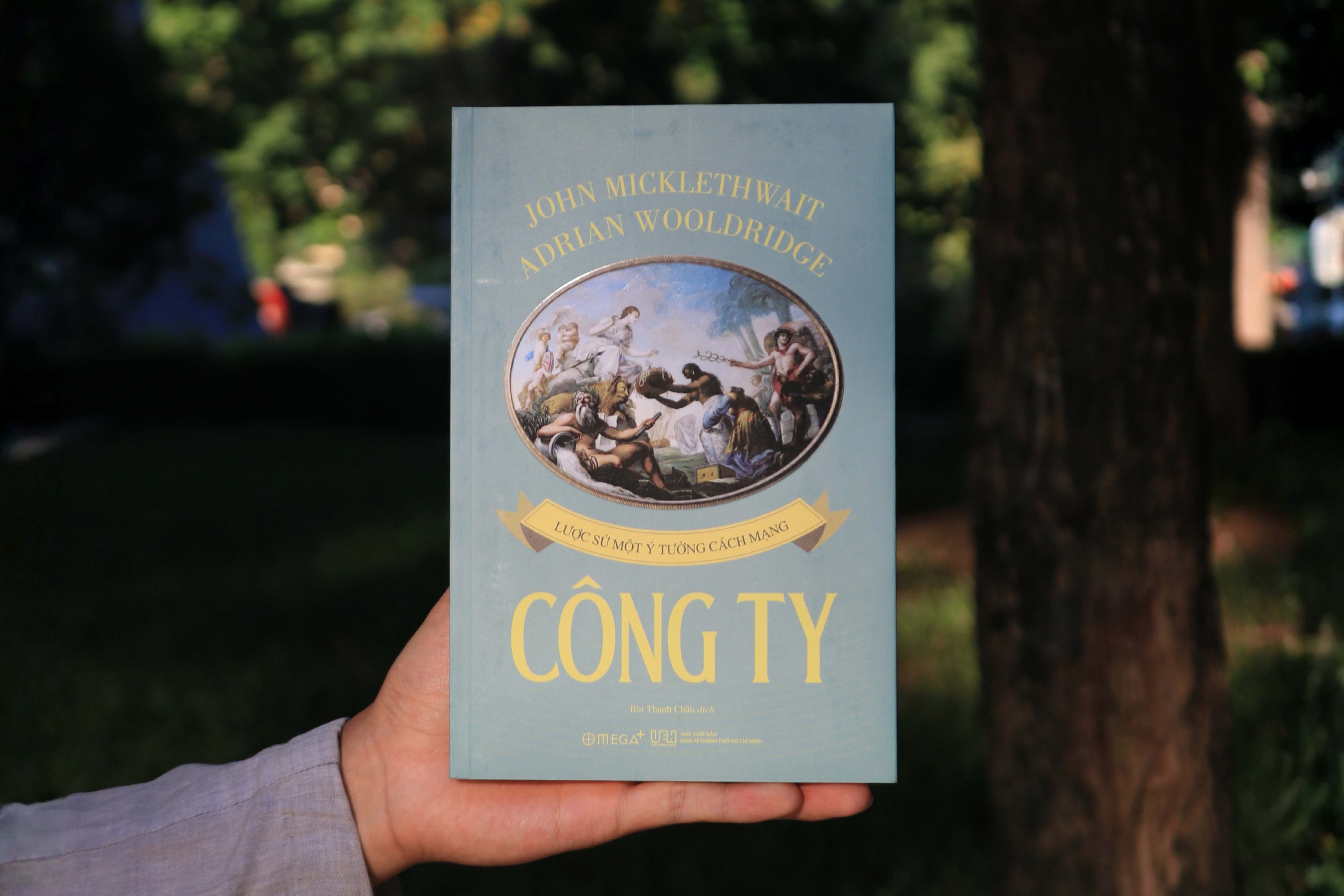 |
The book "The Company - A Brief History of a Revolutionary Idea. " Photo: OP |
A social "invention"
In their book, *The Company - A Brief History of a Revolutionary Idea *, the two authors do not view the company simply as a business model. They see it as an institution that has helped shape the economy, politics , and social life for centuries.
It's noteworthy that the book doesn't begin with famous corporations or modern-day entrepreneurs. Instead, readers are transported back to ancient civilizations, where rudimentary forms of commercial cooperation emerged among merchants in Mesopotamia, Greece, and Rome. From these initial business agreements, the idea of multiple people pooling capital, sharing risks and profits gradually developed into an economic structure capable of mobilizing resources on an ever-increasing scale.
The book's introduction states: The company is one of the most important organizations in the modern world . According to the authors, the real turning point occurred in the 19th century when the three core elements of the modern company were combined: independent legal personality, the ability to issue shares to many investors, and the principle of limited liability. This change allowed entrepreneurs to raise large amounts of capital while investors only bore risk to the extent of their contributed capital.
Micklethwait and Wooldridge call the emergence of the modern company a “revolutionary idea.” It not only facilitated unprecedented scaling of business operations but also transformed how society organized its resources, labor, and capital.
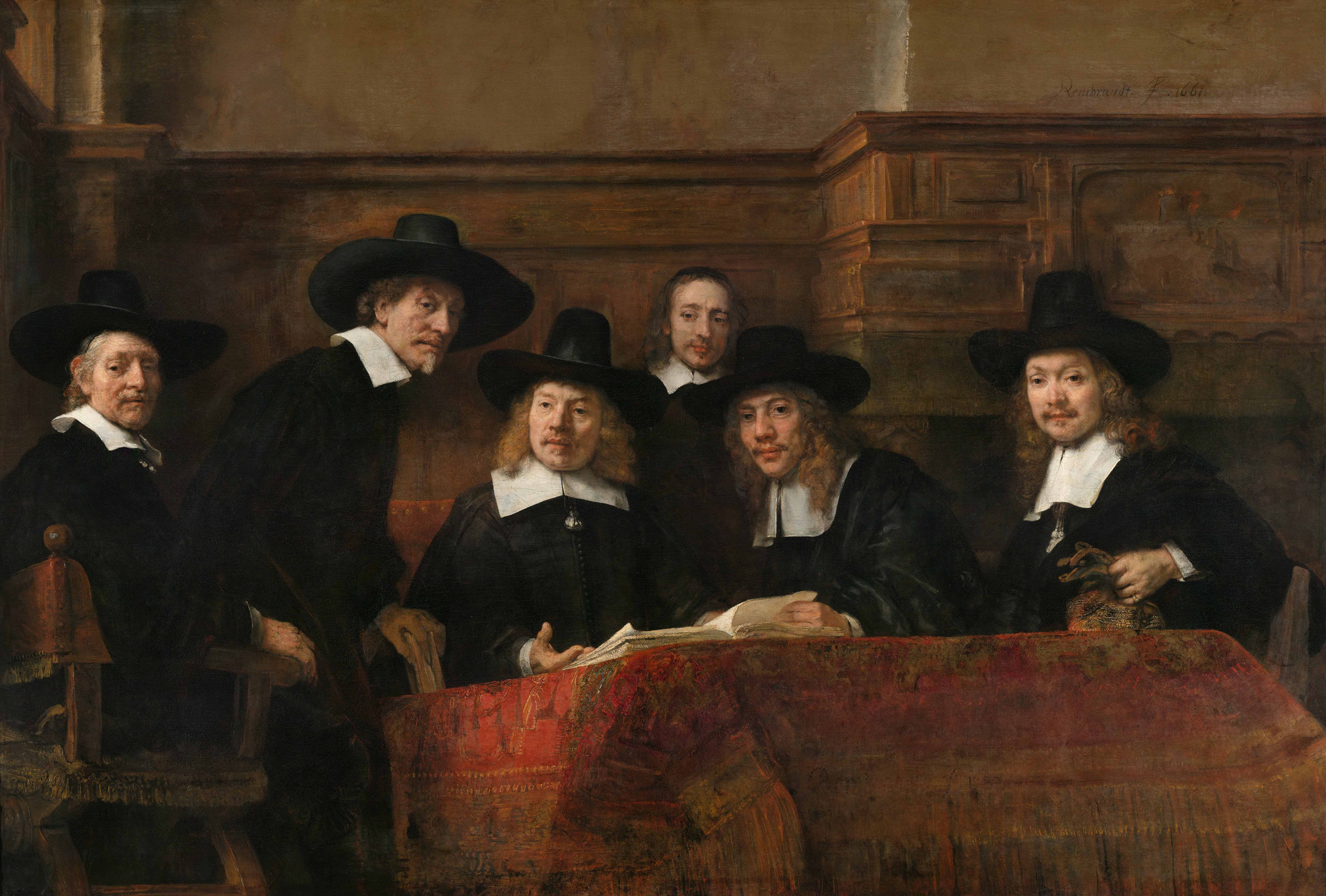 |
A painting by Rembrandt depicting textile guild managers in 17th-century Amsterdam – a form of commercial organization that was a precursor to the modern company model. Source: Wikipedia. |



The book also devotes considerable space to explaining why the Companies Acts in England in the mid-19th century are considered a significant milestone. From this point on, company formation was no longer a privilege requiring individual state licensing. Ordinary individuals could also establish businesses, raise capital, and expand their operations.
Besides presenting the company's history as a purely economic narrative, the authors show that the company was once an extension of empires, directly involved in colonial expansion and shaping the global trade order.
The British East India Company is one example that is often mentioned. From a business organization, this company once possessed its own army and had a profound influence on Indian history.
 |
John Micklethwait (right) and Adrian Wooldridge (left). Source: intelligencesquared. |
An institution that is always in motion, constantly adapting.
One of the highlights of The Company – A Brief History of a Revolutionary Idea is its ability to connect the history of the company with the history of modern capitalism. Through eight chapters, Micklethwait and Wooldridge examine the formation of the special-purpose companies during the maritime trade era, the rise of industrial conglomerates in America, the business model in England, Germany, and Japan, and the growing role of professional management in the 20th century.
The authors acknowledge the company's significant contributions to economic growth, technological innovation, and resource mobilization. At the same time, they do not shy away from the negative aspects associated with the company's history, such as financial speculation, monopolies, and abuse of economic power.
In the final section, the two authors expand the narrative to the future. Against the backdrop of digital technology and globalization transforming traditional production structures, they question the purpose of companies in the 21st century. Will businesses continue to grow, transforming into more flexible networks, or will they give way to new organizational models? The book doesn't offer a definitive answer.
With its comprehensive writing style, combining history, economics, and management, "The Company - A Brief History of a Revolutionary Idea" offers a perspective on a familiar institution that is rarely seen as an invention.



In closing, what remains is not only the history of these businesses, but also the realization that the company is essentially a social invention – an idea that has contributed to shaping the modern world as we know it today.
Source: https://znews.vn/sach-ve-lich-su-mo-hinh-cong-ty-post1661563.html



![[Photo] General Secretary and President To Lam receives Palestinian Ambassador Saadi Salama](https://vphoto.vietnam.vn/thumb/1200x675/vietnam/resource/IMAGE/2026/06/25/1782365384740_a1-bnd-9423-8322-jpg.webp)
![[Image] Ho Chi Minh City: Ma Lang area, Chicken-Rice Market about to change its appearance](https://vphoto.vietnam.vn/thumb/1200x675/vietnam/resource/IMAGE/2026/06/25/1782377698627_ndo_br_m1-jpg.webp)
![[Image] Schools organize meetings and introduce teaching models to students admitted to grade 10.](https://vphoto.vietnam.vn/thumb/1200x675/vietnam/resource/IMAGE/2026/06/25/1782368077271_ndo_br_z7970052192242-1ec8daeb77a6eed1a4e9f58c564ddd3e-jpg.webp)