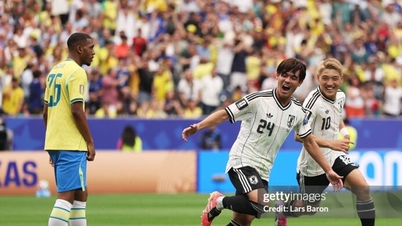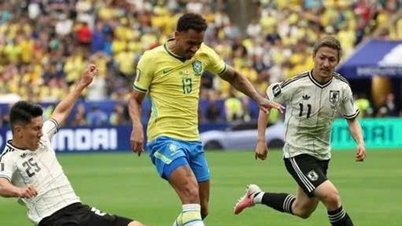


Japan has always been a formidable opponent that any team must be wary of. The Asian representatives advanced through the group stage with a disciplined, fast-paced style of play and incredibly quick transitions. The Samurai Blue aren't the type of team that prefers excessive ball control. They build their game on a foundation of extremely tight formation, minimizing space in the midfield before launching high-speed counter-attacks. Once they win possession, vertical passes are immediately initiated, while attacking players constantly move without the ball and switch positions to stretch the opponent's defense. Unlike Brazil , Japan doesn't rely on a single star but possesses multiple attacking players who know how to make a difference. This collective spirit has helped Japan maintain an impressive run of matches and always be ready to punish opponents' mistakes.
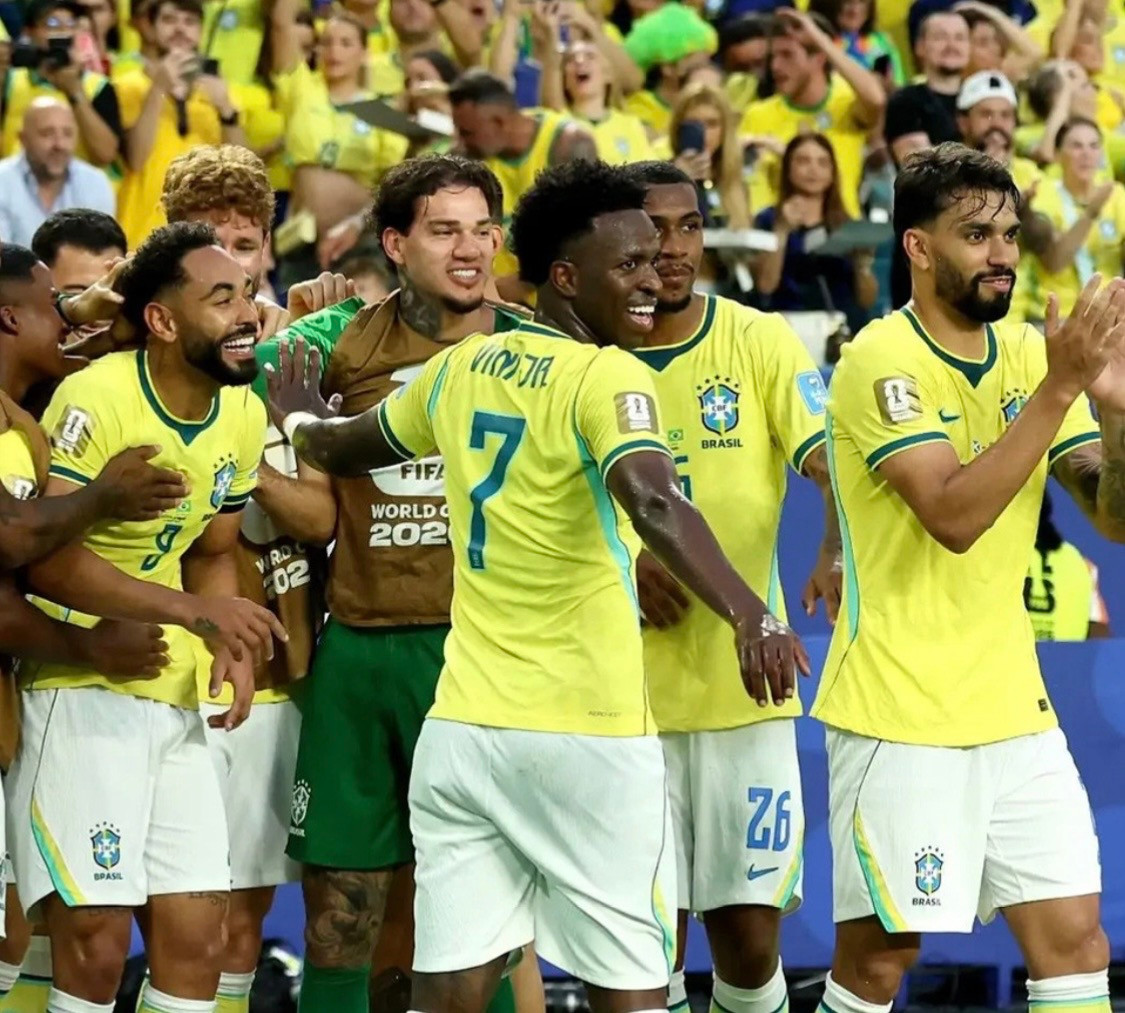
On the opposite side, Brazil enters the Round of 16 of the 2026 World Cup as one of the title contenders. On the World Cup stage, Brazil is always on a different level. Currently, Carlo Ancelotti's team possesses stars who can change the course of a game with a single moment of brilliance, especially Vinicius and Matheus Cunha. But the World Cup is not just a stage for exceptional individuals. Because the more stars Brazil has, the more they tend to push their formation high up the pitch to create constant pressure. This is precisely what Japan is waiting to punish if the South American representative makes a mistake. And against a formidable opponent like Japan, even though Carlo Ancelotti's team is considered slightly superior due to their squad quality and consistent form, the "Samurai Blue" have proven they are capable of surprising any opponent, something Brazil must be very wary of.


.jpg)
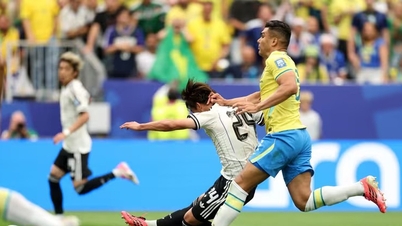
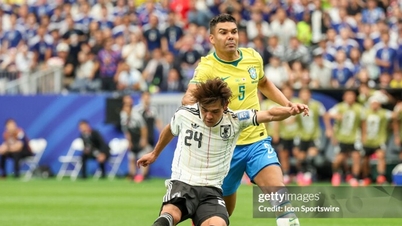
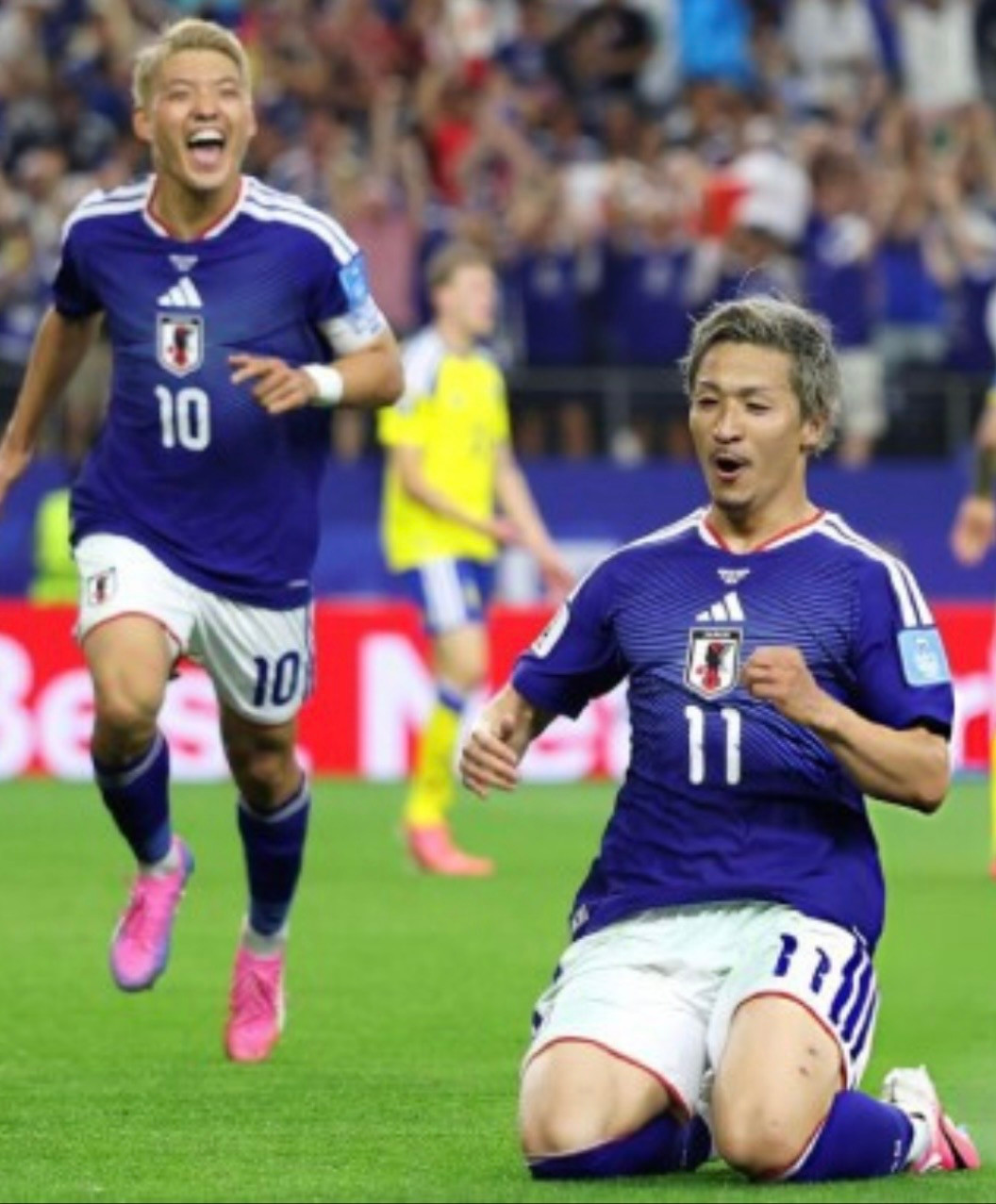
Both Brazil and Japan started the match at a fast pace, with high-pressing formations. In the 2nd minute, the Japanese defense made a mistake with a misplaced clearance, creating a left-footed opportunity for Guimaraes, but the Newcastle midfielder's shot went wide of the post. In the following minutes, Brazil regained control of the game, pushing Japan back into their own half. Ancelotti's team wanted an early opening goal to break Japan's defense. Meanwhile, the Asian representatives played a 5-4-1 formation, dropping deep to contain Vinicius and Cunha. Standing firm against Brazil's pressure, Japan unexpectedly took the lead in the 29th minute. Sano intercepted the ball in midfield. He made a solo run in Brazil's half before unleashing a superb long-range diagonal shot that beat goalkeeper Alisson. After unexpectedly conceding a goal, Brazil exerted immense pressure on Japan's goal, but the Samurai held firm and maintained their 1-0 lead at the end of the first half.
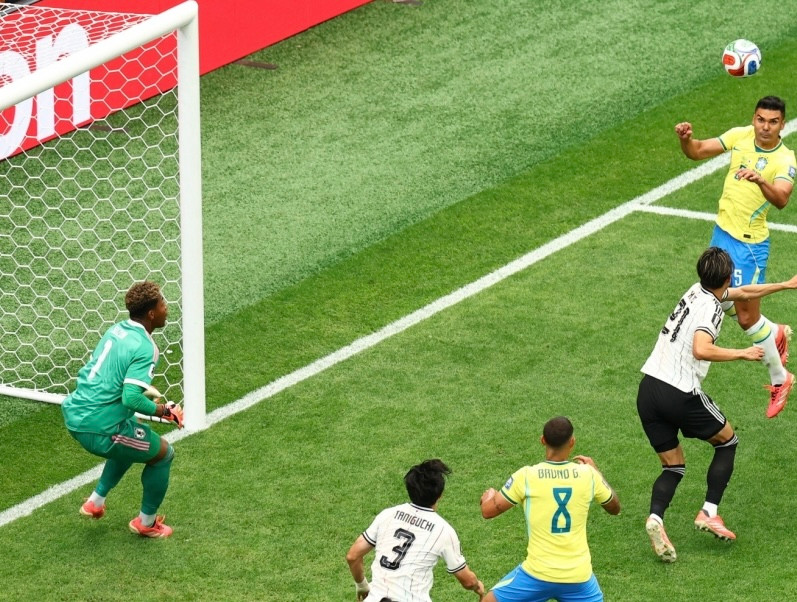
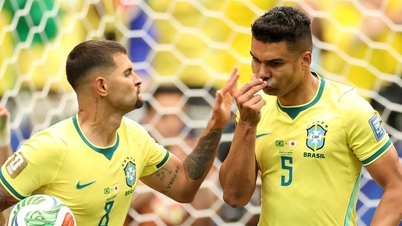
In the second half, Brazil exerted relentless pressure on Japan's goal. After several chances were denied by goalkeeper Suzuki's excellent saves, Brazil equalized in the 56th minute. Casemiro's perfectly timed run and header brought the Samba dancers back to square one. Just two minutes after the equalizer, Vinicius's dazzling dribbling nearly put Brazil ahead. However, once again, Suzuki's skill prevented the Real Madrid superstar from scoring a spectacular goal.
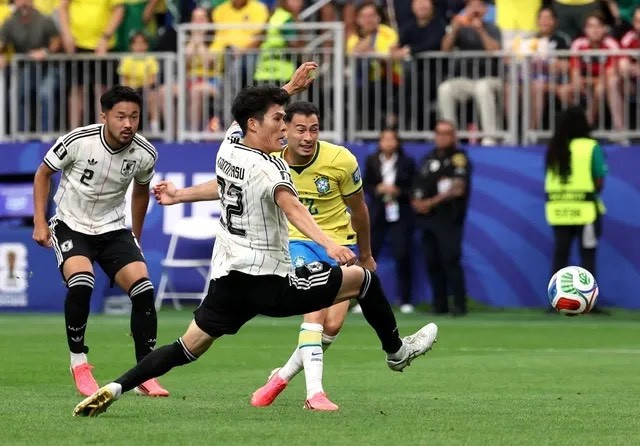



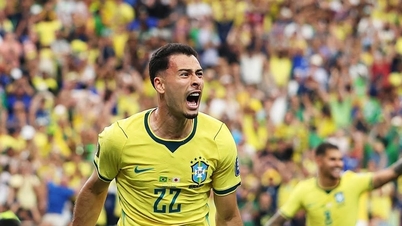
It seemed as though the match would go into extra time, with the score still 1-1 at 90+5 minutes. However, Martinelli's perfectly placed shot inside the penalty area sent the Samurai into tears. Coming from behind to beat Japan 2-1 thanks to Martinelli's goal in the 6th minute of added time in the second half, Brazil advanced to the Round of 16 of the 2026 World Cup. Carlo Ancelotti's team will face either Ivory Coast or Norway for a place in the quarter-finals.
Source: https://baolamdong.vn/samurai-dung-buoc-450881.html

![[Image] A look back at the capital's preparations for the century-long master plan.](https://vphoto.vietnam.vn/thumb/1200x675/vietnam/resource/IMAGE/2026/06/29/1782750453122_quy-hoach-100-nam-minh-duy-1-2118-jpg.webp)
![[Photo] General Secretary and President To Lam works with the Party Committee of the Government on the work of preventing and combating storms, floods, extreme natural disasters and climate change.](https://vphoto.vietnam.vn/thumb/1200x675/vietnam/resource/IMAGE/2026/06/29/1782729441945_a1-bnd-0385-9454-jpg.webp)
![[Photo] National Assembly Chairman Tran Thanh Man attends the Conference to announce the Master Plan for Hanoi Capital City with a 100-year vision.](https://vphoto.vietnam.vn/thumb/1200x675/vietnam/resource/IMAGE/2026/06/29/1782709639728_ndo_br_1-jpg.webp)