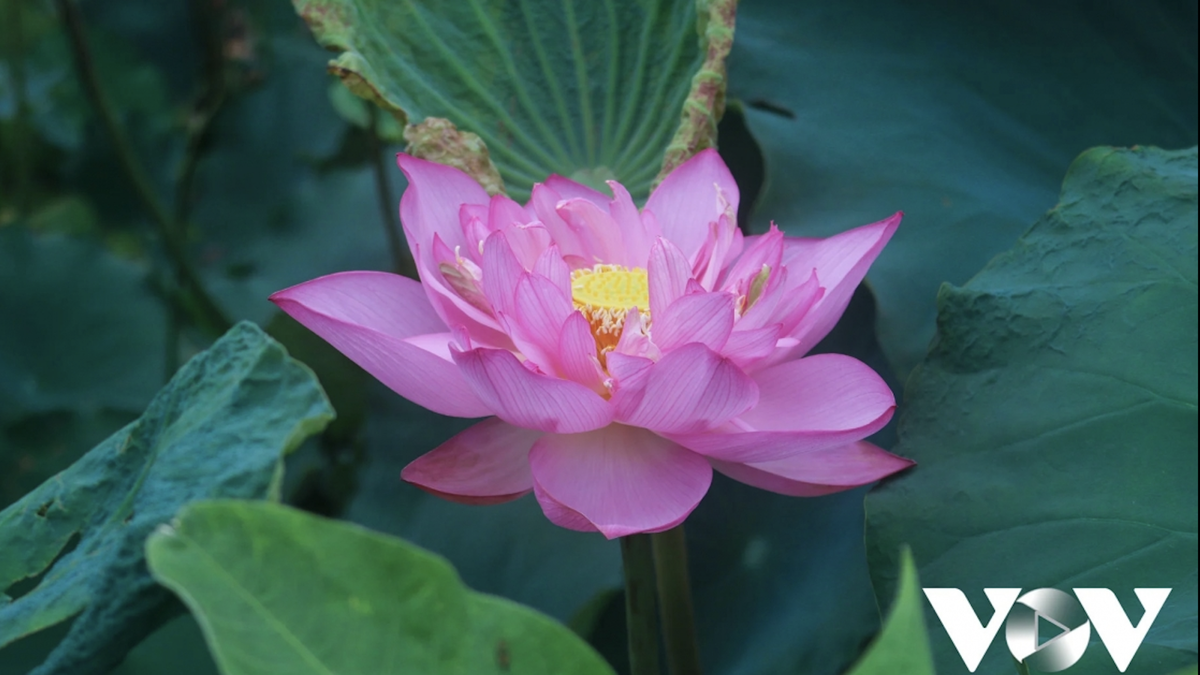
In Thuan An ward, Ho Chi Minh City, lotus flowers made from clay are attracting customers during Tet (Lunar New Year), serving the needs for display and gifting at the beginning of the year. Beyond meeting the demand for decoration and gifts, this product also reflects a consumer trend towards sustainable cultural values in modern urban life.
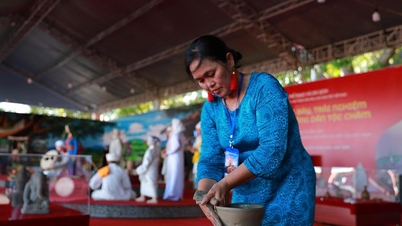
In a small house repurposed as a workshop, Ms. Dam Thi Ly, residing in Thuan An ward, is busy shaping and coloring clay lotus flowers. Under the skillful hands of the craftswoman, the initially rough blocks of clay gradually transform into soft lotus branches with natural colors and a high degree of realism. Many customers say that, if only observed with the naked eye, it is very difficult to distinguish that these flowers are made from clay.
According to Ms. Ly, the main materials for making clay lotus flowers are sourced from domestic suppliers, combined with some types of clay, colors, and specialized accessories imported from Thailand and Japan. The careful selection of materials ensures high durability, minimizing cracking, breakage, and fading during long-term use.
The process of making clay lotus flowers requires many manual steps and a lot of time. From mixing the clay, kneading, rolling thinly, pressing the petals, pistil, and calyx into molds, to shaping with wire and assembling them into a complete flower, everything is done by hand. Among these steps, the coloring process is considered the decisive factor in determining the quality and "essence" of the product.

According to Ms. Dam Thi Ly, it takes an average of 7 to 10 days of continuous work to complete a clay lotus flower bouquet of 5 to 7 blossoms. Each petal takes about a day to shape, then must be left to dry and painted with multiple layers. For products with a high level of detail, the completion time can extend beyond two weeks.


Because of this meticulous craftsmanship, clay lotus flowers are more expensive than many other types of decorative flowers. Currently, a single lotus flower costs several hundred thousand dong; complete lotus pots or bouquets used for Tet (Lunar New Year) decorations or as gifts range in price from about 500,000 dong to 8 million dong, depending on size, number of flowers, and level of detail.
Currently, Ly earns an average income of about 15-20 million VND per month from making clay lotus flowers. Due to the increased number of orders during the peak season at the end of the year, she has hired two more people to help with the production process. The products are now mainly sold through Facebook. Initially, due to limited awareness, the number of orders was not high; however, as the quality and aesthetics of the products improved, the number of followers and orders gradually increased over time.

According to observations, the majority of customers buying clay lotus flowers are urban households, civil servants, small business owners, and some small enterprises ordering them as year-end gifts. Besides individual customers coming in person, the majority of orders are placed online via social media, with a particularly sharp increase starting about a month before Tet (Lunar New Year).
Despite the high price, the product is still well-received by the market. Ms. Bui Vuong Tuyen, a resident of Thu Dau Mot ward, said she chose clay lotus flowers for Tet (Lunar New Year) because they are elegant, durable, and don't need to be replaced after a few days like fresh flowers. According to her, the higher price is suitable for families who value aesthetics and spiritual significance.
Ms. Huynh Thi Thanh Truc, a resident of Thuan An ward, said that while many handcrafted products have appeared on the decorative flower market, creating lotus flowers with shapes and colors close to real flowers is not common. According to her, clay lotus products have delicate lines and harmonious compositions, creating a lively and profound feeling when displayed. Her family's business also chooses clay lotus flowers as gifts for foreign partners at the end of the year because the product is rich in cultural elements and suitable for showcasing the image of Vietnam through a traditional handcrafted product.




Currently, the market for clay lotus flowers is mainly concentrated in Ho Chi Minh City and surrounding areas. Some products are also ordered by customers in other provinces as gifts. However, due to their relatively large size and the need for careful packaging, long-distance transportation or export still faces many difficulties.
In the long term, Ms. Dam Thi Ly said she is gradually improving the designs to be more compact and lightweight, while developing creative product lines to suit the needs of customers both domestically and internationally. In addition, she plans to open classes teaching how to make clay flowers to spread the craft, while also creating more jobs and income for those who love this field.
Source: https://baotintuc.vn/kinh-te/san-pham-hoa-sen-dat-set-hut-khach-mua-tet-20260209171614842.htm























![[Photo] Thousands of people participate in a run to show their support for the campaign "Sharing a common determination to build drug-free communes, wards, and special zones".](https://vphoto.vietnam.vn/thumb/1200x675/vietnam/resource/IMAGE/2026/06/27/1782554475933_0673e2a3df7b5e25076a-8283-jpg.webp)