

The Ho Chi Minh City Department of Education and Training is located at 66-68 Le Thanh Ton Street, District 1. The Department's Board of Directors consists of six people: the director and five deputy directors. The director is Mr. Nguyen Van Hieu; the deputy directors are Mr./Ms. Le Hoai Nam, Mr. Duong Tri Dung, Mr. Nguyen Bao Quoc, Ms. Le Thuy My Chau, and Ms. Huynh Le Nhu Trang.
Currently, the Ho Chi Minh City Department of Education and Training has 126 affiliated units, including 109 high schools and junior high-high schools, 3 kindergartens, 4 continuing education centers; 3 vocational schools and 7 other units.
The number of assigned employees in 2025 is 11,183, of which 10,816 are paid from the state budget, and 376 are paid from the revenue of public service units. The total number of civil servants is 10,492 paid from the state budget, and there are 639 contract workers.
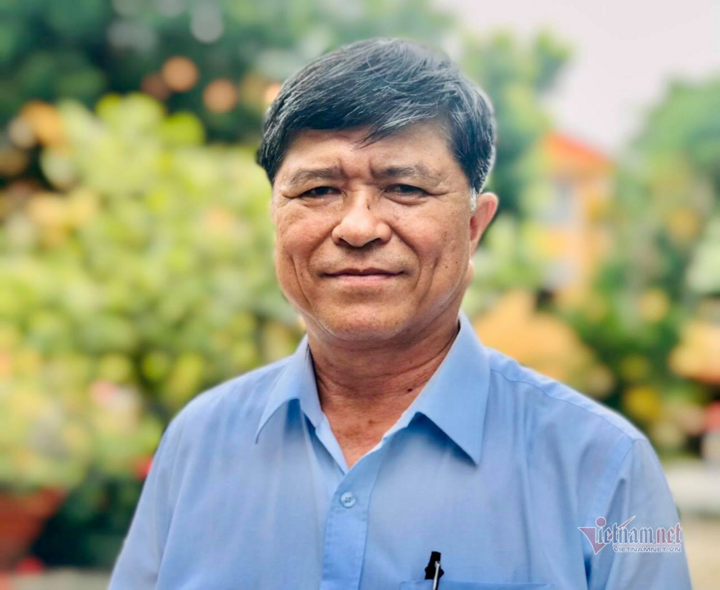
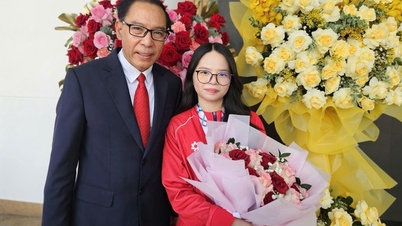
Mr. Nguyen Van Hieu, Director of the Department of Education and Training of Ho Chi Minh City.
The Department of Education and Training of Binh Duong Province is located in the Binh Duong Administrative Center, Le Loi Street, Hoa Phu Ward, Thu Dau Mot City. The Board of Directors of the Department of Education and Training of Binh Duong Province consists of 3 people: 1 director and 2 deputy directors. The director is Ms. Nguyen Thi Nhat Hang; the deputy directors are Mr. Nguyen Van Phong and Ms. Truong Hai Thanh.
The Department of Education and Training of Binh Duong Province has 34 affiliated units, including 30 high schools, one continuing education center, and 3 vocational secondary schools. The number of employees at the Department in 2025 is 2,482, of which 2,243 receive salaries from the state budget, 136 receive salaries from revenue sources, and 178 are laborers.
The Department of Education and Training of Ba Ria - Vung Tau Province is located in Block B3 of the Provincial Political and Administrative Center, 198 Bach Dang Street, Phuoc Trung Ward, Ba Ria City. The Board of Directors of the Department of Education and Training of Ba Ria - Vung Tau Province consists of two people: the Director, Ms. Tran Thi Ngoc Chau, and the Deputy Director, Mr. Phan Ke Toai.
The Department of Education and Training of Ba Ria - Vung Tau Province has 38 affiliated units, including 30 high schools, 6 continuing education centers, and 2 schools for children with disabilities. The assigned workforce for 2025 is 2,478 people, including 2,344 civil servants and 209 employees.
What is the proposed plan for merging the three Departments of Education and Training?
Mr. Nguyen Van Hieu, Director of the Department of Education and Training of Ho Chi Minh City, has proposed a plan to merge the three Departments of Education and Training of Ho Chi Minh City, Binh Duong, and Ba Ria - Vung Tau into a single Department of Education and Training of Ho Chi Minh City.
This new Department (comprising 3 regions: Ho Chi Minh City, Ba Ria - Vung Tau, and Binh Duong) is a specialized agency under the People's Committee of Ho Chi Minh City and takes over the existing public service units and units under the state management authority of education from the Departments of Education and Training of Ba Ria - Vung Tau and Binh Duong.
The organizational structure includes a director and deputy directors appointed by the competent authority in accordance with regulations. Based on the organizational structure of the Ho Chi Minh City Department of Education and Training, after the merger, the Department was reorganized into 10 divisions: Office, Inspection and Legal Affairs Division, Personnel and Organization Division, Planning and Finance Division, Student Affairs Division, Quality Management Division, Preschool Education Division, General Education Division, Continuing Education - Vocational and University Education Division, and Non-Public Educational Institution Management Division.
The new Ho Chi Minh City Department of Education and Training will have 198 public service units, including 165 high schools and junior high-high schools, 2 specialized high schools, 2 high schools for gifted students in physical education and sports, and other units.
For the time being, the staffing levels and number of employees in the departments and public service units under the three regional departments will remain unchanged; a roadmap will be developed to streamline staffing, reducing the number of civil servants and public employees receiving salaries from the state budget by at least 20%.
The facilities are expected to remain unchanged. The department's staff and employees will be assigned to work in three areas to ensure that work is handled promptly and continuously.
What is the projected scale of education in Ho Chi Minh City in the new era?
Approximately over 2.6 million students
According to data released by the Departments at the beginning of the 2024-2025 school year, Ho Chi Minh City currently has 1,707,220 students; Binh Duong has approximately 520,700 students; and Ba Ria - Vung Tau province has about 300,000 students at all levels. Thus, after the merger of the three provinces and cities, the new Ho Chi Minh City will have nearly 2.6 million students, the highest number in the country currently.
The new city will have more than 3,500 schools.
Ho Chi Minh City currently has 2,341 schools, including 1,308 kindergartens, 529 primary schools, 299 secondary schools, and 205 high schools... not to mention a number of new schools that were inaugurated or built to commemorate the 50th anniversary of national reunification.
Meanwhile, Binh Duong province currently has 713 schools at all levels, including 375 public schools and 338 private schools. Ba Ria - Vung Tau province has 463 schools, including 195 kindergartens, 139 primary schools, 91 junior high schools, and 38 senior high schools.
Thus, after the merger, the new Ho Chi Minh City will have more than 3,500 schools at all levels, from preschool to high school.

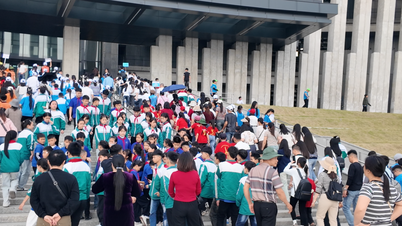
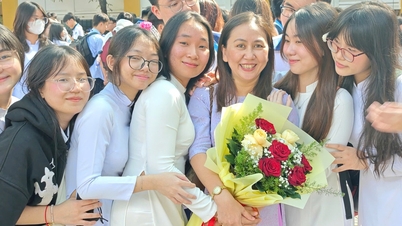
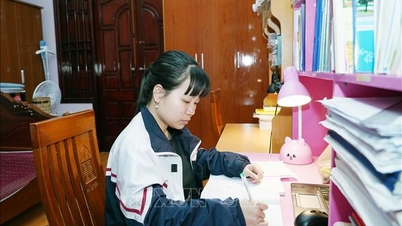
Students in Ho Chi Minh City.
The new city will have more than 110,000 teachers.
At the beginning of the 2024-2025 school year, Ho Chi Minh City will have 80,612 teachers. This includes 26,889 preschool teachers; 23,155 primary school teachers, 18,125 lower secondary school teachers, and 12,442 upper secondary school teachers.
In Binh Duong province, the education sector for the 2024-2025 school year will have 19,878 civil servants (excluding non-public schools and vocational education/continuing education at the district level). Of these, 14,883 are teachers and 1,048 are administrative staff. Ba Ria - Vung Tau province has approximately over 16,000 teachers at all levels.
Thus, the new Ho Chi Minh City will have more than 110,000 teachers at all levels.
Nearly 80 universities are located in the area, including 4 universities under its direct management.
Currently, Ho Chi Minh City has over 65 universities and colleges, including two universities (Vietnam National University Ho Chi Minh City and Ho Chi Minh City University of Economics); 38 public universities (including branches); 8 academies and institutes; 15 private universities; and 5 universities managed by foreign entities. Meanwhile, Binh Duong province has 8 universities; and Ba Ria Vung Tau province has 2 universities.
After the merger, the new Ho Chi Minh City will have nearly 80 universities, becoming a megacity for higher education in the country, not to mention dozens of colleges, vocational colleges, secondary schools, and vocational secondary schools.
Ho Chi Minh City currently has three affiliated universities: Saigon University, Pham Ngoc Thach University of Medicine, and the Ho Chi Minh City Academy of Cadres. After merging with Binh Duong and Ba Ria - Vung Tau, Ho Chi Minh City will have one more affiliated university: Thu Dau Mot University (Binh Duong).
Source: https://vtcnews.vn/sap-nhap-3-so-gd-dt-tp-hcm-binh-duong-ba-ria-vung-tau-nhu-the-nao-ar948187.html


![[Photo] Prime Minister Pham Minh Chinh presides over the conference announcing the establishment of the International Finance Centre in Vietnam.](/_next/image?url=https%3A%2F%2Fvphoto.vietnam.vn%2Fthumb%2F1200x675%2Fvietnam%2Fresource%2FIMAGE%2F2025%2F12%2F21%2F1766309817714_ndo_br_dsc-3400-jpg.webp&w=3840&q=75)

![[Photo] Prime Minister Pham Minh Chinh presides over a meeting on private sector economic development.](/_next/image?url=https%3A%2F%2Fvphoto.vietnam.vn%2Fthumb%2F1200x675%2Fvietnam%2Fresource%2FIMAGE%2F2025%2F12%2F20%2F1766237501876_thiet-ke-chua-co-ten-40-png.webp&w=3840&q=75)



































































Comment (0)