

Building on the positive results of the reorganization and merger of district, city, and commune-level administrative units, which have continuously improved the socio -economic conditions and material and spiritual lives of the people in the merged administrative units, and invested in infrastructure, Quang Ninh province will continue to reorganize commune-level administrative units in the coming period. The reorganization plans have been developed by the province and localities in accordance with regulations, aiming for the highest goal of bringing about new development for the localities and benefits for the people.
Surely, the people of Quang Ninh in general, and Ha Long in particular, cannot forget December 17, 2019, when the Standing Committee of the National Assembly officially issued Resolution No. 837/NQ-UBTVQH14 on the merger of district and commune-level administrative units in the province, in which Hoanh Bo district was merged into Ha Long City.
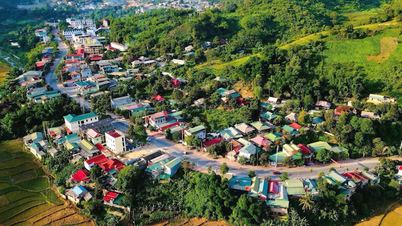
Following the merger, with its expanded development space, Quang Ninh province has prioritized infrastructure investment, especially regional and inter-regional connectivity infrastructure towards the former Hoanh Bo district. Notable examples include the Love Bridge and the Dawn Bridge; the project to upgrade and renovate the road connecting Son Duong and Dong Son; and the project to upgrade, renovate, and expand Provincial Road 342 from the intersection of the Ha Long - Van Don expressway overpass to Dong Tra village, Dong Lam commune...
Since Hoanh Bo district was merged into Ha Long City, Ha Long City has prioritized investing resources in over 60 projects with a total investment of over 4,000 billion VND to develop infrastructure, especially transportation, culture, education , and clean water, in mountainous, highland, and remote areas. The city plans to invest in approximately 40 more projects from now until 2025, thereby creating momentum and expanding new development opportunities for Ha Long.
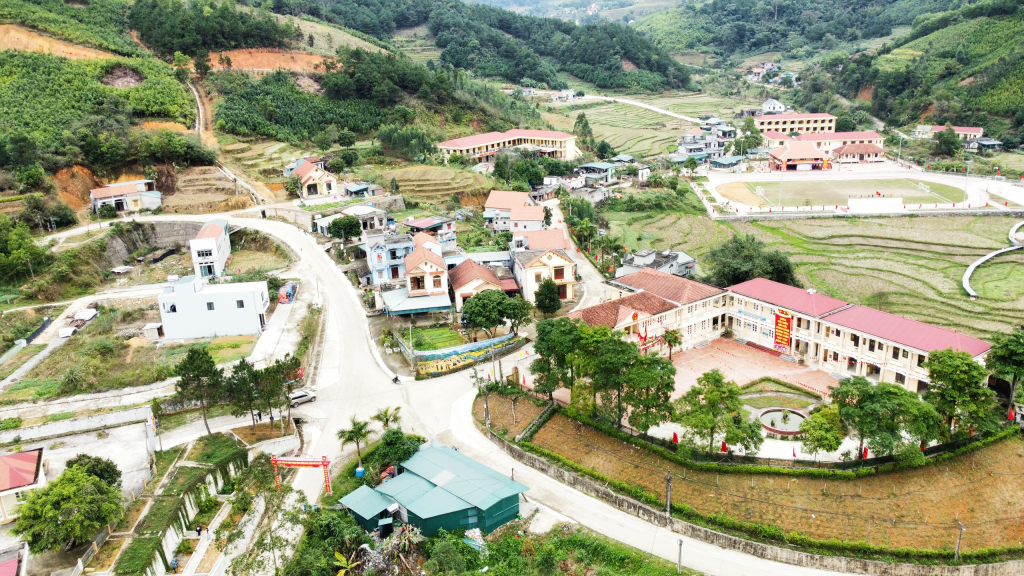
Regarding the merger of commune-level administrative units, a notable example is the merger of Dai Thanh commune into Dai Duc commune (Tien Yen district). This has created a vast development space, exploiting and awakening new potentials and driving forces for the socio-economic development of the locality, and improving the lives of the people. Average per capita income in 2023 reached over 64 million VND/person/year, far exceeding the 54.5 million VND/person/year in 2022. The commune no longer has any poor households according to national standards for the 2021-2025 period. After the merger, infrastructure has received significant investment from the province and Tien Yen district, notably the completion of a 7.08km road connecting the center of Dai Duc commune to the former center of Dai Thanh commune, replacing the previous 17km road with many steep and bumpy slopes. The new route not only reduces distance and travel time but also narrows the development gap between Dai Duyc and the lowlands.
Following the highly positive results of previous administrative unit mergers, Quang Ninh province continues to merge 12 more commune-level units. Specifically, in Ba Che district, the entire natural area and population of Minh Cam commune are merged into Luong Mong commune to form Luong Minh commune. After the merger, Ba Che district has 7 commune-level administrative units: 6 communes (Luong Minh, Don Dac, Dap Thanh, Thanh Lam, Thanh Son, Nam Son) and Ba Che town. In Cam Pha city, the entire natural area and population of Cam Hai commune are merged into Cong Hoa commune to form Hai Hoa commune. After the merger, Cam Pha city has 15 commune-level administrative units: 2 communes (Hai Hoa and Duong Huy) and 13 wards (Quang Hanh, Cam Thach, Cam Thuy, Cam Trung, Cam Thanh, Cam Binh, Cam Tay, Cam Dong, Cam Son, Cam Phu, Cam Thinh, Cua Ong, and Mong Duong).
For Dong Trieu Town, the entire natural area and population of Tan Viet commune will be merged into Viet Dan commune to form Viet Dan commune; the entire natural area and population of Dong Trieu ward will be merged into Duc Chinh ward to form Duc Chinh ward. After the reorganization, Dong Trieu Town will have 19 commune-level administrative units, including: 10 communes: Viet Dan, Binh Khe, Hong Thai Tay, Binh Duong, An Sinh, Hong Thai Dong, Nguyen Hue, Thuy An, Trang Luong, Yen Duc and 9 wards: Duc Chinh, Mao Khe, Xuan Son, Hoang Que, Hung Dao, Hong Phong, Kim Son, Yen Tho, Trang An.
For Mong Cai City, the entire natural area and population of Hoa Lac ward were merged into Tran Phu ward to form Tran Phu ward. After the reorganization, Mong Cai City has 16 commune-level administrative units, including: 9 communes: Hai Xuan, Hai Dong, Quang Nghia, Hai Tien, Van Ninh, Vinh Trung, Vinh Thuc, Hai Son, Bac Son and 7 wards: Tran Phu, Ka Long, Hai Yen, Hai Hoa, Tra Co, Binh Ngoc, Ninh Duong.
For Ha Long City, the entire natural area and population of Tran Hung Dao ward were merged into Yet Kieu ward to form Tran Hung Dao ward. After the reorganization, Ha Long City has 32 commune-level administrative units, including: 12 communes (Le Loi, Thong Nhat, Son Duong, Dan Chu, Quang La, Bang Ca, Tan Dan, Vu Oai, Hoa Binh, Dong Lam, Dong Son, Ky Thuong) and 20 wards (Tran Hung Dao, Hong Gai, Bach Dang, Cao Thang, Cao Xanh, Ha Khanh, Ha Lam, Ha Trung, Hong Hai, Hong Ha, Ha Tu, Ha Phong, Bai Chay, Gieng Day, Ha Khau, Hung Thang, Tuan Chau, Viet Hung, Dai Yen, Hoanh Bo).
Following the reorganization and merger of commune-level administrative units, Quang Ninh province now has 171 commune-level administrative units, including 95 communes, 69 wards, and 7 towns, a reduction of 6 commune-level administrative units (3 communes and 3 wards).
The process of developing a plan for reorganizing commune-level administrative units in Quang Ninh province has been carried out in accordance with the correct procedures and regulations of current law. In particular, it has fostered consensus and unity among officials, Party members, and the people, avoiding disruption and ensuring political stability and social order.
It is evident that the reorganization and merger of administrative units have brought about a new impetus, creating momentum for the merged units to achieve breakthrough development. It is believed that, with the right and effective policies, the merged commune-level units will experience new socio-economic development, and the lives of the people will continue to improve.
Source
![[Image] "Journey of Hope" promotes the organ and tissue donation movement in Vietnam.](https://vphoto.vietnam.vn/thumb/1200x675/vietnam/resource/IMAGE/2026/05/20/1779294400833_1-8910-jpg.webp)





































































Comment (0)