

 |
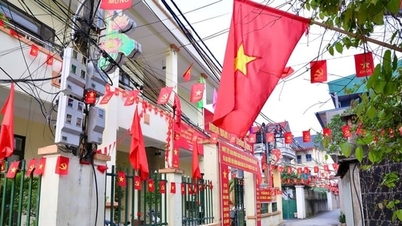
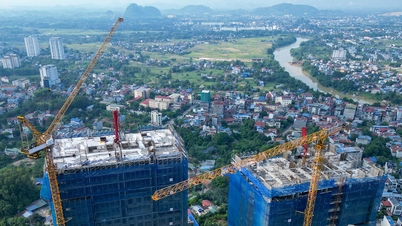
| Thai Nguyen province currently has 2,452 villages and residential areas that do not meet the standards and will be reorganized in June 2026. (Photo: Provided) |
However, mergers are unlikely to be as effective as desired if they are approached solely from criteria such as population, area, or the number of administrative units. Behind each village or neighborhood name lies a cultural space, a history of community formation, and social connections built up over generations.
In many localities, the name of a village is associated with the process of land reclamation, with historical sites, festivals, customs, or shared memories of the residents. These are values that are difficult to quantify using administrative criteria. Therefore, each merger decision directly impacts the psychology, emotions, and level of community cohesion.
Recent experience has shown that in areas where effective communication and public relations are implemented, relocation plans are made public, people's opinions are listened to, and local cultural elements are respected, the implementation proceeds smoothly and receives high levels of consensus.
Conversely, in some places, concerns and anxieties still arise when familiar names change, when community gathering places shift, or when some people feel that the distance to accessing common activities has become greater after the merger.
These concerns need to be listened to and addressed thoroughly. This will not slow down the implementation of the policy but will help make the arrangements more suitable to the realities of each locality. The consensus of the people is always a crucial condition for all decisions to be put into practice.
Therefore, merging villages and residential areas should be viewed as a process of rearranging the community space. Besides the prescribed criteria, a thorough assessment of cultural similarities, customs, traditions, historical backgrounds, and social connections is essential. When these factors are carefully considered, the new administrative unit will have a solid foundation for stability and development.
During this process, the role of grassroots officials is particularly important. As the area expands, the population grows, and social relationships become more diverse, the demands on village and neighborhood leaders are also higher than before. They need to play a role in connecting the community, building consensus, and fostering a shared identity for the newly merged unit.
In summary, reducing the number of administrative units is a necessary requirement, but it is not the only measure. When administrative "additions" are accompanied by social consensus and maintain the values that bind the community together, merging villages and residential areas will truly create a foundation for sustainable development from the grassroots.
Source: https://baothainguyen.vn/xa-hoi/202606/sau-nhung-phep-cong-hanh-chinh-7640371/



![[Image] Shipbuilders exposed to steel and record-breaking heat.](https://vphoto.vietnam.vn/thumb/1200x675/vietnam/resource/IMAGE/2026/06/04/1780545781745_ndo_br_img-5402-4683-jpg.webp)





















































![[Video] Sunset at Lap An Lagoon – Where the sun sets over the fishing nets](https://vphoto.vietnam.vn/thumb/1200x675/vietnam/resource/IMAGE/2026/05/31/1780192137701_beach-landscape-sea-water-nature-grass-745871-pxhere-com.jpeg)




































Comment (0)